


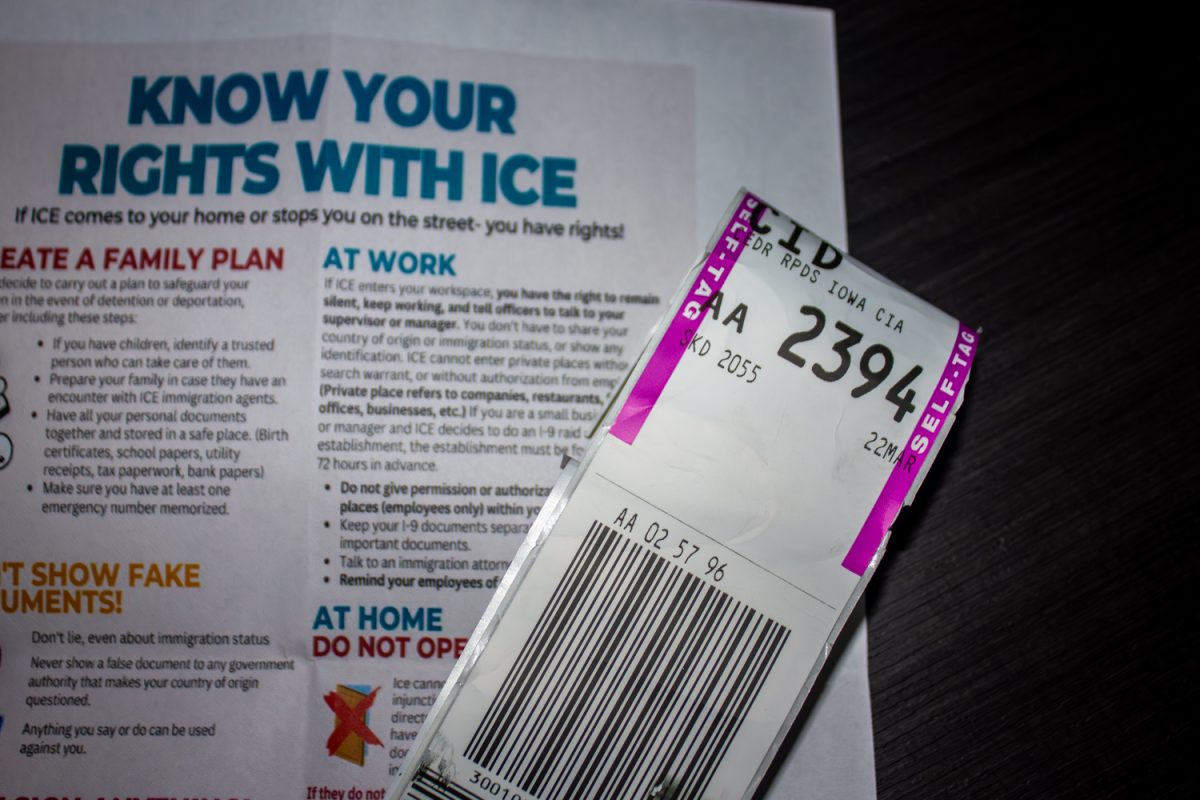
The decision to bring more U.S. Immigration and Customs Enforcement, or ICE into major airports during a government shutdown was framed as a solution. In short, it wasn’t.
On March 23, the Trump administration added ICE to major U.S. airports, claiming this move would support the TSA during a partial government shutdown caused by disputes over Department of Homeland Security funding.
This decision raised serious concerns about the message it sends to citizens and visitors. If ICE’s presence on city streets has already caused severe anxiety and distrust, extending its reach into major airports only heightened this sense of insecurity around basic activities like travel.
According to Reuters, from the beginning of President Trump’s presidency to February of 2026, more than 800 people have been arrested by ICE due to leads from TSA. These leads were supplied by TSA’s records on more than 31,000 travelers. The TSA’s Secure Flight Program is responsible for these records. However, this program was created as a “counter-terrorism measure,” not to give out private information for ICE to abuse.
Fortunately, as reported by CNN on April 9, many ICE agents have started to vacate airports across the nation. During a recent City Council budget hearing for the Philadelphia International Airport, it was noted that ICE agents were slated to depart by Thursday. Notably, at Cleveland Hopkins International Airport, agents had already left as of the Friday prior.
This change is unfolding in various airports nationwide. And yet, the brief addition of ICE in the airports has left a lasting, fearful impression on people. Their presence made many Americans feel uneasy and heightened their fears. ICE was not even serving any constructive role at TSA checkpoints, as much of that training would take months. Their contributions seemed limited to simply checking for IDs and even just handing out water to people waiting in long lines.
Instead of reassuring the public, the administration’s approach risked further damaging America’s reputation as a welcoming and safe destination. By adding this brutal and distrusting form of security instead of focusing on actual security, we are just making people think twice about coming here at all. Is that the message we want to send about our country?
According to PBS, the addition of ICE at airports comes straight from the ongoing disagreements in Congress over funding for the Department of Homeland Security, which covers both TSA and ICE. Reuters has reported that since the start of the funding dispute, about 450 TSA workers have quit after about 1,110 who quit during the 2025 shutdown.
Despite these new additions, NPR recently reported that after 40 days of no pay, TSA workers have started to get paid again. As great as this is for many hardworking TSA agents, the Trump Administration has decided to allow ICE to remain in airports supposedly until the airports and TSA are working in full capacity, according to NBC News.
The Trump administration seems to believe that the best solution is to incorporate the same federal law enforcement agency which has killed innocent Americans, violently assaulted others, and acted on biased, racist impulses, and add them to spaces where people of every background travel.
It’s clear that airports are struggling and need support. During spring break, many travelers dealt with extremely long lines and serious delays getting through security. On March 25, officials also announced that only two TSA screening checkpoints were operating across two terminals. This situation was directly tied to the lack of funding for TSA agents.
Meanwhile, ICE was still being paid during this same period, despite little evidence showing that they were actually helping ease TSA’s workload or improve airport security operations. Instead, their presence in airports mainly created tension and fear for many travelers.
According to The Independent, ICE agents are not trained to screen passengers, operate X-ray machines, conduct pat-downs, perform explosive trace detection, or clear bags. These skills require months of specific TSA training. Because of that, their presence does little to actually reduce the growing airport lines or improve efficiency at security checkpoints.
Despite this, Trump has suggested they are there to supposedly help “protect Americans.” ICE has always been at major airports to an extent, but if they aren’t actually improving airport safety, it seems like Trump wanted to create more fear than there already is.
We must question how ICE is operating in these spaces and whether their presence is being used in ways that go beyond safety and into intimidation during routine travel.
For University of Iowa third-year student, Terra Richards, the presence of ICE in airports doesn’t feel like added security. Rather, it feels like a threat.
“I immediately feel unsafe,” she said. “As someone who travels a lot, I think of airports as a sort of safe zone in my travel day, where I know that there are always authority figures and people ready to help you out.”
She argues that bringing more immigration enforcement into airports, given the current tension between citizens and ICE, crosses a line.
“It is really inappropriate that federal immigration officers are allowed to operate in these types of spaces,” she said, pointing out that airports had already had enough security personnel in place. “It’s cruel to take advantage of public spaces to prey on people with complicated legal status or to harass innocent citizens as we have seen ICE agents do on numerous other occasions.”
Even after experiencing the long delays during spring break firsthand, Richards doesn’t see ICE as a solution.
“I think that more ICE presence is just slowing down the already lacking efficiency of our airport and customs system,” she said.
“I am truly disgusted that the American government is using ICE to target Americans and immigrants alike. And even more horrified that they are now placing them in airports to ‘streamline’ the process,” Richards said.
By bringing ICE into airports, the Trump administration isn’t solving the actual problem; it’s revealing its priorities. Instead of addressing the clear staffing shortages and underfunding of TSA, it has chosen to introduce a force that grows fear rather than fixing the efficiency problem of airports. It proves that the Trump administration’s focus is not on improving travel safety, but on expanding enforcement and control in highly visible public spaces.
Adding ICE to our airports didn’t fix long lines. They couldn’t replace trained TSA agents, and it didn’t make airports run more smoothly.
What it did do is send a message to Americans and to the rest of the world about what kind of country we are allowing ourselves to become.