
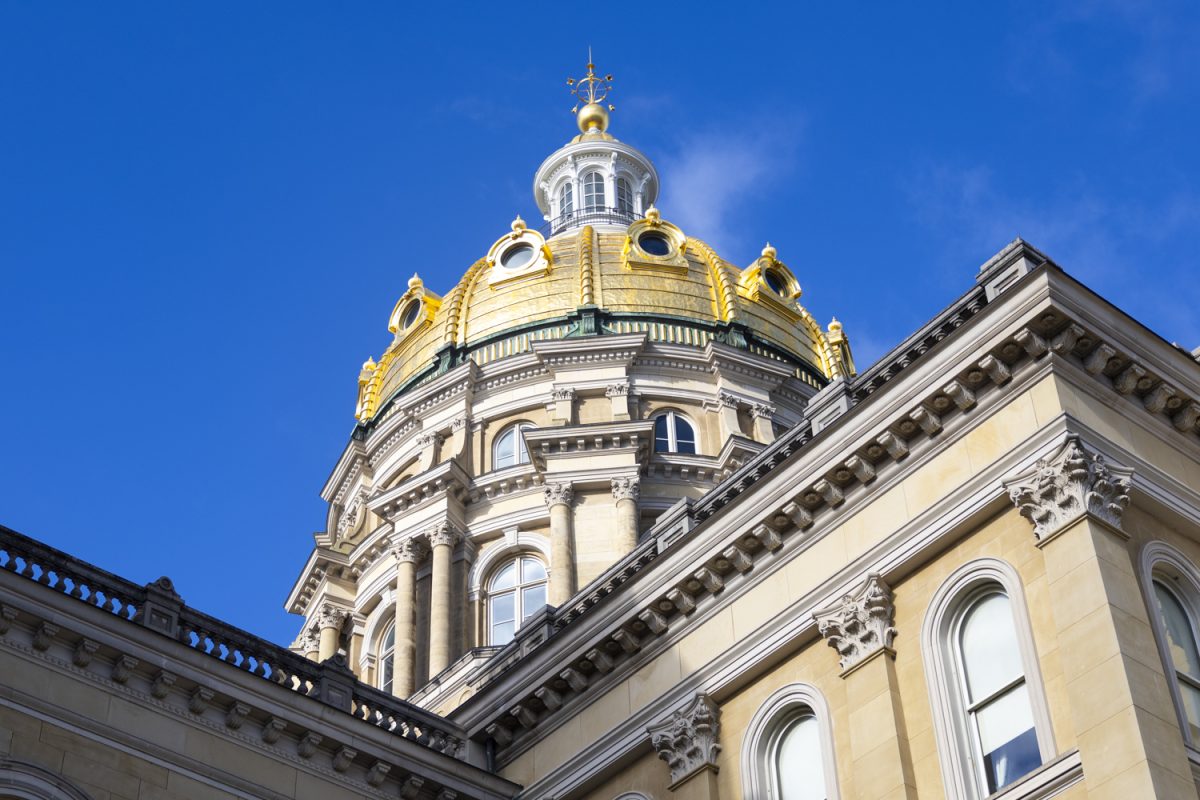
About midway through the legislative session, Iowa lawmakers reached the second funnel deadline, requiring most bills to advance out of one chamber and be approved by a committee in the other to remain eligible for debate. The deadline further narrowed the list of proposals under consideration at the capitol.
Lawmakers have continued to debate bills relating to higher education, anti-diversity, equity, and inclusion initiatives, and civil rights issues but far fewer measures remain in play compared to the first funnel. Those that survived signal which issues have gained enough support to keep moving through the legislative process.
Similar to the first funnel, the deadline serves to winnow down legislation that lawmakers will consider in the final stretch of the session.
Bills that failed to meet the requirements are generally considered dead, unless they are tied to budget-related measures, offering a clearer picture of the priorities shaping debate in the weeks ahead.
RELATED: Funnel week recap: What bills are still active in the Iowa legislature
Bills Gov. Kim Reynolds signed into law
Gov. Kim Reynolds signed the first law of the legislative session into law on Feb 26. Senate File 2201 will increase K-12 public school per pupil funding by 2 percent for the 2026-27 school year.
Reynolds said in a statement the legislation will increase state education funding by $82 million for the upcoming school year, and the increase will result in more than $4 billion for Iowa’s public schools.
“These investments and more demonstrate Iowa’s commitment to empowering educators, elevating academic standards, and driving accountability to ensure every Iowa student succeeds at school, work and life,” Reynolds said in the statement.
Senate File 579 received the governor’s signature on March 10. The legislation will restrict local governments from offering civil rights and transgender protections beyond what is established in state law.
A version of the bill was passed by the Iowa Senate with bipartisan support in 2025, but the newly amended bill by the Iowa House bars local governments from adopting civil rights protections broader than those in the Iowa Civil Rights Act.
Sen. Herman Quirmbach, D-Ames, pushed for an amendment which was aimed at removing the measure that would restrict civil and transgender rights, citing Iowa’s civil rights code, Chapter 216. However, the amendment failed on the Senate floor.
“The civil rights guaranteed in Chapter 216 form a floor on civil rights, not a ceiling,” he said.
Sen. Scott Webster, R-Bettendorf, the bill’s floor manager, said the bill would maintain statewide consistency in civil rights enforcement, prevent confusion between cities, and allow unresolved local cases to be handled efficiently by the state.
Higher education bills still eligible for legislative consideration
Lawmakers are discussing bills requiring state universities to include civics education in their general education curriculum. House File 2361 was approved by the House on March 12 and Senate File 2232 was advanced out of Education Committee on Feb. 9.
The legislation would direct the creation of courses for the Center for Intellectual Freedom at the University of Iowa, tasked with supporting free expression initiatives and reviewing compliance with the new requirements.
The Iowa Board of Regents approved the center’s bylaws in December 2025, which endorsed guidelines on staffing, governance, and the mission of the Center for Intellectual Freedom.
Placed as unfinished business on the Senate calendar, House File 2544 advanced out of subcommittee on Feb. 11 and if passed, would require the Iowa Board of Education to file and publish an annual antisemitism report.
The bill aims to provide lawmakers, educators, and the public with a clearer picture of antisemitic incidents in both K-12 schools and regent universities, helping guide policy decisions and prevention efforts.
House File 2487 and its Senate companion, Senate File 2303, are still eligible for consideration and would direct the Iowa Board of Regents to examine general education requirements at the state’s public universities for content related to diversity, equity, and inclusion or critical race theory, allowing those requirements to be revised or removed.
Democrats did not support the bills and said the legislation would undermine academic freedom and limit what students are able to learn.
Rep. Ross Wilburn, D-Ames, said restricting course content could lead to misunderstandings and further legislative efforts to expand similar bans. He criticized the rhetoric surrounding the House bill, labeling it as a “stop woke act” that does not contribute to a respectful or productive climate.
House File 2331 would establish a loan repayment program for the UI College of Law graduates who choose to practice in the state post-grad.
According to an annual report from Iowa Courts, as of 2025, nearly half of Iowa’s counties have 10 or fewer attorneys and 17 counties have five or fewer private practice lawyers creating “legal deserts” across the state.
The legislation is aimed at addressing Iowa’s attorney shortage by incentivizing UI graduates to remain in-state and work in underserved or rural communities.
House File 2240 if passed would impose an annual tax with a rate set at 15 percent on endowments. According to The Council of Nonprofits, endowments are assets that grow over time resulting from income earned from interest on the underlying invested funds.
Jillian Carlson, Iowa Board of Regents state relations officer said 80 percent of their endowment funds go toward student scholarships. She said the bill would deplete funds for the three regent institutions in 10 to 15 years by $250 million, the threshold cited in the bill.
“Right now, as the name implies, those scholarships are endowed, and so they go on in perpetuity, allowing us to fund those scholarships that we have set up year over year for our students,” Carlson said.
House File 2513 passed through the House on March 3 and would prohibit public universities from entering employment contracts with federal H-1B visaholders, or international professionals working in U.S. specialty occupations, requiring highly specialized knowledge and at least a bachelor’s degree. The legislation has been placed on the Senate’s debate calendar.