


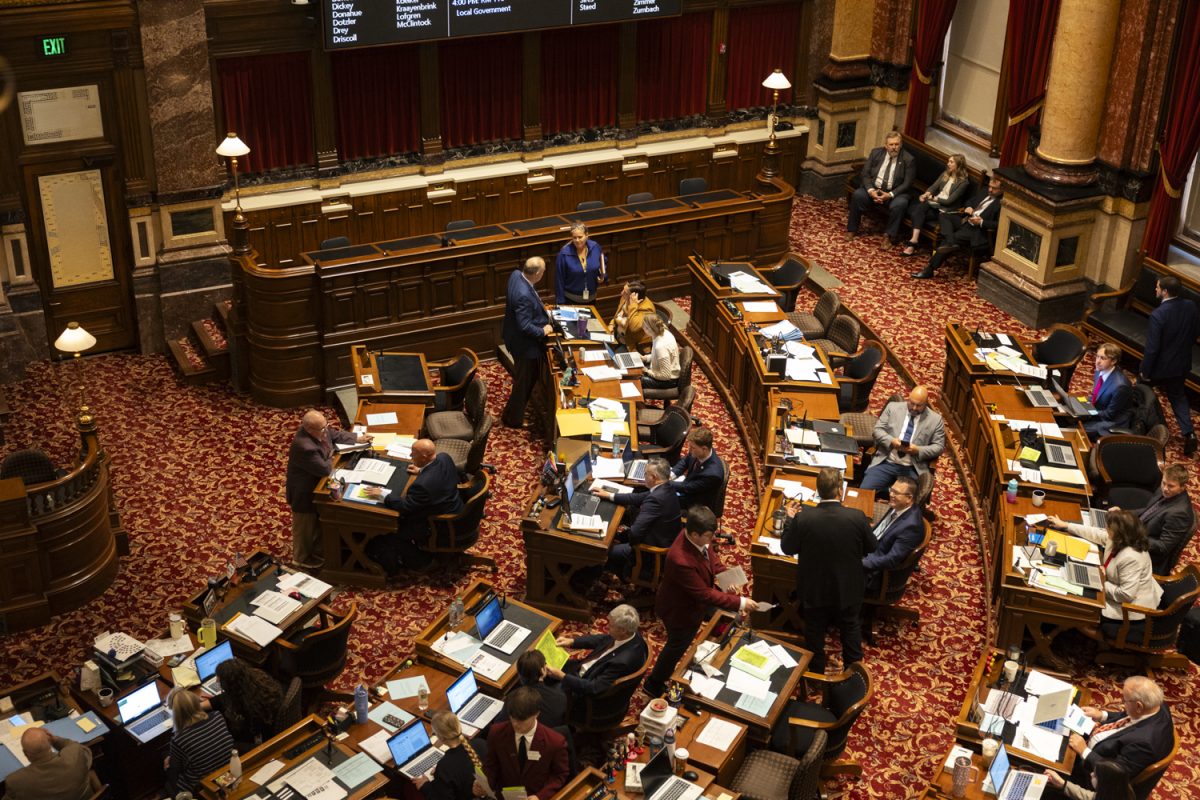
The Iowa Senate passed a bill on Monday that would prohibit local governments from offering civil rights protections to groups not protected under state law, which includes the transgender community.
Signed into law in February 2025, Iowa lawmakers removed gender identity as a protected class from the Iowa Civil Rights Act, ending nearly two decades of statewide protection against discrimination for transgender and nonbinary Iowans. The change made Iowa the first state in the county to repeal protections for a group previously covered under its civil rights code.
Although a version of the bill was passed by the Iowa Senate with bipartisan support in 2025, Senate File 579 returned to the Senate floor for debate on March 9. The House amended the bill on March 5 to include language from House File 2541, barring local governments from adopting civil rights protections broader than those in the Iowa Civil Rights Act.
Democrats opposed the updated legislation and said it was a threat to transgender Iowans and other vulnerable groups, arguing it undermines local control and could limit protections that communities have put in place to address discrimination.
Sen. Herman Quirmbach, D-Ames, introduced an amendment in response to the House’s modification of the bill. The amendment, which failed in a 16-29 vote, was aimed at removing the measure which would restrict civil and transgender rights.
Quirmbach cited Iowa’s civil rights code, Chapter 216, and said his amendment would preserve local control by allowing cities and counties to maintain or adopt civil rights protections beyond those listed in the Iowa Civil Rights Act, arguing that the law should serve as a baseline for protections rather than a limit on them.
“The civil rights guaranteed in Chapter 216 form a floor on civil rights, not a ceiling,” he said.
Sen. Renee Hardman, D-Des Moines, who served as a West Des Moines City Council member before being elected to the Senate, supported Quirmbach’s amendment and said the bill was an overreach of the Iowa government, hurting local government.
RELATED: Few protections remain for transgender Iowans following repeal of civil rights protections
“I’m rising to support local governments, which I have been proud to serve for eight years,” she said. “They know it best. They know their people. They know the issues that face their local communities, and they have willing individuals willing to take on some of that work, to not burden the state.”
Quirmbach, who works as a professor at Iowa State University, said he has developed close connections with LGBTQ+ students on campus and said they contribute positively to the community.
“They understand life a lot better than I think some people do, because they’ve had to be in contact with some of the rougher parts,” he said. “But they continue on working on their education, contributing to the community, helping out with local elections. They’re great people. They deserve to be treated better.”
Sen. Scott Webster, R-Bettendorf, the bill’s floor manager, opposed the amendment and said the bill would maintain statewide consistency in civil rights enforcement, prevent confusion between cities, and allow unresolved local cases to be handled efficiently by the state.
Sen. Janice Weiner, D-Iowa City, opposed the bill and said she didn’t understand how it would help local governments in Iowa address kitchen table issues including health care, child care costs, and affordable housing.
“This bill would declare that state law’s the ceiling, and I don’t think that we in the state legislature would take kindly to the federal government doing that to us from the federal level,” she said.
Webster urged the Senate to vote in favor of the bill because it would create uniform civil rights protections across the state, ensure impartial handling of complaints, and prevent local boards from delaying or obstructing cases, ultimately improving the efficiency and fairness of Iowa’s civil rights system.
“Vote yes for this bill,” he said. “If it doesn’t matter to you, and it can take years and years and years and get dragged out and cases can’t get solved and people can’t get resolution, then vote no. In my mind, I think yes is the correct vote.”