


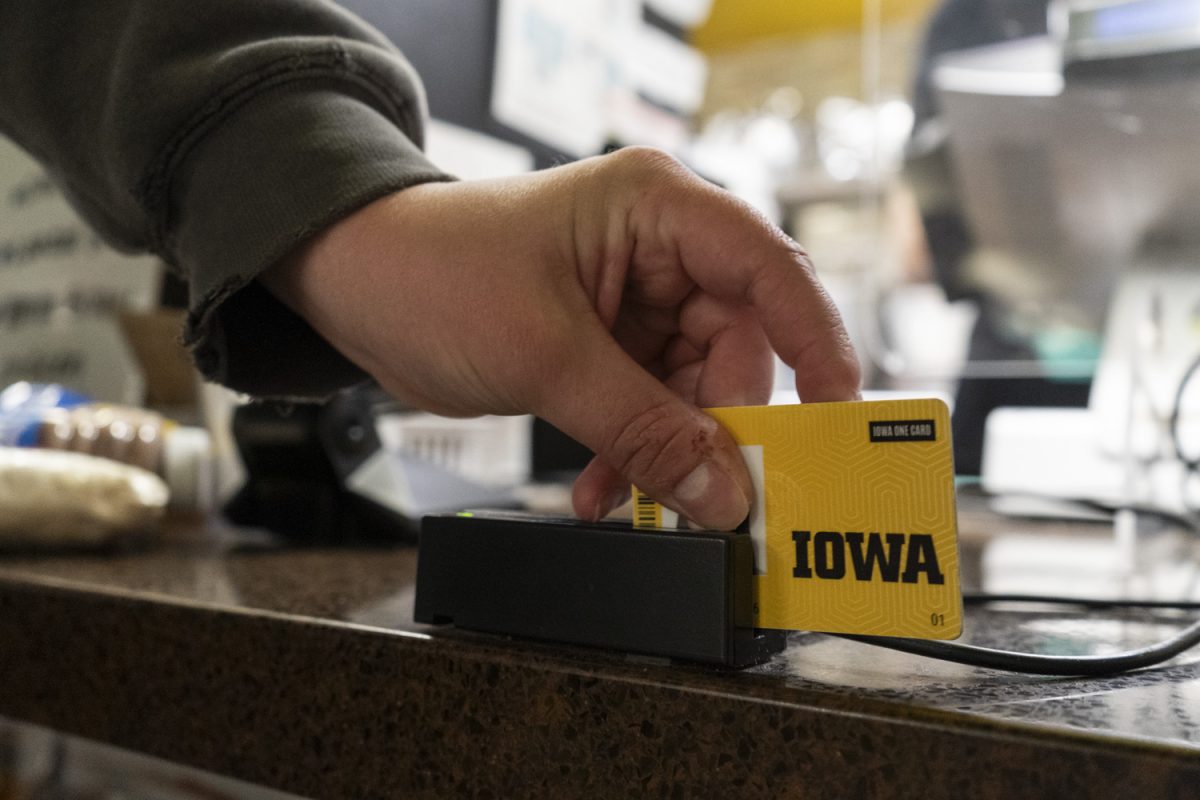
As a first-year student, I am still discovering the many benefits the University of Iowa offers, but the dining dollars system has stood out to me. It allows students to purchase meals at campus dining locations, along with Hawk Dollars for laundry and other expenses.
Still, I often struggle to make it to the dining halls on time as I navigate my schedule and learn my way around campus. I prefer not to rely too heavily on my limited dining dollars when I already have unlimited meals included in my plan. That’s why I was surprised to learn the flex swipe system was discontinued before I moved here.
Similar to dining dollars, flex swipes had a limit. Approximately 75 swipes were available per semester, with a maximum of five swipes allowed per day. Unlike dining dollars, flex swipes guaranteed either one entrée, two sides, and one drink or one meal at Burge Marketplace, the former River Room, and more.
While dining dollars allow for the purchase of a variety of foods, they come with a limited budget that students must manage on their own. Flex swipes are easier to handle, as a single swipe ensures a complete meal without the need for separate payments for individual items to get a decent lunch-worthy meal.
According to previous reporting by The Daily Iowan, the flex swipes were replaced because they could not be utilized at all dining locations, whereas dining dollars offered greater flexibility.
Reactions at the time were mixed, as some felt the change would encourage responsible spending, while others worried the funds would be depleted more quickly, according to the article.
Now, instead of using one swipe for a full meal, students may spend about $14 from either a $150 or $450 balance, depending on their plan — a steep price for what used to be covered by a single swipe.
“[Dining dollars are] not as convenient to get food,” Gage Gaul, a third-year UI student, said. “Especially after the dining halls are closed.”
Flex swipes ensured a reliable meal with each swipe, whereas the dining dollars can feel more limited due to the uncertainty of the actual amount received.
“I used all of [my flex swipes],” Noa Zapin, a third-year UI student, said. “It was like my go-to lunch. Some people would just miss lunch in general because of classes.”
While dining dollars present a valuable option for students with diverse dining needs, the financial constraints associated with them can be overwhelming, particularly for first-year students like myself. My focus should be on adapting to university life and not monitoring my spending on meals, meals that the school is already providing.
“I could see how it would depend on the student and their schedule and lifestyle,” Zapin said. “I’m sure for some people who are using them for different reasons than me might benefit from the dining dollars better, but I don’t see why it couldn’t be that the students have the choice to pick.”
Preferences vary widely, and providing both options would better support students’ needs. Personally, I find flex swipes far more reassuring, ensuring I can get a full meal even when my schedule makes it difficult to reach the dining halls.