


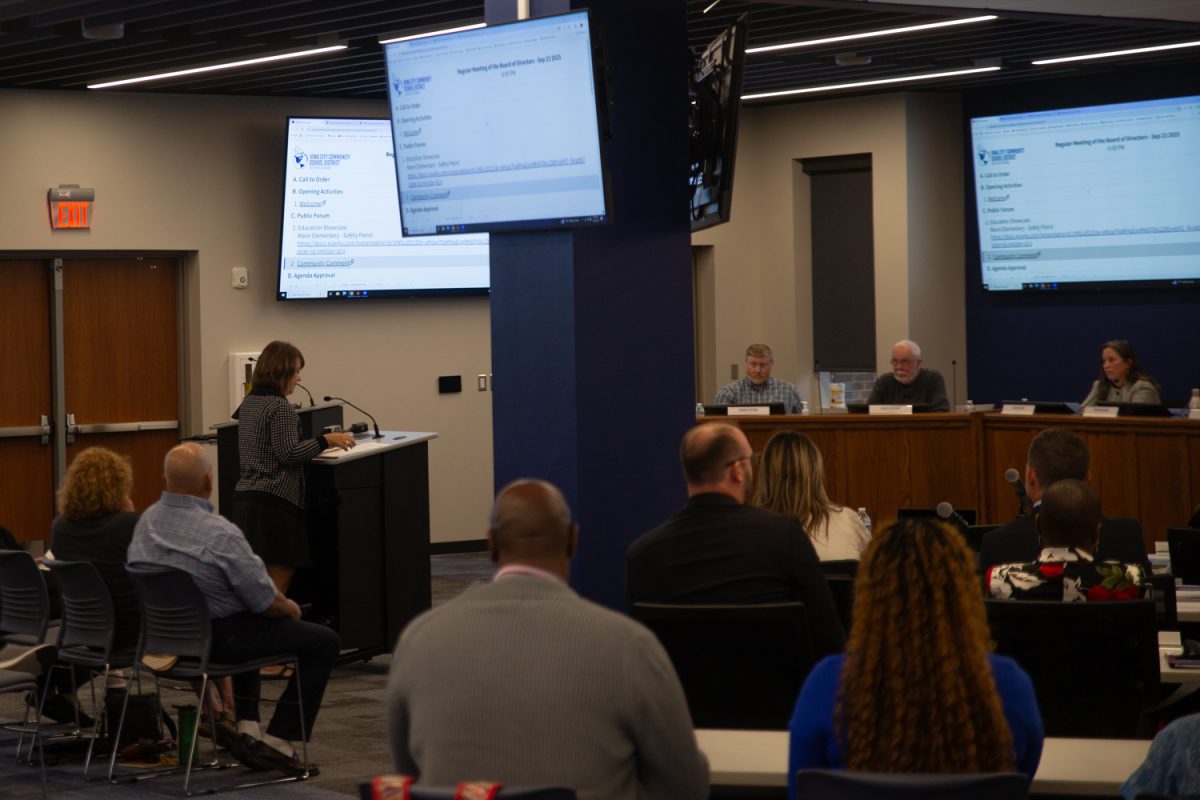
The Iowa City Community School District awarded over $500,000 to two construction firms to pursue its Dream Accelerator education program during a board meeting Tuesday.
The district received two bid applications on Sept. 18 for the seven-part project, with City Construction applying for the first item, labeled “general construction” by the board, for $82,200. The remaining six parts were awarded to Tricon General Construction in the amount of $454,430 for electrical work, ventilation, and fire suppression, among others.
The measure passed 5-2, with Board Directors Mitch Lingo and Jayne Finch voting against it. Lingo was the only board member to make a comment about the project prior to voting.
The Dream Accelerator is a technology-based career exploration program designed by Junior Achievement of Eastern Iowa, a Cedar Rapids-based education nonprofit that designs early-education, business-focused curricula. The program is a screen-filled room with software designed to guide students in finding their strengths, weaknesses, and interests to ultimately help identify possible career paths.
The district initially approved a resolution to pursue the partnership in April.
City Construction and Tricon General Construction were the only project applicants and were awarded the bids according to their applications.
RELATED: ICCSD takes measures to combat measles if identified within the district
The Dream Accelerator’s screen usage is another issue, Lingo said, causing his continued disapproval. The board has been vocal and active about its treatment of cell phones and screen time in the classroom after creating a policy to confiscate personal devices seen or heard in classrooms during instructional time in December.
“If I’m going to talk against cell phones in the classroom,” he said, “and I’m the guy that also questions the one-to-one program, is this really the best way?”
The one-to-one program sets aside a school-approved educational device, usually a laptop, for each student to have and use throughout the school day, increasing screen time for students.
Lingo cited his original cost concerns for the project during its initial consideration in April as to why he decided to vote against the proposal Tuesday. The director said he has little faith the planned technology is worth the price tag.
“There’s a lot of other projects that we could spend $2.5 million on that actually show you can improve student learning,” he said.