


As it stands, women are the fastest-growing group in the veteran population.
According to the U.S. Department of Veteran Affairs, women accounted for four percent of the veteran population in 2000. By 2040, they are projected to account for 18 percent.
Public Relations Director of the Iowa Department of Veterans Affairs Karl Lettow believes this number will only increase.
“As more women can serve, the more women veterans there are going to be,” he said. “Therefore, the need for treating them on the VA side is probably going to grow and commensurate with their percentage of the actual force.”
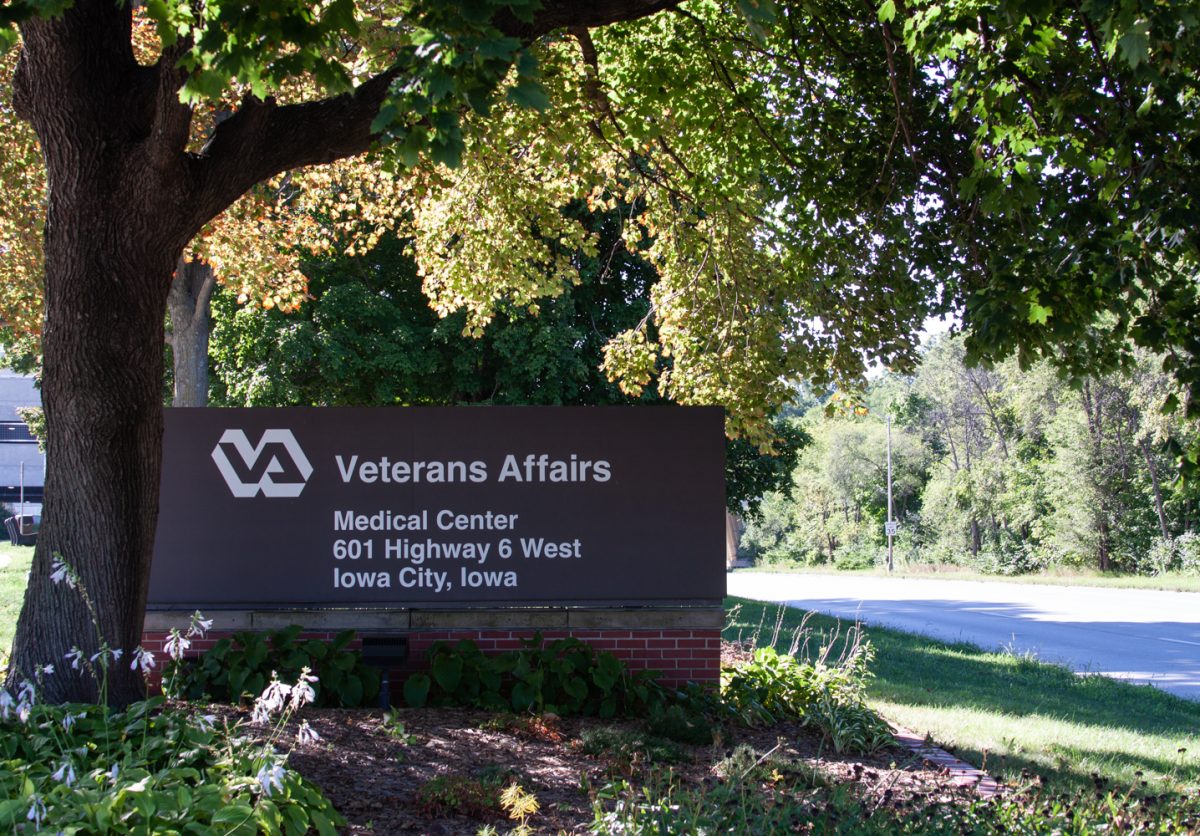
The Iowa City VA Health Care System will address this need head-on, as the VA’s main hospital will add 27,500 square feet and two floors to the Women’s Health Clinic to accommodate its growing number of female veterans. The estimated deadline for completion is fall 2026.
“The new space will provide four exam rooms. Each one of them will have their own bathroom,” Women’s Clinic Manager Bonnie Konkowski said. “We need a procedure room for things like IUDs, colposcopies, those kinds of things, so this particular room will be very helpful.”
Konkowski believes the additions will help strengthen the Women’s Health Clinic as a one-stop shop for all women patient health needs from services like primary care, gynecology, breast health services, psychology, and social work.
Konkowski also hopes the health clinic will help address an unintentional national disparity of health care treatment of men and women that has formed over the years.
“Men are often perceived as very stoic and pain-tolerant, whereas women may be perceived as more sensitive and more likely to report pain, but maybe less likely to be taken seriously for cardiovascular disease,” she said. “They just don’t correlate heart health with women.”
Konkowsi also emphasized the disparity in medical research, estimating only 39 percent of clinical trials include an equal male-to-female ratio. An equal ratio could prove beneficial, as some medications are effective with one gender and disagree with the other.
RELATED: Johnson County appoints Mandy Coates as new veterans affairs director
“Back in 1977, females of child-bearing age were removed from clinical research studies because some of those drugs caused some serious birth defects,” she said. “So, even though they updated their guidelines, the FDA did in 1993, there is still a big research gap even today.”
Lettow shared his approval of the United States Congress giving more attention and funding to women veteran’s health-related issues.
“The contributions that they made are right on par with their male counterparts,” he said. “We all serve together. It’s all one team. A bullet doesn’t know gender.”
University of Iowa first-year Ella Wertz shared her perspective on the expansion. Wertz is currently in the ROTC program and drills with a National Guard unit.
“I definitely think [the expansion] is great,” she said. “ I know in the past, female representation in guard Army Reserves has just been pretty low, so the fact that it’s expanding to help other women veterans, especially those with disabilities, is a really good step in the right direction.”