


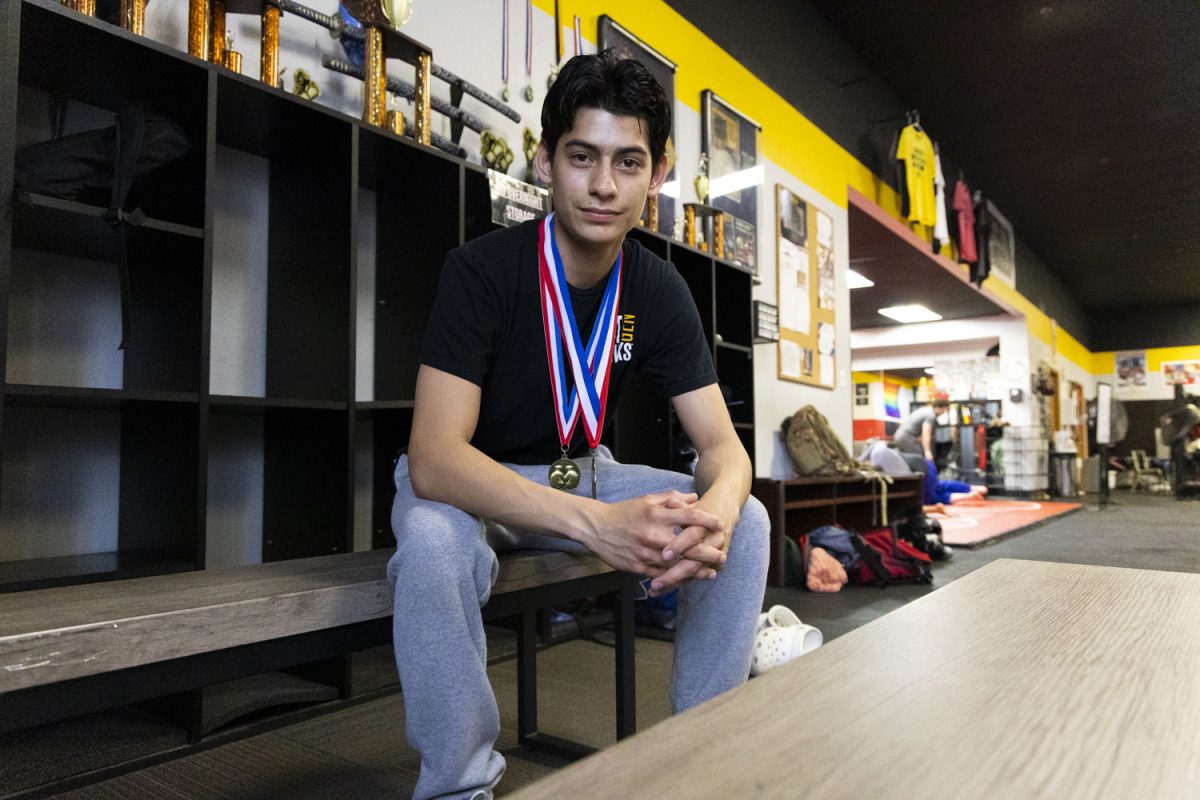
Inside the University of Iowa Boxing Club, discipline means pushing through the final 30 seconds, even when there is nothing left. For two boxers at the UI, that mindset is shaping more than just their performance in the ring – it’s defining who they are.
Freshman Luciano Cardozo-Torres and sophomore Samson Diener, members of the boxing club, come from different backgrounds and levels of experience. However, through long practices, tough losses, and the daily challenge of staying consistent, both are discovering how boxing demands discipline and, in turn, shapes their sense of identity.
“I wanted to be different,” Cardozo-Torres said.
Boxing offered Cardozo-Torres something other sports couldn’t — complete control over the outcome. No teammates to rely on, no one else to blame but himself. Inside the club, that responsibility is a privilege he holds in high esteem. Self-reliance shapes not only how he trains, but how he sees himself.
From Iowa City, Cardozo-Torres was involved in the martial arts form of taekwondo for most of his childhood. In middle school, he realized he wanted to focus on something similar, but with his fists. What started as an interest and a fun pastime quickly became a commitment as he started consistently training at Big George’s Boxing Gym and winning two state titles in high school.
As an exercise science major, his schedule now revolves around early runs, long practices, and constant repetition, all while balancing classes.
“One of the hardest parts of training is just being consistent,” Cardozo-Torres said. “There’s some days where you don’t want to wake up early, but just being here is important.”
That consistency has shaped more than his physical ability. It builds confidence. Once unsure of himself, Cardozo-Torres now brings a different presence, in and out of the ring.
“Boxing has boosted my self-confidence,” he said. “Once I started boxing, I found it easier to be confident with other things as well.”
In the ring, that confidence is shown through precise movements and composure, something he believes is often misunderstood about boxing.
“I think a lot of people misunderstand that boxing isn’t just about hitting another person,” Cardozo-Torres said. “It’s like an art.”
With aspirations of winning the National Collegiate Boxing Association, or NCBA, Nationals and eventually becoming a professional, he sees boxing not just as a sport, but as an avenue to the future. Placing second at this year’s NCBA Nationals at 119 pounds, Cardozo-Torres is already making a name for himself. Through discipline, repetition, and the pressure of being alone in the ring, he’s learned that success isn’t shared; it’s earned.
“It’s all on you,” he said.
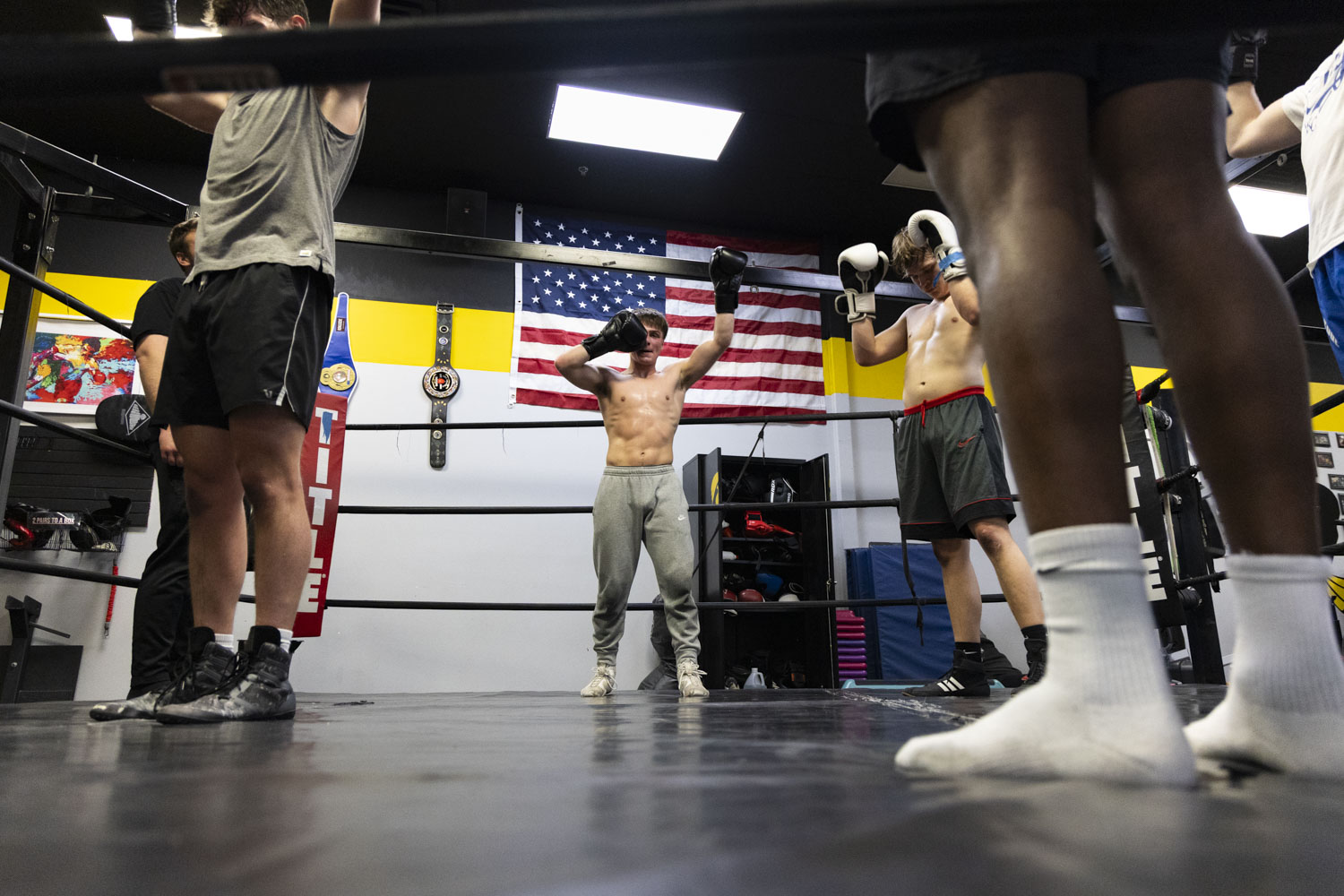
But not everyone in the gym comes in with years of experience or a clear path forward.
For Diener, a Des Moines native studying criminal justice, boxing started almost by accident. What began as a month-long commitment through a fraternity boxing event, known as Knockout University, turned into something more when he decided to keep showing up.
“Most guys didn’t continue after that, but I just stuck around,” Diener said.
Six months into boxing, his focus isn’t on mastering the sport; it’s on learning how to stay consistent, same with Cardozo-Torres.
“You’re not going to see big changes one at a time,” he said. “But if you keep going and stay consistent, you’ll get better.”
With practices in the evening, he builds his schedule around getting schoolwork done first, using boxing as a way to create routine rather
than disrupt it.
“It helps having a structure every day,” Diener said.
Still early in his boxing career, he’s learning one of boxing’s hardest lessons: humility.
“One of the hardest parts of training would be realizing you’re not the best boxer out there,” he said. “You have to learn to be humble with it and take it all in and learn.”
In the ring, that process takes shape through his aggressive style that contrasts with his personality. But, for Diener, that difference is what makes boxing meaningful. It’s not about having everything figured out; it’s about becoming something new through the work it takes to improve. After winning the novice Iowa Golden Gloves title at 165 pounds, he hopes to capture the title at NCBA Nationals.
“One of the best things people can learn is what you can do if you really set your mind to it,” Diener said. “You can achieve things that you didn’t think you could.”
Inside the gym, the differences between athletes like Diener and Cardozo-Torres are clear, but the expectations placed on them are the same. The culture, according to coaches, is built less on talent and more on persistence.
Assistant coach Zach Knoop said consistency is what separates those who improve from those who don’t.
“Hard work beats talent any day,” he said. “If you come to practice once a week and kind of try, I’ll teach you some stuff. But if you’re there every day, even if you don’t have a ton of talent, I’m interested in teaching because you’re putting in the commitment.”
The daily commitment defines how the gym operates. While boxing is often viewed as an individual sport, the environment in the gym is highly team-oriented. Built on shared effort, respect, and responsibility, these athletes work together and push themselves to the best they can be.
“The boxing gym is kind of a cool home for anyone who wants it,” Knoop said. “As long as you’re willing to show up and work, it doesn’t matter who you are or where you came from. If you’re putting in the work, people will like you and respect you.”
Head coach George Chamberlain, who has been with the program since its founding in 2018, sees that same culture as something deeper than competition. For him, boxing is about learning how to handle resistance, both inside and outside the ring.
“Any time you set a goal with a time frame, you have resistance,” Chamberlain said. “These are full-time students … and still make it to the gym. That shows me that they want to learn and grow as athletes and people.”
That growth looks different for every athlete. Cardozo-Torres and Diener, though stylistically different, both reflect the values of the program in their own way.
“Luciano is quiet and humble,” Knoop said. “He’s got a ton of talent, but you almost won’t notice him unless you were looking. When he gets in the ring, he shines.”
Diener, on the other hand, has a more outgoing presence. He is very compassionate and brings energy into the room but also shares the same foundation of effort and discipline, his coaches said.
“They are both great guys,” Chamberlain said. “They work hard and keep wanting to improve.”
For the coaches, that work is what matters most. The gym is designed to push athletes physically through conditioning and repetition, but also mentally: teaching them how to respond to pressure, failure, and growth. As Chamberlain said, “In the gym we win or we learn, and if done correctly, we do both.”
“Sometimes things suck, but if we just push forward a little longer, it will probably get better,” Knoop said.
Over time, those lessons extend beyond boxing and into life itself. The sport becomes a way of understanding effort, identity, and personal limits.
“You have to identify what you’re good at and maximize that,” Knoop said. “That translates to life.”
For Cardozo-Torres and Diener, the path forward may look different: the former chasing a sport in the future, and the latter still discovering where it might take him. But, inside the club, the lesson remains the same. Through early mornings, long practices, and the decision to keep showing up, the pair combine discipline with a continual love for the sport.
“The most important thing about it is just going in there and having fun,” Cardozo-Torres said.