

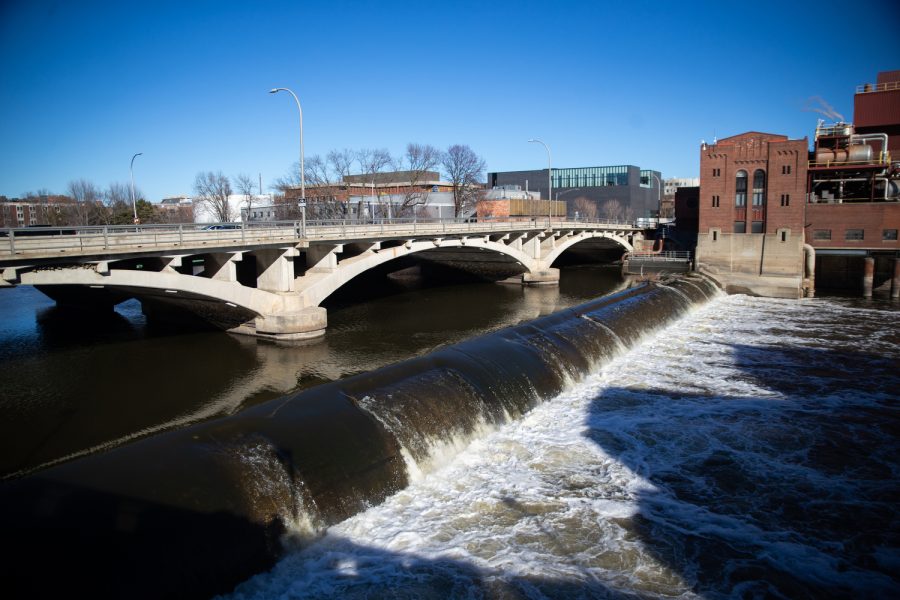
Last month, U.S. Sen. Chuck Grassley, R-Iowa, backed a bill that will give Iowa $64 million to replace and repair bridges. For obvious reasons, this is a good idea. Bridges, along with roads, sewage, and power lines are the basic building blocks of society.
Without them, markets and people are disconnected from one another. It is great that bills such as the Infrastructure Investment and Jobs Act, or IIJA, which provide funds for powerline and water management, are being passed. However, those bills, in general, exist to maintain already existing projects. At best, they serve to catch up.
Iowa is a developmental oddity. There is very little of pre-colonial Iowa left. Around 93 percent of the state has been developed in some way, according to ISU data. Compare that with a state such as New York, where 60 percent of the land remained preserved as a forest. Iowa’s economy exists because of all the ways we improved the state’s land. If Iowa was not developed into farmland, we would all be living in marshes and prairies, which, despite being beautiful, don’t lend utility.
Knowing how much development Iowa took to become a productive state, it is rather odd how unwilling the state is to maintain this legacy. Yes, early farmers could build ditches to drain wetlands, and they could move glacial boulders without help from the state. Those were different times. I find it hard to believe that other Iowan businesses and citizens will be able to develop their lands without much help.
How can we attract new residents, beautify our cities and towns, and create engaging living spaces without state assistance? For that, we will need more than roads, strong electrical grids, and clean water.
That is the great decision Iowa has to make. Are we willing to pay to make this state better? Today, Iowa can provide businesses with cheap land, cheap power, and lax regulations. This doesn’t attract world class people or money, it brings data centers, coal plants, and heavy industry. In the short term, there are benefits,such as jobs, paychecks and increases in GDP. Long term prospects are grimmer. Iowa still has issues with energy plants dumping polluted water into wetlands. For as long as the state makes it cheaper to pay the fines than it is to use proper disposal, this will keep happening. The state can make it cheaper to properly dispose of wastewater by building better sewage infrastructure, but just doing that won’t attract jobs to replace that power plant.
The University of Iowa keeps 37.7 percent of its students in Iowa, according to The Common Sense Institute. This is not because of economic factors. Iowa offers cheap real estate, low taxes and a robust job market.
“If cost of living was the be-all and end-all of economies, Silicon Valley wouldn’t be in San Francisco,” Amman Hassan, an urban planning student at the UI, said.
Iowa can become an even greater state, but it has to spend money to do so. Only maintaining basic infrastructure is no longer enough to create a robust economy. Other places can undercut us in labor costs and regulations. Competing in those areas is a race to the bottom. One I don’t want to partake in.
However, we can invest in better cities that are fun and vibrant and pleasant to be in. We can invest in education, and attract parents and children. We can invest in the arts, creating spaces where people can relax and enjoy something different. This is how you attract people with ideas, and businesses with high paying jobs. Iowa already has a growing advanced manufacturing sector, with clean, well paying jobs. Let’s lean on it and try to attract the best instead of competing to be the cheapest.
I understand that building up Iowa would be expensive. We, taxpayers, would foot the bills. I don’t like paying taxes. I also don’t like eating leafy greens, but I still do.