



Shopping has become more about staying up to date with trends rather than buying things you like, feel confident wearing, and will have in your closets for a long time.
While fast fashion is a constantly growing market, alternatives such as thrifting, vintage shopping, and buying secondhand are gaining more traction and popularity.
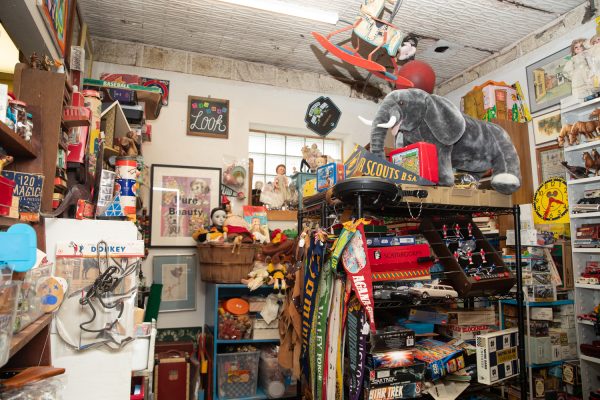
These alternatives are no longer stigmatized as they were 20 years ago, but rather celebrated. Today, buying secondhand is viewed as cool, cultured, and thoughtful. If I ask someone where they got something, and they say Aritzia, I think, “Oh, nice, you spent $80 on sweatpants.”
When someone says they thrifted something, though, I think, “Oh, you’re cool and have good taste.” Whether you like shopping in person or online, buying second-hand has options for all shoppers. From cool thrift and vintage stores to online websites such as ThredUp and Depop, secondhand shopping has become easily accessible.
Buying secondhand is not only generally cooler, but also more environmentally friendly. Fast fashion feeds climate change by producing massive amounts of waste, pollution, and carbon emissions driven by rapid and low-quality production. Choosing to shop secondhand over brand new may feel small in the grand scheme of things, but it is a meaningful way to push back against the system.
Gen Z is largely responsible for the increasing popularity that thrifting and buying secondhand have received. I asked my music writing class what their thoughts are on buying secondhand, considering most of them thrift.
In my class of 17 people, 13 of them said they prefer thrifting to buying brand new, 14 if I include my professor, Julia Conrad.
Parker Field, a second-year UI student, said he finds all of his best stuff secondhand. He added that the pieces he found at thrift stores tended to be more unique.
Eleanor Ginsberg, a UI student, echoed Field’s opinion.
“Buying secondhand is infinitely cheaper than buying brand new, and it’s so much more ecologically sensitive,” Ginsberg said.
The few that disagreed had strong opinions against thrifting. Nate White, a UI student, said because he is so tall, it’s often harder to find clothes that fit him right.
“I prefer buying brand new because I can buy clothes knowing they will for sure fit me,” White said.
“I didn’t grow up around secondhand stores or cool vintage shops, buying brand new clothes just feels more reliable,” Cali Weber, an Iowa native, said.
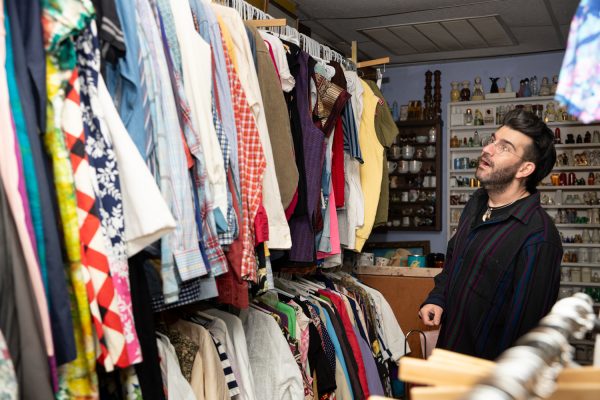
I also spoke to another student, Avery Fricke, who is getting married this May. She told me all about how buying secondhand has been her saving grace for her wedding.
“To buy new for every event, it would have cost us thousands,” Avery said. “I have always loved thrifting, I think it’s the process of finding unique items that no one else has that feels so fun to me.”
She said she prefers thrifting because it’s nice to know she isn’t producing as much waste and is a believer in passing down items to family or friends.
Fricke said she values creating a wedding she can feel proud of and also secure in the fact that she saved money and did not contribute to the growing problem of climate change.
In my opinion, buying secondhand is superior to buying brand new. I can understand needing to buy brand new for a tall pair of jeans or a new pair of sneakers, but if you’re looking for a cool flannel, head to the thrift store and find one for $5 rather than a retail store that will sell you a polyester one for $80.
Revival, in downtown Iowa City, does a fantastic job at meshing both secondhand and brand-new clothes. Their store includes secondhand items, from Burberry boots to Old Navy t-shirts and everything in between. They also sell brand-new retail items from eco-friendly brands such as The Blank Lab and Baggu.
There are many other great secondhand stores in the Iowa City area as well, such as Second Act Vintage, Ulysses Modern, Ragstock, Goodwill, Salvation Army, and Wonderland, just to name a few. There are also seasonal flea markets that happen in Iowa City.