


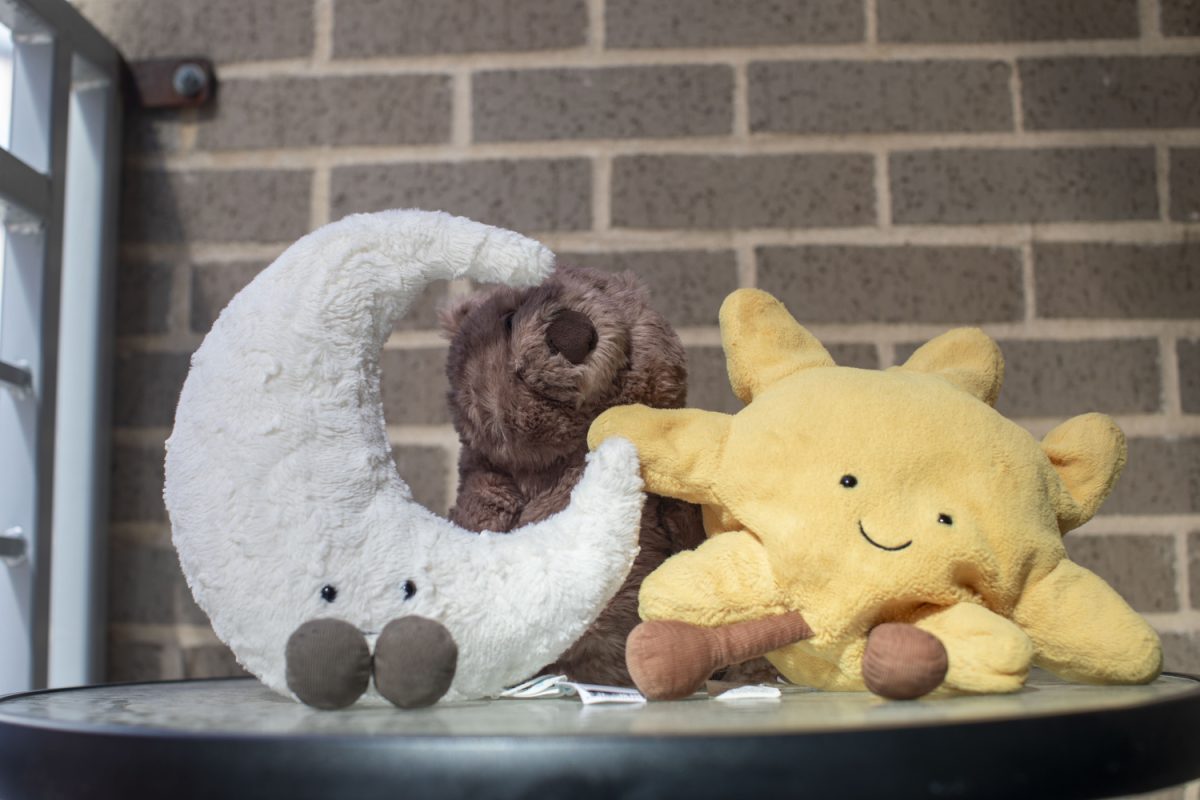
I, among countless others, am a 22-year-old girl graduating from college in a month — and I have way too many stuffed animals. My journey with stuffed animals began my first year of college, thanks to my roommate, who introduced me to Jellycats.
She had three at the time, and I remember being so confused about the appeal. What was with the obsession with stuffed animals at 19 years old? However, everything changed that year when she gifted me one for my birthday.
Suddenly, all my doubts disappeared, and I became obsessed. One Jellycat turned into five, then 10, and so on. Although Jellycats became a guilty pleasure for me, I occasionally questioned my own enthusiasm.
It was during one of these moments, while scrolling TikTok, that I saw a user with over 200 Jellycats. Yes, you read that right: 200.
My small collection seemed minuscule in comparison. This made me realize that young adults, mostly women, have transitioned from collecting buttons and seashells to a much more expensive and youthful product: Jellycats.
The Jellycat brand was established in London in 1999 by brothers Thomas and William Gatacre. Their goal was to create soft toys that would be considered “luxurious” and stand out from other stuffed animals. The brand is known for its fun and often humorous designs, such as the egg with glasses or the little peanut — my personal favorite. By the mid-2010s, Jellycat transformed from a niche British brand to a global phenomenon and obsession.
Jellycats have become a cultural sensation. From Jellycat cafes, Jellycat gift exchanges, and Jellycat collectors, these stuffed toys are inescapable. It became a trend on TikTok to get together with friends and do a white elephant gift exchange with Jellycats. Except, instead of a silly product you can find at Walmart for $15, it’s with $30+ stuffed toys.
The obsession stems from a longing to go back to adolescence. There is a nostalgia people feel as they grow up, often wanting to go back to when life was simpler — when toys were our most prized possessions, and we had no responsibilities. Jellycat lets young adults feel childish again.
I talked to some friends and classmates, and 16 girls said they had more than one Jellycat. Some favorites among them were the amuseable pickle, the raindrop with rainboots, albee bee, the smudge monkey, and the aforementioned peanut with legs.
Whether crowding our beds or sitting on a shelf, Jellycats have become a part of who we are. When I see the mini Bartholomew bear, I think of my friend Anusha. When I see the orange octopus, I think of my friend Sydney.
These associations have become a part of our identities, and how we want people to perceive our more playful sides. There is a fine line that people are walking with their Jellycat collections — the girl with over 200, but what’s the harm in a few? They provide comfort and joy, and in a world where it’s hard to find either anywhere, Jellycat provides both easily.
Maybe the rise of Jellycats isn’t as strange as it seems. In a world that feels increasingly stressful and uncertain, it makes sense that people are reaching for comfort wherever they can find it — even if it comes in the form of a plush avocado or a smiling moon.
What looks like a childish trend might actually be something much more human: a desire to feel nostalgic and just a little bit lighter. I used to question why anyone our age would want stuffed animals. Now, I don’t really question it at all. Somewhere between my first Jellycat and the ones that followed, I realized they weren’t just toys; they were comfort, personality, and a small way to make adulthood feel a little less serious.