


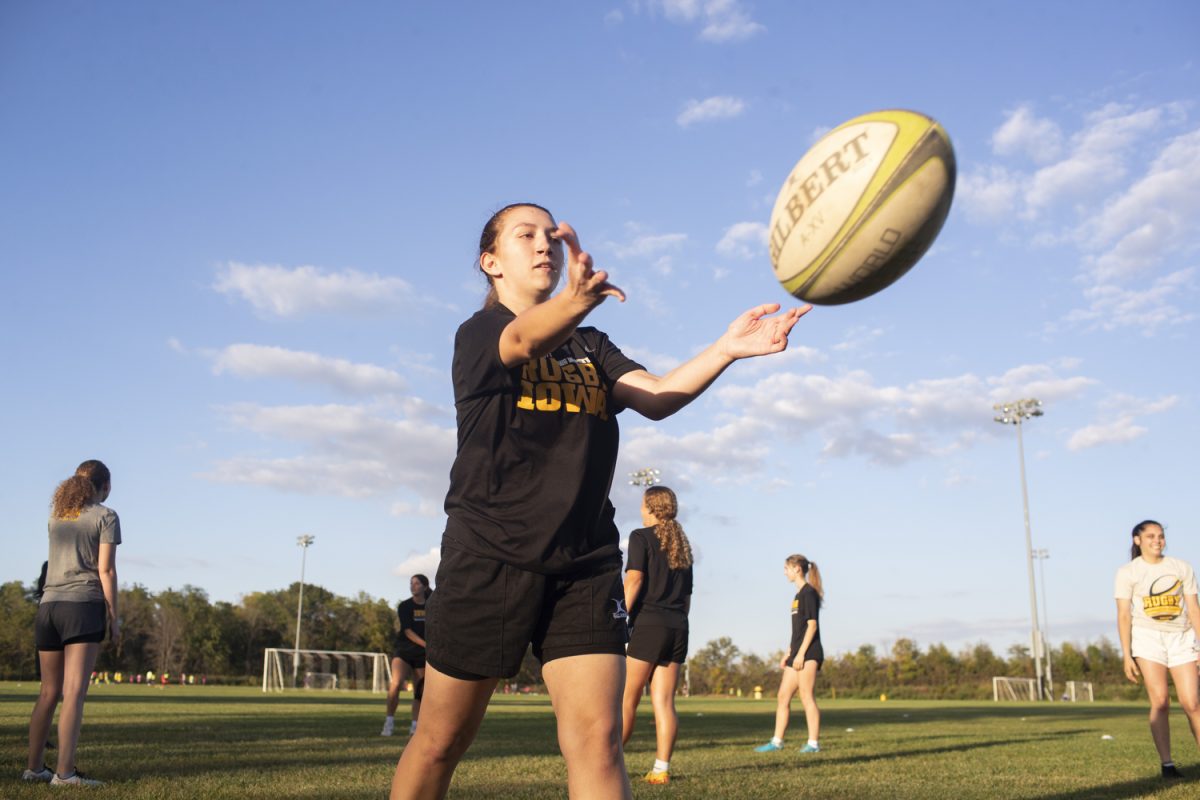
The University of Iowa has 22 varsity teams that compete in NCAA Division I, eight men’s and 14 women’s programs. Sports like football, wrestling, basketball, and others attract thousands of spectators and earn millions of dollars for the university.
The path to becoming a college athlete, however, is a long and tedious one, with only about one in 13 high school athletes committing to play at the next level. For many who played sports in high school as well as others looking for community, involvement, or physical activity, club sports at Iowa provide a solution.
Hawkeye students have access to 41 club teams on campus. These range from more traditional sports, such as softball, baseball, and volleyball, to unique groups like shooting sports, Brazilian jiu-jitsu, and triathlon.
“We try to offer something for everyone,” Matt Schaefer, Iowa’s assistant director of sport programs, said. “While the most popular sports are sports like basketball, soccer, and baseball, not everyone has an interest in those activities, so having a huge variety, hopefully we’re capturing more students that we otherwise wouldn’t.”
It’s not just the school that benefits from more student organizations, but the Hawkeyes that make up those organizations, too.
For sophomore Scarlette Rahman, club tennis at Iowa has provided both a social scene and a way to stay in touch with her sport.
“I really love the social aspect of it,” Rahman said. “I made so many new friends from this team, and you get to travel to all these different colleges, meet new people, have these different experiences.”
Rahman also expressed the idea that playing club sports in college is a good way to keep students, many of whom no longer play for a varsity team, active on campus.
“I think a lot of times, people forget about the sports that they used to do in high school,” Rahman said. “Having club sports at college really just keeps you active and engaged with the sport that you used to play.”
Participating in club sports also provides access to mentorship from older students and the coaching staff involved with these programs, such as Tyler Dailey, the head coach of men’s rugby since 2018.
“I think a lot of college students, when they get out of the house and get away from family and get away from that high school structure, it becomes pretty difficult for them to stay organized,” Dailey said. “It’s good for them to have something that they can get involved in.”
For Dailey, joining one of these clubs also educates students on the nature of sports that they may not be familiar with or have had exposure to.
“I think there are a lot of misconceptions about the dangers of rugby, and people think that it’s ‘football without pads,’” Dailey said. “It really couldn’t be further from the truth. Rugby is a very structured game, and it’s one that, if people are willing to work hard and be resilient, can actually teach you a lot of life lessons.”
Junior Emily Schriever serves as the president of the Iowa Figure Skating Club, to which she has attributed similar themes of community and engagement.
“I think having clubs, both athletic and non-athletic, is a great way to find a sense of community and find your own people,” Schriever said. “Nine times out of 10, a lot of them can be lifelong friends that you have for a long time.”
Schriever also noted how being president of a club has allowed her to make new connections and explore unfamiliar settings.
“One thing that I have gotten from being in the club over the years is being able to learn to communicate with others and get outside my comfort zone and talk to people,” Schriever said. “I’m kind of an introvert, but being in a club has forced me outside of my comfort zone to get to talk to people and get to know people in my club setting.”