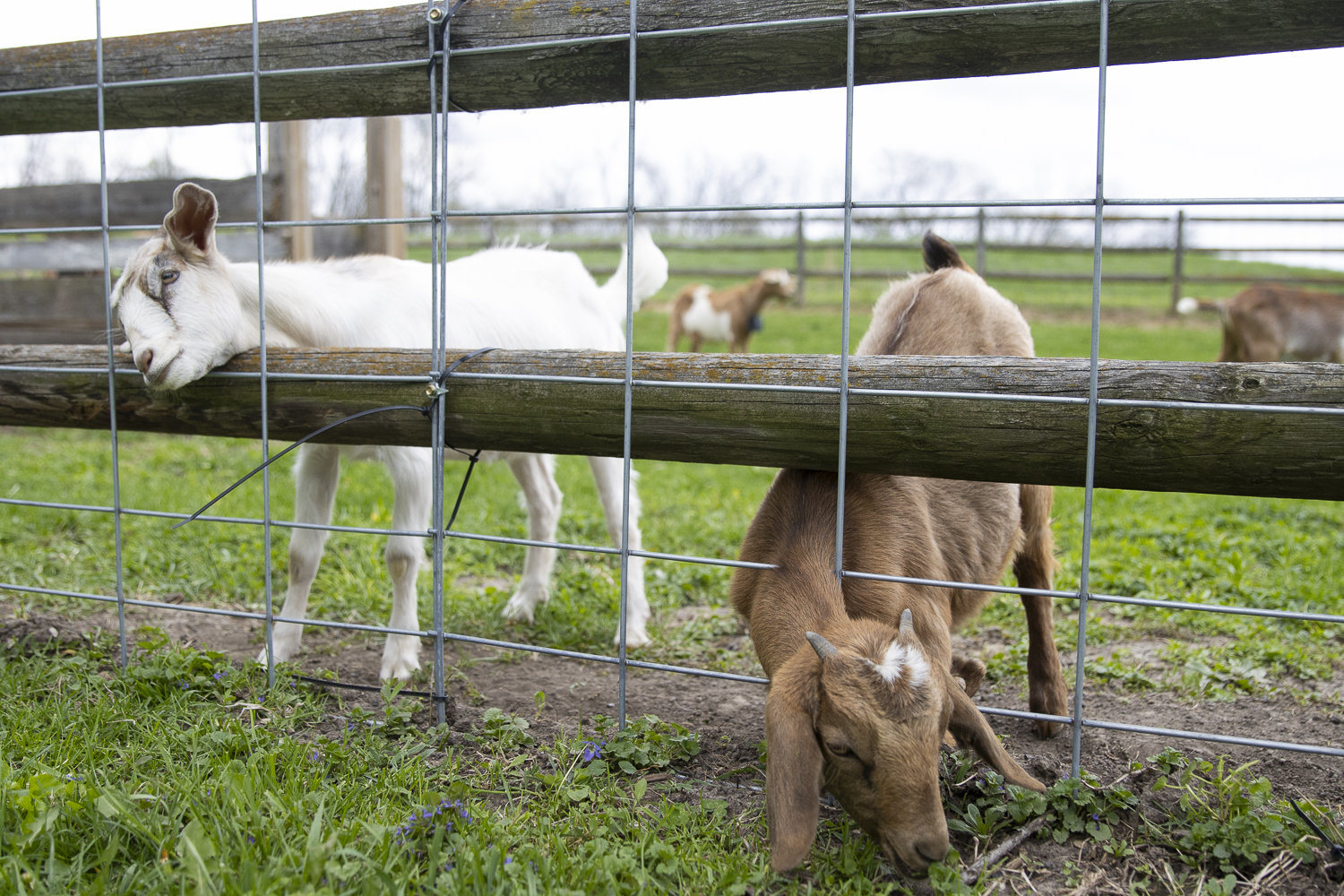


In the middle of Iowa’s burning season — when controlled burns are used to reduce wildfire risk from mid-March to May, according to the Iowa Department of Natural Resources — Johnson County residents are using an unorthodox supplementary tool: a herd of goats.
Many residents have been calling on Go-At It Land Stewardship goats to graze on their property to reduce wildfire risk, resetting the landscape much like a controlled burn.
The need for wildfire prevention was especially highlighted this season when a fire broke out south of US-218 on Feb. 18. It was estimated to have covered 500 acres and spread 3.5 miles before it was put out, according to Johnson County Conservation.
Tamra Elliott, who runs Go-At It Land Stewardship with her husband, Ryan Elliot, said she wasn’t expecting to receive so many calls from residents specifically requesting the goats for wildfire prevention.
Elliot said Go-At It provides free consultations for residents interested in using the service, after which she provides a quote based on the size of the site and the management goals of the owner.
Elliot said Go-At It began in summer 2025 and has yet to compile the number of clients requesting goats for wildfire prevention.
“It was very surprising how many people are now kind of thinking outside of the box, saying, ‘We need this burned, this is becoming a pretty bad situation here, so let’s try the goats. What can the goats do?’” she said.
Elliott said goat grazing is not tied to a strict fire season but instead follows plant cycles, with much of the prairie and fuel-reduction work happening during the dormant months before spring growth.
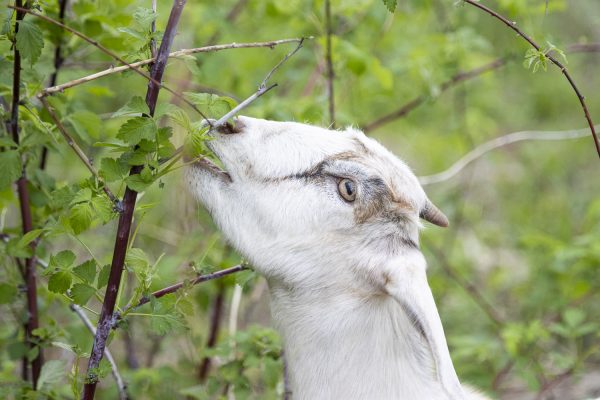
Elliot said the goats reduced wildfire risk by grazing and trampling overgrown vegetation with their hooves, breaking up built-up plant material so it decomposes faster and doesn’t accumulate as dry fuel.
The goats also leave behind a natural parting gift, using their feces to add carbon to the soil and improve nutrient cycling.
Elliot said the goats’ grazing and “foot action” help not only prevent wildfires but also aid Iowa’s dwindling prairies by opening space for new plant species to grow.
“It really does do the stimulation for your prairies and your other ecosystems that we haven’t really considered bringing into the management,” she said.
Elliot said historically, people have thought of goats as only being useful for grazing shrubs but are now seeing their broader applications as controlled burns become harder to schedule around bad weather.
“It’s hard to get your prescribed burns through because the weather is getting so erratic lately,” she said. “It’s too harsh, or it’s too wet. This is something that you don’t have as narrow a window, and if you are concerned about the amount of plant death, this is a great way to get that under control.”
Brad Freidhof, the director of Johnson County Conservation, said the goats help replicate historical grazing patterns that have been lost due to declining populations of bison and elk, and because animals such as chickens and hogs are now raised indoors.
“Returning the goats to the landscape gives them a replacement for prescribed fire,” he said. “ In some places, a prescribed fire is not applicable because of smoke management or infrastructure. Goats are actually the best mechanism to control and help care for the landscape.”
Freidhof said the goats are another tool for wildfire prevention, not a complete substitute for controlled burns. He noted that the grazing method is time-consuming and sometimes requires subsequent visits to apply growth chemicals.
He said Johnson County will need all the wildfire-prevention tools it can get, as climate change and dangerous human practices, such as burning trash, increase the risk of wildfires across the state.
“With these extremely dry conditions and high winds that we’re now seeing across the state, those are the things that are driving these wildfires that we’ve never seen in Iowa in the past,” Freidhof said. “Yes, wildfires have happened, but not to this extent.”
Caitlin Savage, a client who uses the goats for her property in Cedar Rapids, said the goats have been helping manage her prairies and filling her empty horse stables with an entertaining amount of chaos.
“It’s really fun because the goats are all really friendly, and they all have their personalities,” she said. “It’s nice to have the goats there and on the property and in the pasture where the horses used to roam.”
Savage said the goats put less pressure on her to conduct prescribed burns every year, which, while preventing wildfire risk, wouldn’t give the plant life adequate time to grow.
“It’s been really nice since some of those areas that we weren’t able to burn this year and have been holding off for a year or two, the goats have been able to come in and decrease the dead material lying on the ground, so that it’s a little less of a wildfire risk for this season,” she said.
Elliot said climate change will create incentives for people to adapt in every possible way to prevent wildfires, especially by not hesitating to call for the goats at Go-At It Land Stewardship to come to aid.
“This is something that I think will have a growing popularity,” she said. “Doing the fire prevention in Iowa, that’s something we did not expect to be applying it for, but we found that it has been very successful.”