
The shape of politics today would be unrecognizable 10 years ago. This might seem obvious, but being able to adapt to the changing tastes and desires of the public is an essential part of successful politics. Perhaps someone should tell Gov. Kim Reynolds the obvious. Often the least popular governor in the U.S., Reynolds failed to lead changes that would push Iowa forward, instead focusing on loosening child protection laws and opposing mask mandates.
During the COVID-19 pandemic, her approval rating was at an all-time low of 26 percent, while other governors were in the upper 40s. It is no surprise that she is done with politics. What is a surprise is that we now have candidates who have strong plans — and personalities — who are ready to push Iowa forward.
“Someone who is actually going to have interests in mind, put in the work. Not just ride off the coattails of other politicians,” Aiden Rosek, of Cedar Rapids, said.
Iowa has a fairly bipartisan history until recent years. I believe that the average Iowan is too reasonable to engage with cutthroat party politics and is more interested in sensible policies that improve their lives, which many candidates are now focusing on, honing in on specific policies with solid improvement plans.
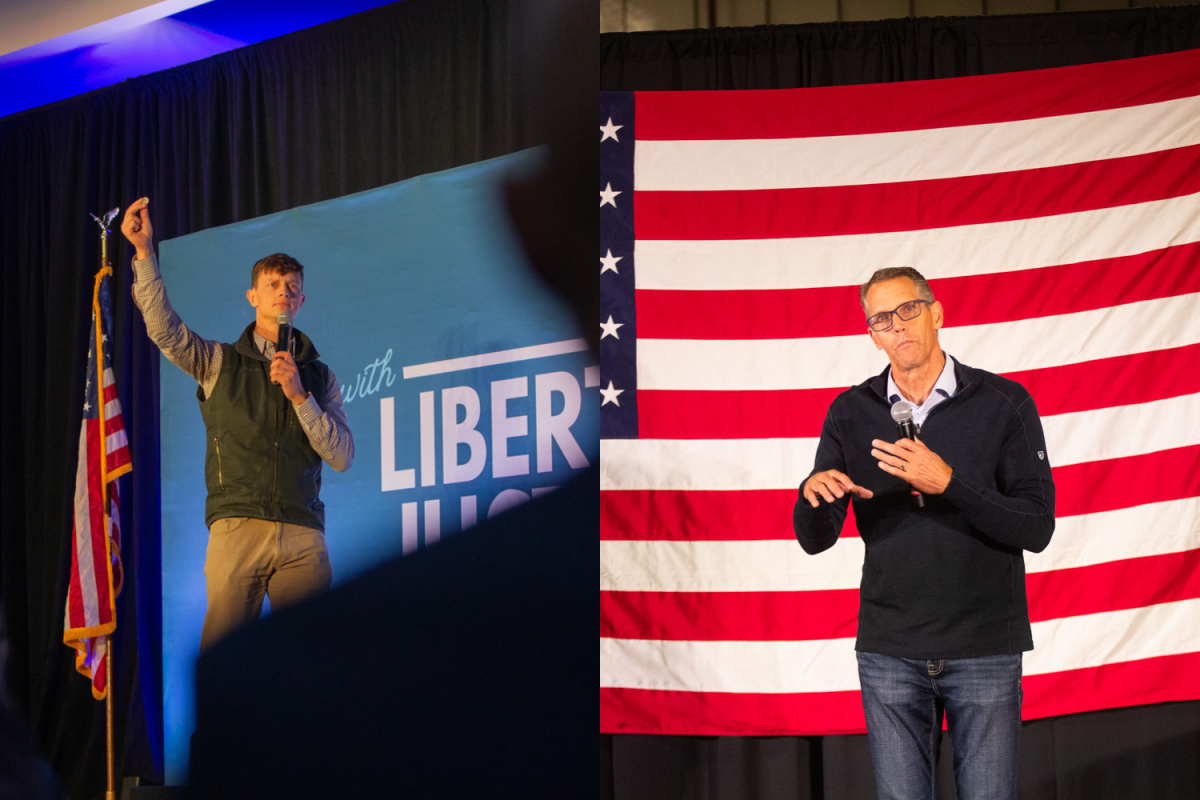
The GOP front runner, U.S. Rep. Randy Feenstra, R-Iowa, is one example. He sees that Iowa agriculture is lagging behind, being too dependent on soil alone and lacking infrastructure. He then supported the Fortifying Refrigeration Infrastructure and Developing Global Exports Act, or FRIDGE Act, which invested in port infrastructure to facilitate trade between the U.S. and its partners, strengthening bonds and ensuring Iowa has a good reputation overseas. Iowa has a strong agricultural economy, so a plan to invest in it sounds sensible to me.
Now compare that planning with Zach Lahn. Lahn is a less orthodox Republican, who has focused on tackling the health crisis plaguing Iowa, which has the second highest cancer rate in the nation. While also pleading to fix education, and “fight for our birthright to own the ground under our feet,” noting that 25 percent of Iowa’s soil is owned by out-of-state investors. It is unclear how detailed Lahn’s plans are, but at least his website is a blast to read.
The only Democrat running, Rob Sand, has more fleshed out strategies, focusing on increasing transparency and government efficiency after 10 years of one-party rule in Des Moines. With proposals including strengthening the Auditor’s Office, banning elected officials from trading stocks, and increasing transparency for school vouchers programs. As a lawyer and state auditor, it is not surprising that he understands how to develop practical political plans.
At the end of the day, what matters is that Iowa has stagnated for too long. Those familiar with farming in Iowa know that wetlands once covered much of the state. When unmanaged, water rises and lingers, killing crops and making the land unusable. Similarly, when politics becomes too comfortable, it harms the state.
Politicians stop feeling the need to act or to work to protect our interests. That is how we end up with the worst economy in the country, bottom-half education, and a shrinking workforce. It makes me very happy to see that there are candidates who see that inaction is a death sentence, and are willing to put in the effort to plan new ways to give Iowans what they deserve — a good state.
Pay attention to the gubernatorial elections. Take a little bit of time off your day to some of the candidates, and a little bit more time to go vote. We are on the edge of change, and hopefully, it will be for the best.