


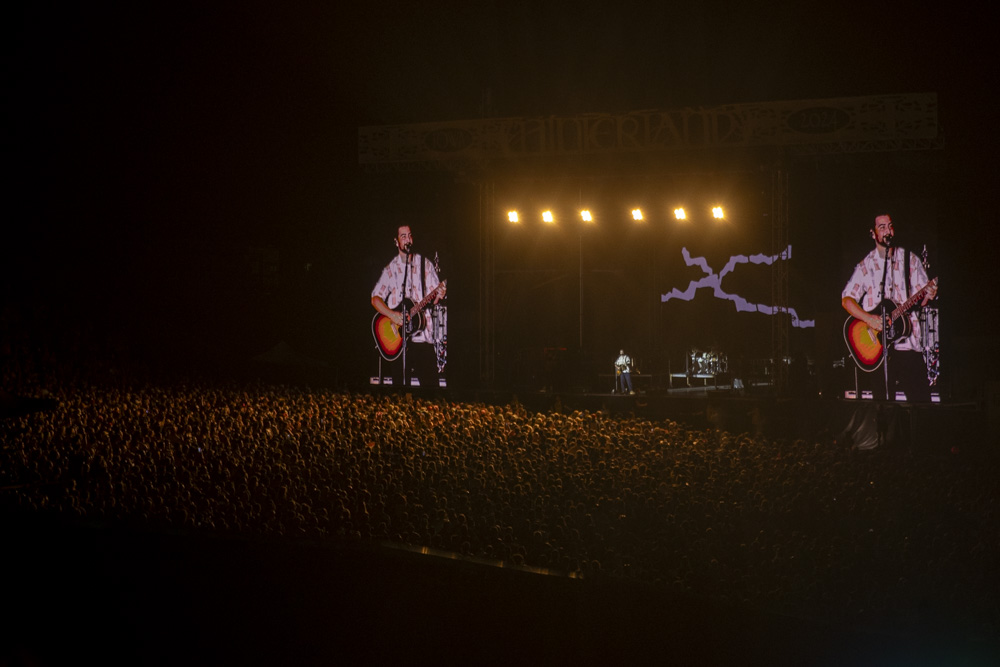
“The Great Divide” is a new album by American singer-songwriter Noah Kahan. The album, released on April 24, marks Kahan’s first major release since his 2022 hit album “Stick Season.”
Kahan is known for enhancing his hit songs such as “Stick Season,” “Northern Attitude,” and “You’re Gonna Go Far” with folk-rock-inspired instrumentation and deep lyrical storytelling. This style has been carried into the new album and even expanded with a few surprises in certain songs.
Kahan delivers many folk-rock songs, which also include country-inspired instrumentation, in the new 17-track album.
The first song, “End of August,” is a mellower song that builds momentum for the impending tracks that follow. The song includes piano rhythms and double-tracked vocal harmonies to create a vibrant sound, setting the tone for the instrumentation and themes explored throughout the rest of the album.
Many of the songs on the album begin with intricate guitar fingerstyle rhythms, highlighting Kahan’s musical talent and establishing the distinct rhythms of each track.
A few songs like “Willing and Able” and “Downfall” have elegant guitar rhythms that may often feel similar but give each song its distinct sound.
Many of the songs explore deeper themes of relationship difficulties, struggles with immense fame, and personal struggles.
“The Great Divide” is one of the lead singles of the album, and a major highlight of Kahan’s newest work. The lyrics “I hope you settle down, I hope you marry rich” and “you inched yourself across the great divide, while we drove aimlessly along the Twin State line” represent someone adapting to new changes in life and persevering through personal guilt.
RELATED: Review | ‘Noah Kahan: Out of Body’ is a deep look into singer’s life and career
“Porch Light” is another single released before the album. This single dives into the theme of relationship difficulties, with the lyrics “I ain’t holding breath, ain’t holding any faith at all, and I’ll pray for you, be in pain for you, I’ll leave the porch light on” representing a potential healing process of a fractured relationship. During the final chorus, there is a banjo mixed with the guitar rhythm, as well as harmonies and escalating strings that elevate the emotion of the song.
“Haircut” is another great example of a track that is enhanced by Kahan’s intricate lyric writing. The lyrics “I’m happy for your haircut, I’m glad you got your act together” and “you’re showing up like bad news and leaving like a bad dream” are excellent lyrics that build the theme of self-exploration and uncertainty about life.
The song “Dashboard” includes interesting lyrics such as “the world just restarts, like the clock just resets, like we all just move on, like we all just forget” and “just when you think that the roads straight ahead is when the devil shows up on your dashboard again.” This song is elevated by its upbeat drum beat and pleasant vocal harmonies, and explores the theme of trying to move on from past difficulties and find a new path in life.
While “The Great Divide” has songs with nice instrumentation and intricate lyrical storytelling, a few songs fall noticeably short of others in terms of quality.
“Paid Time Off” is one example of a filler song that does offer country-inspired instrumentation but similar lyrics to the other tracks.
Another, called “Headed North,” has a combination of guitar strumming and fingerstyle patterns but has inferior lyrics, making it a more conventional song that provides the usual Kahan sound.
The album ends with the song “Dan,” a pleasant song that invokes a sense of nostalgia and longing to reconnect with old friends and acquaintances.
The final lyrics, “let’s talk about high school and talk about death, before the moment tries to disappear, don’t the sky look pretty up here?” end the album on a satisfying note that reminds listeners of the songwriting talent Kahan uses to invoke various emotions in listeners.
“The Great Divide” delivers a variety of slow-paced and upbeat songs that have nice instrumentation and explore various themes of self-exploration, nostalgia, and personal struggles.
A few of the tracks may sound repetitive because of the conventional guitar rhythms or overlapping thematic development, but there are highlights throughout the album that Kahan fans and listeners new to his music can appreciate.