
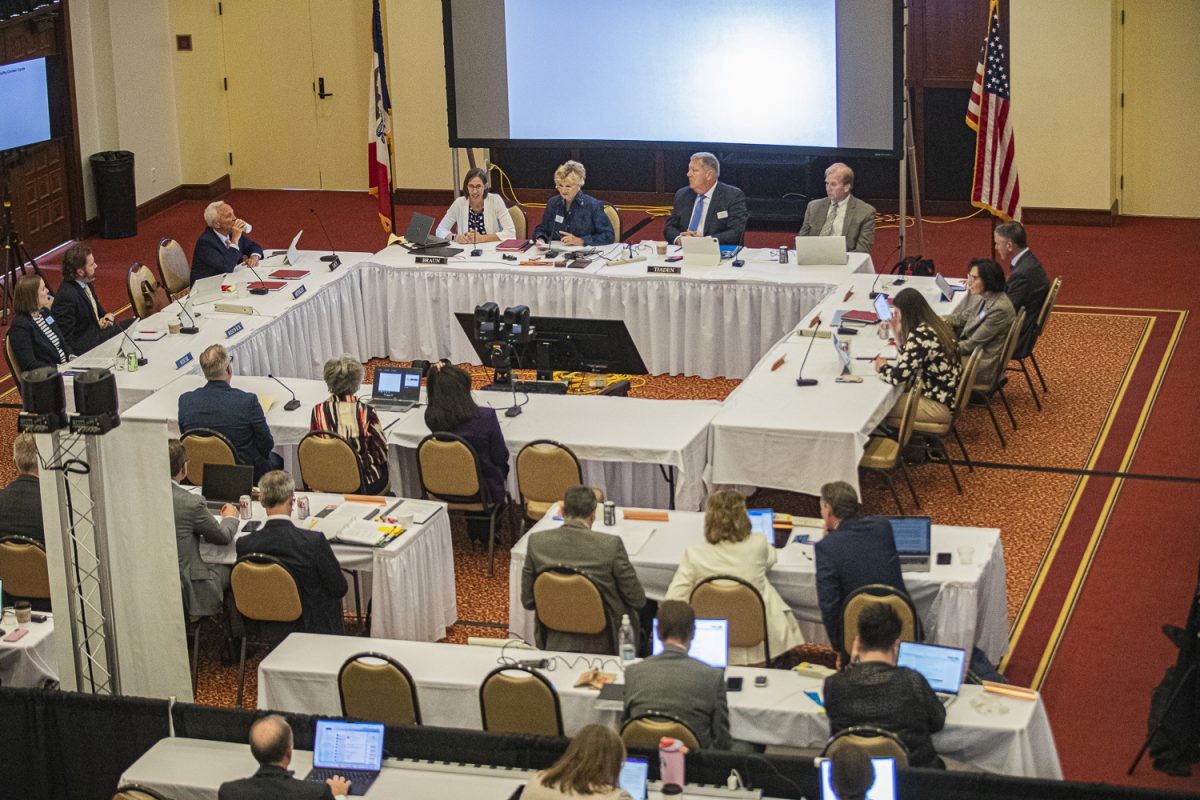
The Iowa Board of Regents approved a tuition increase, in a 8-1 decision, with Regent Christine Hensley in opposition, , for in-state students at Iowa’s three public universities by 3 percent during its April 23 meeting.
The decision also includes a 1.5 percent tuition increase for out-of-state University of Iowa students and a 3 percent increase in the cost of mandatory fees for University of Iowa students.
The increases will take effect for the 2026-27 academic year, which starts on Aug. 24. The approved tuition cost, with mandatory fees included, for University of Iowa students’ will be:
- $11,622 for in-state undergraduate students, a $349 increase
- $34,247 for out-of-state undergraduate students, a $537 increase
- $14,244 for in-state graduate students, a $415 increase
- $33,295 for out-of-state graduate students, a $519 increase
Emily Cross, the University of Iowa Undergraduate Student Government Vice President and President-elect for the 2026-27 academic year, said she understands the rising costs in higher education and was appreciative of the 3 percent rate, the same rate as last year’s increase; however, for students, especially out-of-state students, the increase will greatly affect them financially during their time at college.
“While 3 percent might seem modest, the reality in that is these increases are not happening in isolation. They happen year after year,” Cross said. “For students, that means the cost of staying here doesn’t just rise once. It compounds. What starts as a few hundred dollars becomes thousands over the course of a degree.”
According to a 2025 report from the Higher Education Price Index,an annual inflation cost index for U.S. colleges, the inflation rate for U.S. colleges and universities was 3.6 percent, a 0.2 percent increase from 2024.
According to the board’s 2026-27 tuition and mandatory fees proposal, the tuition rate increase for in-state undergraduate students cannot exceed the average of the index’s last three fiscal year inflation index percentages. The existing three-year index inflation rate average is 3.7 percent.
Cross said tuition increases can lead to students working more hours, having less time for academics and campus involvement, missing out on beneficial opportunities, and relying more on student loans to afford college. “For out-of-state students especially, that burden is even greater,” Cross said. “We are already paying significantly more to be here, and while we choose Iowa for everything it offers, each increase makes that choice more difficult to sustain.”
Cross said her goal is to ensure the lived experiences of students are always a part of the conversation when the board makes financial decisions for the university.
“I’m proud to be here, and I’m proud to represent students in my role,” Cross said. “Part of that responsibility is making sure student perspectives are clearly heard.”
Regent Hensley said while she is sympathetic to the board’s efforts, she would vote no on the tuition increase because of prior conversations on affordability.
Hensley indicated at the board’s February meetings she did not approve of the board’s increases.
“What I really focused on was the gap, the tuition gap, and the fact that you are going to have students that have to incur way more debt, and we’re talking about wanting to make it affordable for the students here, so I have real concerns about a 3 percent increase,” Hensley said.
Hensley said there is uncertainty in tuition and funding, referencing an Iowa House of Representatives tuition guarantee bill that would cap the tuition rate for in-state students at Iowa public universities during their undergraduate career, as a factor for why she was against an increase at this time.
The bill now remains under unfinished business on the legislative calendar.
“We can’t continue increasing tuition every single year, and that’s what’s been happening,” Hensley said. “I just think that this is a year that we should have a pause and not have a tuition increase, even if there’s a feeling that you still need to move forward with a tuition increase, 3 percent is too much.”