


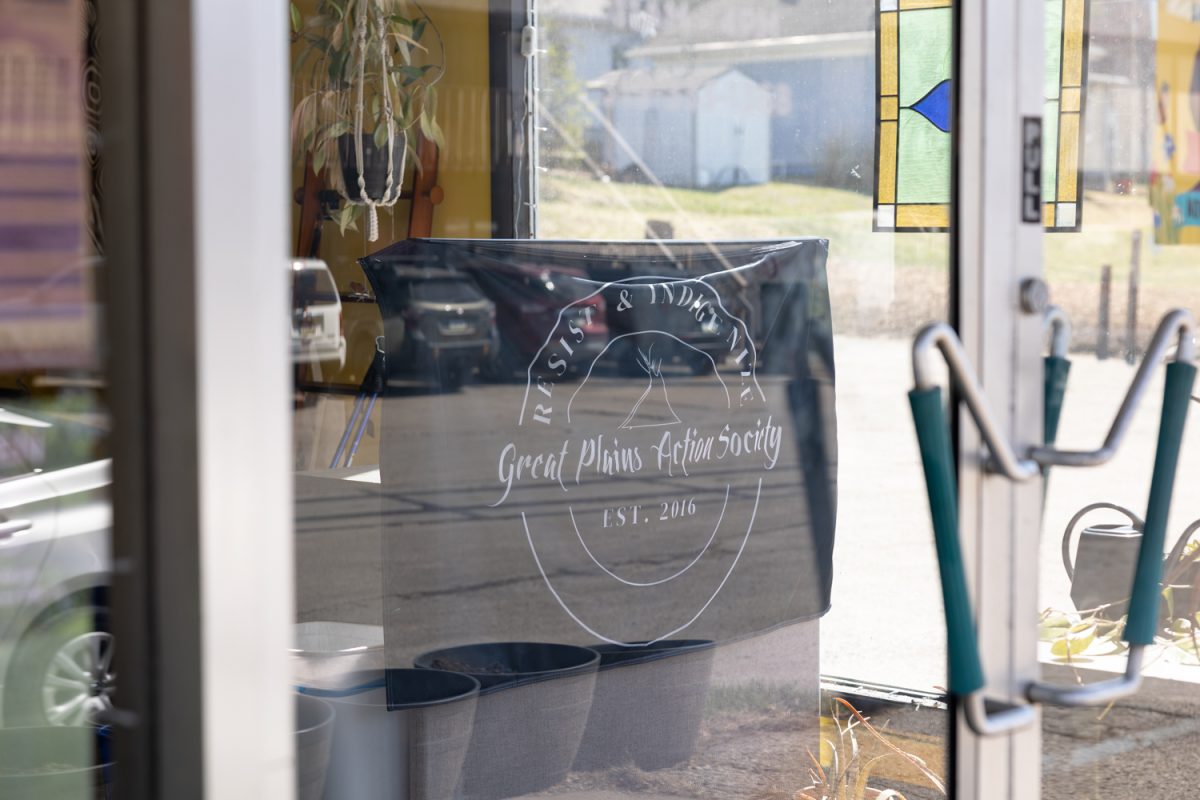
A community-centered development is taking shape in Iowa City, as Great Plains Action Society has begun transforming a cluster of properties into what organizers call a “Resilience Hub” focused on healing, mutual aid, and Indigenous leadership.
Great Plains is an Indigenous-led organization that fights for Indigenous sovereignty, land rights, and climate justice. The group was founded in 2016 and focuses on promoting environmentalism.
The one-acre project is located in the southside of Iowa City on 810 Maiden Ln. and will repurpose existing buildings into a multi-use space that includes a healing sanctuary, community gathering areas, an event space, and a mutual aid garden that will donate produce to nearby food pantries.
The project has been supported through a mix of fundraising efforts, private donations, and grants from other Indigenous organizations. Great Plains does not have an estimated budget or date of completion at the time of publication. While still in its early renovation stages, Great Plains organizers say the vision goes beyond physical infrastructure.
Founder and executive director of Great Plains Action Society Sikowis Nobiss described the effort as a “micro community” rooted in Indigenous values and designed to challenge economic and social systems.
“We can protest as much as we want, or we can try to build new ways of being in the world,” Nobiss said. “Using Indigenous knowledge, we hope that we can create economies based on compassion and justice.”
Central to the project is the concept of “rematriation,” which managing director of Great Plains Action Society Marie Krebs described as a return to matriarchal, community-centered systems.
Krebs said unlike traditional hierarchical structures, this model emphasizes shared responsibility and collective care.
“It’s a circular structure where everyone has a role,” Krebs said. “We’re community oriented, and we are responsible for our community.”
This philosophy will guide programming at the site, including a healing sanctuary focused on marginalized communities, land-based therapy spaces, and a garden that incorporates Indigenous “first foods,” including root vegetables, berries, corn, squash, and others.
RELATED: UI praised by tribal leaders for repatriation work and collaboration
“All food that comes out will be cooked in our space and given to the community or donated to community food pantries,” Nobiss said.
Organizers also plan to include a teaching kitchen, community event spaces, and an entrepreneurial “launch pad” program for the creation of
small businesses.
While the project is Indigenous-led, Nobiss emphasized it is open to all members of the community, with a focus on community engagement and building relationships. Nobiss noted many Indigenous people live in urban areas, making projects like this especially important outside of reservations.
According to the Urban Indian Health Institute, 71 percent of the U.S. Indigenous population lives in urban areas.
“We need to provide land to the marginalized, to the oppressed, and that is what we are doing here,” Nobiss said. “We are trying to provide people with new world views.”
Iowa City City Councilor Oliver Weilein said the space is also intended to create visibility and connection. In Iowa City, the Indigenous population in 2025 was 0.2 percent, according to census data.
“You don’t see a lot of Indigenous people because there is not a lot here for them,” Weilein said. “I see this as a way to provide people a place to heal, to have a space for themselves.”
Weilein, who attended the blessing ceremony of the site on March 22, said the project aligns with Iowa City’s broader strategic goals, particularly around resilience and equality. Weilein said he would like to see the city continue to support projects like this in the future.
The land blessing drew attendees from multiple Indigenous nations, including the Ioway and Omaha tribes. Weilein said the ceremony included prayer, a song in the Ioway language, and a shared meal.
“It was an atmosphere of joy and solidarity,” Weilein said.
Krebs said the timeline for the project is uncertain and largely dependent on funding, which has yet to be determined. For Krebs, the longer-term vision is rooted in how people interact with the space itself.
“When you come to our spaces, we’re not going to be policing you,” Krebs said. “We are all there together in community. Everyone is important, everyone is valued, and everyone has their role to play.”