


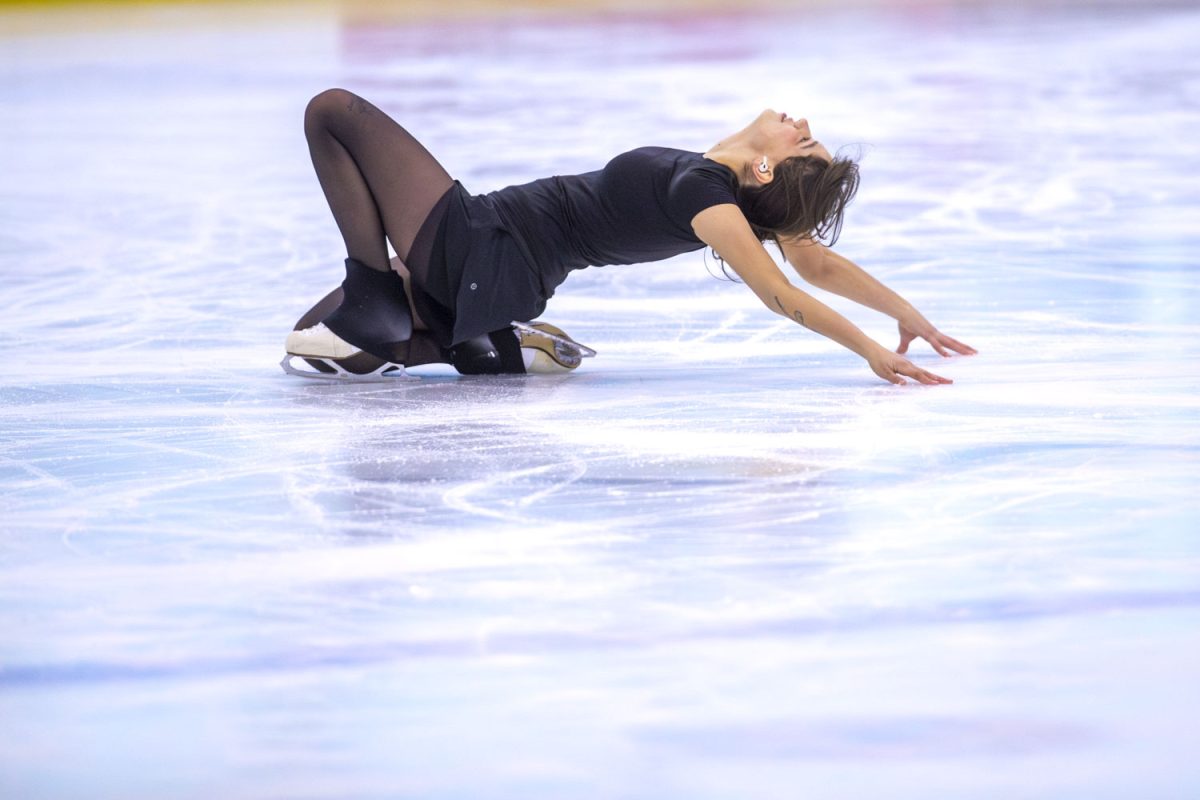
Few sports place a heavy focus on artistry alongside athletics. Ice skating meets both criteria, yet the sport does not have a major organization on the University of Iowa campus or in the state.
Figure skaters at the UI and across Iowa who wish to continue practicing their athletic skills instead turn to the Iowa Figure Skating Club.
Made up of five members — UI students Sarah Oswald, Peyton Webb, Lillian Losiniecki, Callan Dockry, and club president Emily Schriever — the UI’s figure skating club effortlessly combines athleticism and art in a state with limited skating resources.
Each member skated before college. Webb started when she was 4 years old. Oswald tried when she was 15, quit, and was convinced to try again in college by friends. No matter how they got into skating, the club members help each other out by being each other’s coaches.
Dockry and Schriever are the main coaches, having received instructor licenses through the Learn To Skate USA program — the official program used to register coaches for figure skating in the U.S. Being taught by peers in the figure skating world is out of the ordinary, however, Dockry and Schriever still strive for success.
For skaters with less experience, coming to off-ice frequently to train with Schriever and Dockry can help develop skills. Off-ice sessions are to practice jumps and core skills like balancing off ice in order to refine the skills for when they are applied on the ice. Oswald is one skater who frequents these practices.
“Starting her on some more jumps off ice probably helped her feel more comfortable getting them on ice. Since we don’t have a formal coach for the club, it’s just like a community effort,” Schriever said.
Despite the skaters coming together as a group to elevate each other, formal coaching is the ideal way of being taught. Unfortunately, for a club of their size, formal coaching is out of reach.
“I definitely think our club should continue with the community aspect of it,” Schriever said. “Yes, a coach would be ideal to have in the long run, it’s just that Iowa is not the biggest skating culture. So there are very few coaches. I’m the kind of person who’s really picky on the type of coaches we bring into the space because it’s really hard to find a good coach.”
The club president isn’t the only one to understand that hiring a formal coach is somewhat wishful thinking.
“Several of us do contract with different coaches,” Dockry said. “I think that has worked out pretty well since we’ve been able to find coaches that mesh with our kind of learning styles. But I do think the community aspect of us being able to correct each other has been really helpful.”
Like other club sports at the UI, graduated students have offered to coach the figure skating club from time to time. With Dockry graduating soon, she commented that it is no secret to the club that she is willing to take that position for the next year.
But even finding coaches outside of a skater’s regular skate time can pose a rather interesting dilemma. Living in Ames, Iowa, Ruby Johnson — who will be a freshman next year at Ames High school — has been dedicated to the sport all her life, with her mother coming from a skating background. Ruby, though, has noticed some qualms with the coaching culture in Iowa — the main one being the competition coaches have with each other.
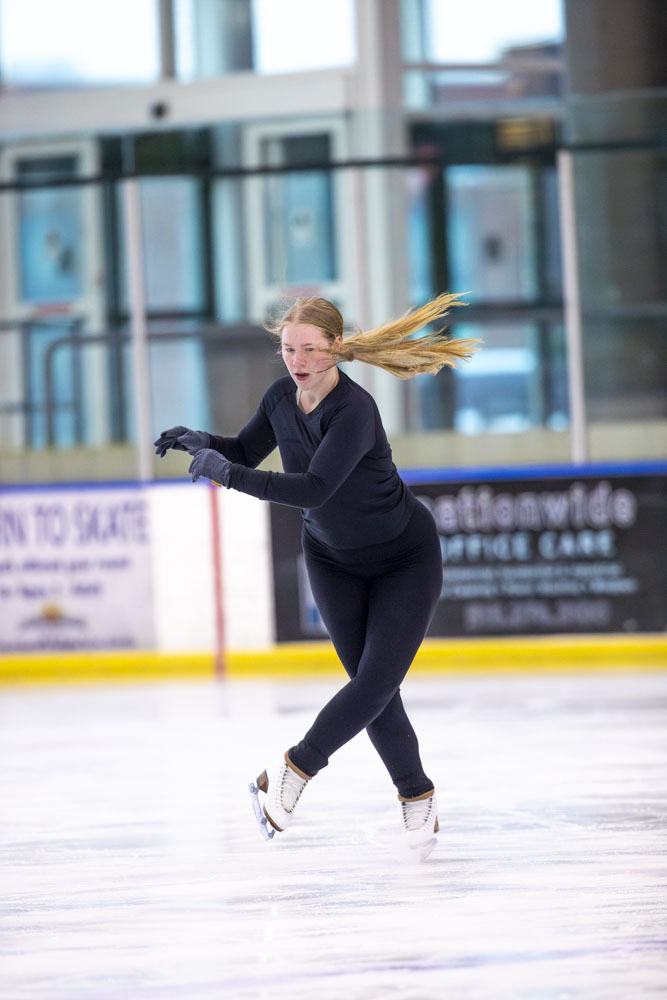
“We should be OK with a student having more than one coach. Most kids have only one coach, but no coach is actually able to teach everything. Think about it. In school, we have a teacher for English, a teacher for math, and a teacher for science. You don’t have a teacher who teaches it all,” Ruby said.
Overall, this observation became a reflection on the lack of skating resources in Iowa altogether.
“We don’t have as many coaches here, we don’t have as many skating times available, we don’t have as many resources. So because of that, I have to drive all around the state and even outside of the state,” Ruby said.
In describing her schedule, she mentioned how she has to often travel out of state to places like Chicago in order to have a more well rounded skating ethic.
“I drive down to Chicago,” Ruby said. “The way I started training there is that I got to a certain level where I can’t skate in Iowa anymore. I especially have to drive there to get custom fitted for skates.”
With most figure skaters starting young, the community that fosters figure skating becomes the backbone of the sport. So, compared to how figure skating is in a state like Illinois or Minnesota, which both have larger communities, the community in Iowa acts very differently.
“There definitely isn’t a big ice skating culture,” Oswald, the only member of the club from Iowa, said. “But I think it does let people have more of an opportunity to connect to each other here.”
The lack of ice skating culture in Iowa also leaves a sizable setback in what the club members can do. For the other members who are not from Iowa, they have noticed many differences in the culture.
“Most people [in Minnesota] have skated forever,” Dockry said. “There are rinks everywhere, and it’s super convenient to be able to go and skate wherever you want.”
This is in contrast to the Coral Ridge Mall, where the skaters spend most of their practice time.
Webb was keen to point out that the competitions the club goes to are laid out fairly similarly in Missouri, which is her home state. With practicing already being so different for much of the club, having some familiarity with how they compete gives less worries.
“It still has that lax feeling in which you feel like you can be friends with anyone. Like your fellow college competitors, I feel that if I talk to them, they wouldn’t be hostile. It brings a lot of joy back into the sport,” Webb said.
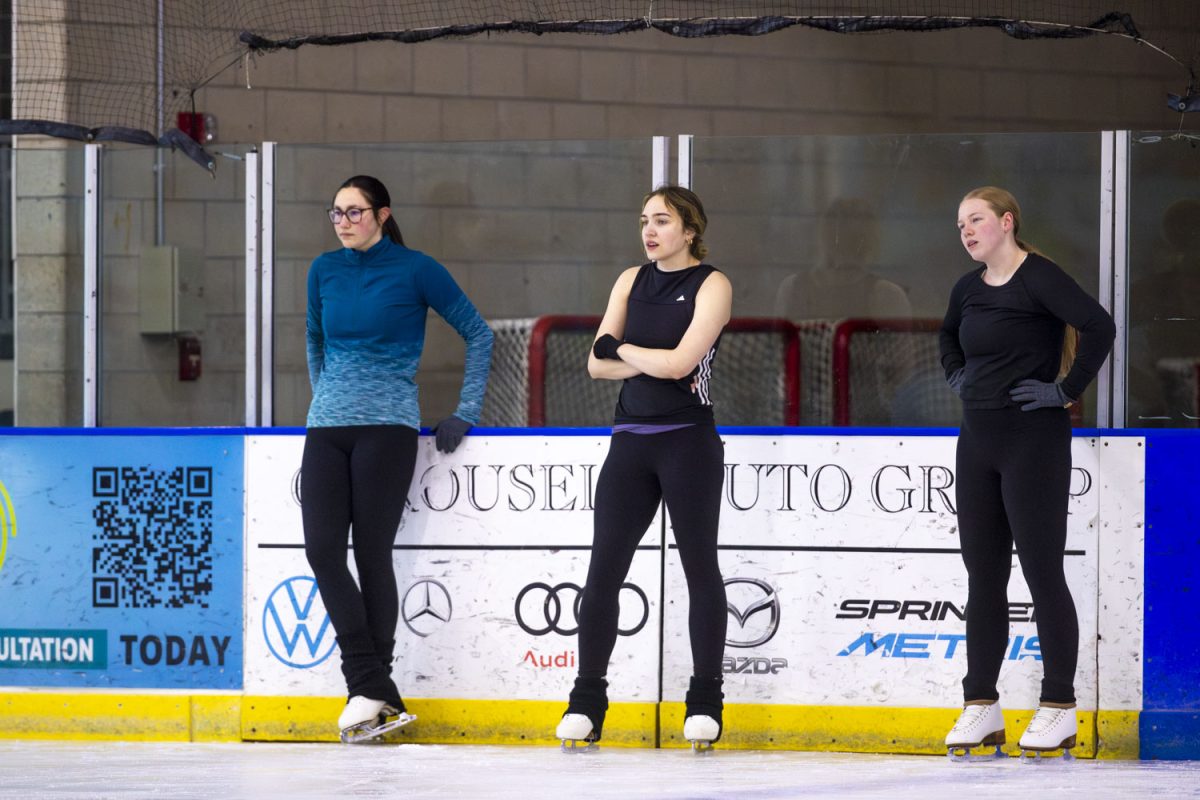
With limited resources, though, come limited places to perform at or even host a competition.
There are no large competitions in the state, so the skaters often travel out of state in order to showcase their skills to a wider audience. About a month ago, three skaters traveled to Texas for a competition. And on the weekend of March 13-15, all five traveled to Madison, Wisconsin, for another.
The competition for the group was cut short due to the weather on the last day, but many were able to perform.
For Losiniecki, this past competition was her second ever in her figure skating career.
“I was more aware of what was going on this time, and I wasn’t as nervous as of like, ‘where am I supposed to be? What am I supposed to be doing?’ I knew the structure of what was happening more,” Losiniecki said.
Her confidence built up throughout her solo on March 13. Skating to a string cover of “Skyfall” by Adele, her black lyrical dress flowed through her spirals, a light teal peaking through the top skirt layer. Losiniecki’s strongest move was her hydroplane, which included having both her feet point out horizontally in a line as she skated in a slight curve, bending herself backwards.
Periwinkle sparkles shone as Webb started her steps movement at the beginning of her own program as seen in a video of one of her solos, pushing her energy through sit-spins and spirals as she dazzled the audience.
Schriever, in her own royal blue dress, also competed and spun out axel after axel in her program.
All three skaters possess different skill sets, but each program shows what a group of dedicated athletes can accomplish on their own as a team.
Webb was unable to participate in anything other than the team event in the most recent competition due to injury. This, however, did not stop her from cheering from the sidelines, despite the disappointment.
“You lowkey just have to get over yourself and enjoy it for what it is. Just being there is just so fun. It’s fun enough in itself to cheer on your teammates and see them do well. That’s still worth going,” Webb said.
Their own teammates aren’t the only people to cheer the skaters on. In fact, parents are usually some of the biggest supporters.
Kevin Dockry is one of these parents. Through the years, he has watched the sport help his daughter evolve through thick and thin.
“We’re just really happy with what she’s been able to find with the Hawkeye Skating Club and with the people that have been involved. The school support, the camaraderie, all of it,” Kevin Dockry said.
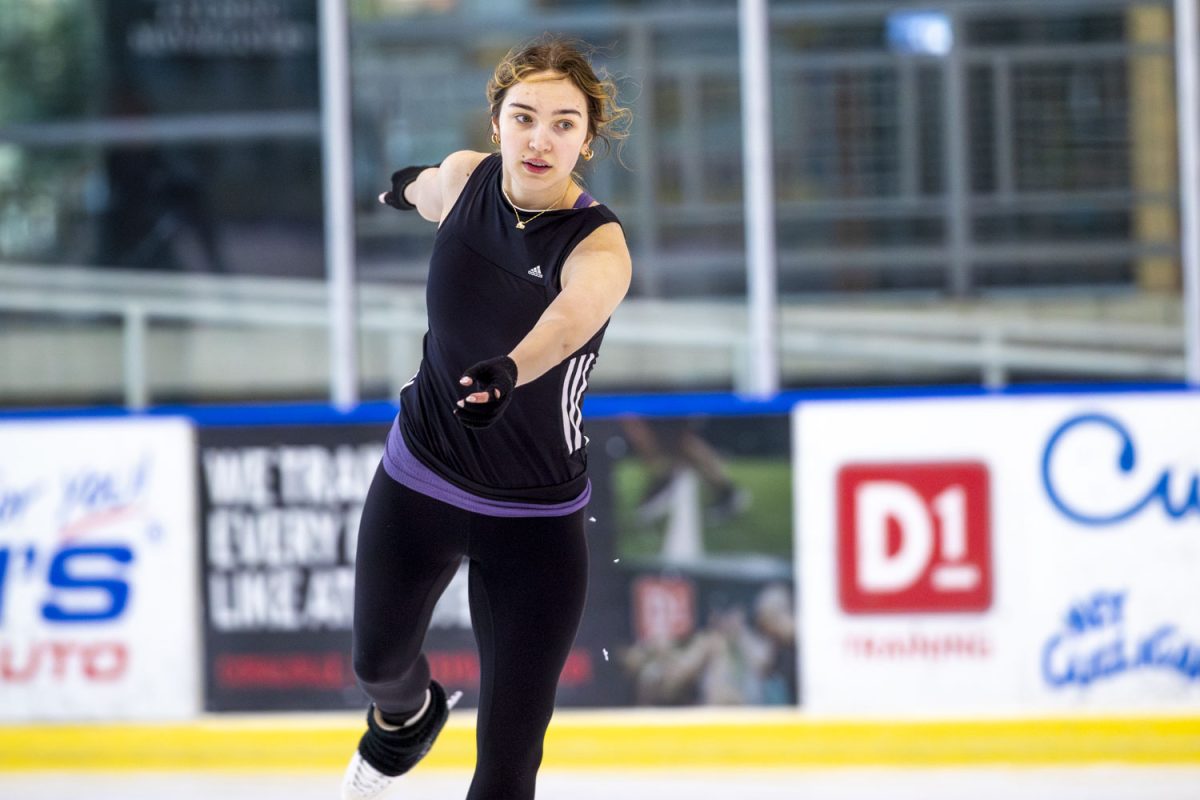
Dockry said the members of the club have learned a lot from each other over the years.
“For Callan, going from a kind of solitary sport then to college, and having a group of people pursuing and facing the same challenges, I think really brings people together,” Kevin Dockry said. “It brings self-confidence for them too as they move forward.”