


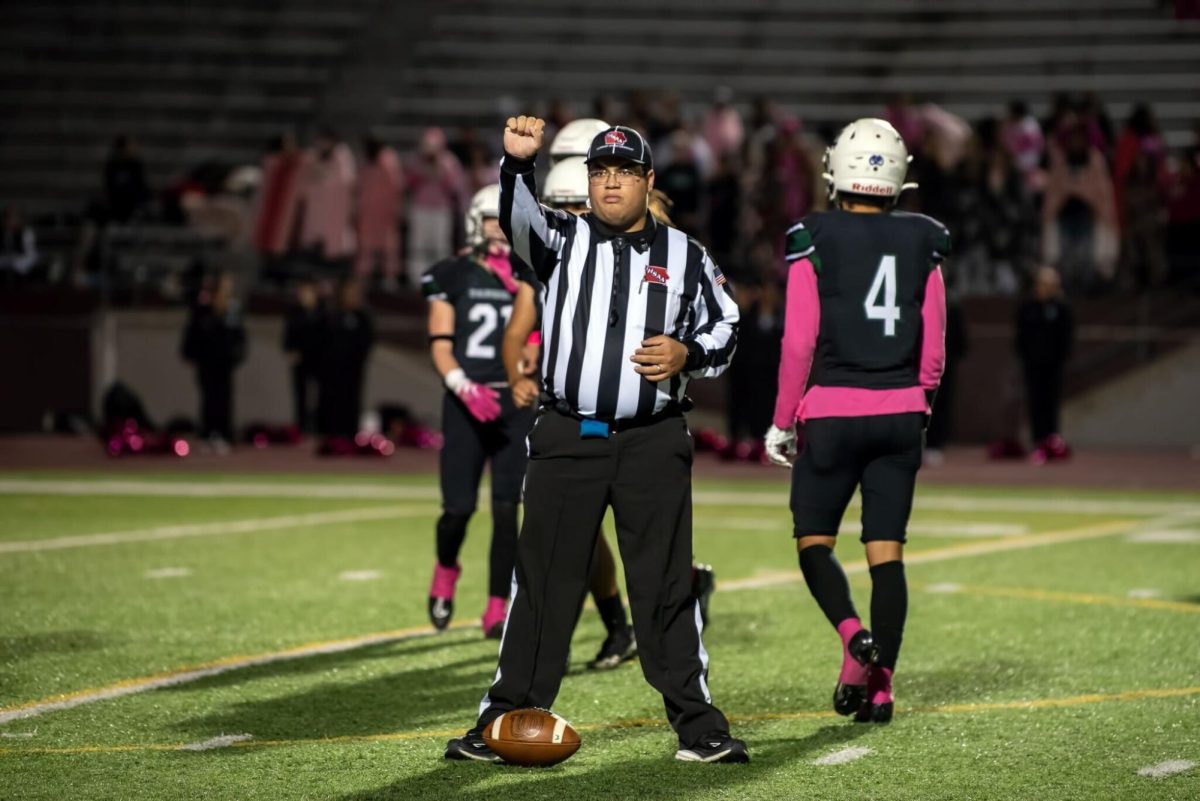
The stands are packed and the fans are roaring, then erupt into chaos as a miscalculated dribble turns the ball loose. Two opponents dive for it but they’re both half a second too late. The ball rolls out of bounds and a lightning-quick game grinds to a halt.
It’s hard to tell who knocked the ball free, even more difficult to decide who made the last contact, but somebody still needs to weigh in. The problem? One, there’s no video replay system at the high school level. Plus, the frenzied crowd in the stands will all insist that the other team, the one they aren’t rooting for, touched it last.
Enter the officials, also called the referees, who have the final say in what could decide the fate of an entire game and determine outcomes in the madness of March. This is oftentimes a part-time job that comes with benefits, challenges, and the highest standards of sound judgment.
“We hold our officials in very high esteem,” Iowa High School Athletic Association Executive Director Tom Keating said. “The games can’t be played without them.”
Keating, named executive director of the association in 2019, cited the officials as a crucial part of every game.
“At the end of the day, there’s one group that is charged with making sure that the game is within the rules, played on a fair and equitable playing field,” Keating said. “That’s the officials.”
Becoming eligible to officiate sports at the high school level is no simple process in Iowa. The process, according to the Iowa High School Athletic Association’s website, includes obtaining a valid license, which expires after the annual state baseball tournament and must be renewed within one year.
Candidates must score 75 percent or higher on an online open-book exam for their intended sport, as well as attend various meetings and clinics depending on their assignment.
According to a survey from the National Federation of State High Schools, officials nationwide declined by an estimated 50,000 during the COVID-19 pandemic but have begun to resurge. NFHS’ survey from the 2024-25 year revealed 237,811 registered high school officials, marking an eight percent increase from 2018-19. In Iowa, the increase was 36 percent.
One of these Iowa officials is Caleb Lubbers, who graduated from Woodbury Central Community High School in Moville in 2020 and then Morningside University in Sioux City in 2024. Now a law student at Drake, Lubbers is certified to officiate football, basketball, and baseball, a job he’s held for five years.
While he enjoys the intensity and the thrill of sports, Lubbers explained the sheer amount of preparation needed for any game, as well as the pressure that comes with officiating.
“Not everyone is always happy with all the calls that you make, so you’re going to get yelled at, and you’re going to get yelled at for making the right calls sometimes too, because not all the fans know the rules,” Lubbers said. “Sometimes you’re going to mess up, so sometimes you will be wrong, but no matter what you can guarantee you’re going to get yelled at.”
The best response, Lubbers said, is to let it roll off his back. His role requires active participation, but strict neutrality.
Dylan Riley, a graduate of Morningside University, balances teaching at Sioux City East, his former high school, officiating basketball, and taking graduate school classes at the University of South Dakota.
Riley, wrapping up a decade as an official, also coaches baseball in the summer, and noted the professional aspect of the job: performance matters.
As part of a crew working on different games, Riley also pointed out the importance of keeping a cool head in tense situations and
constantly communicating.
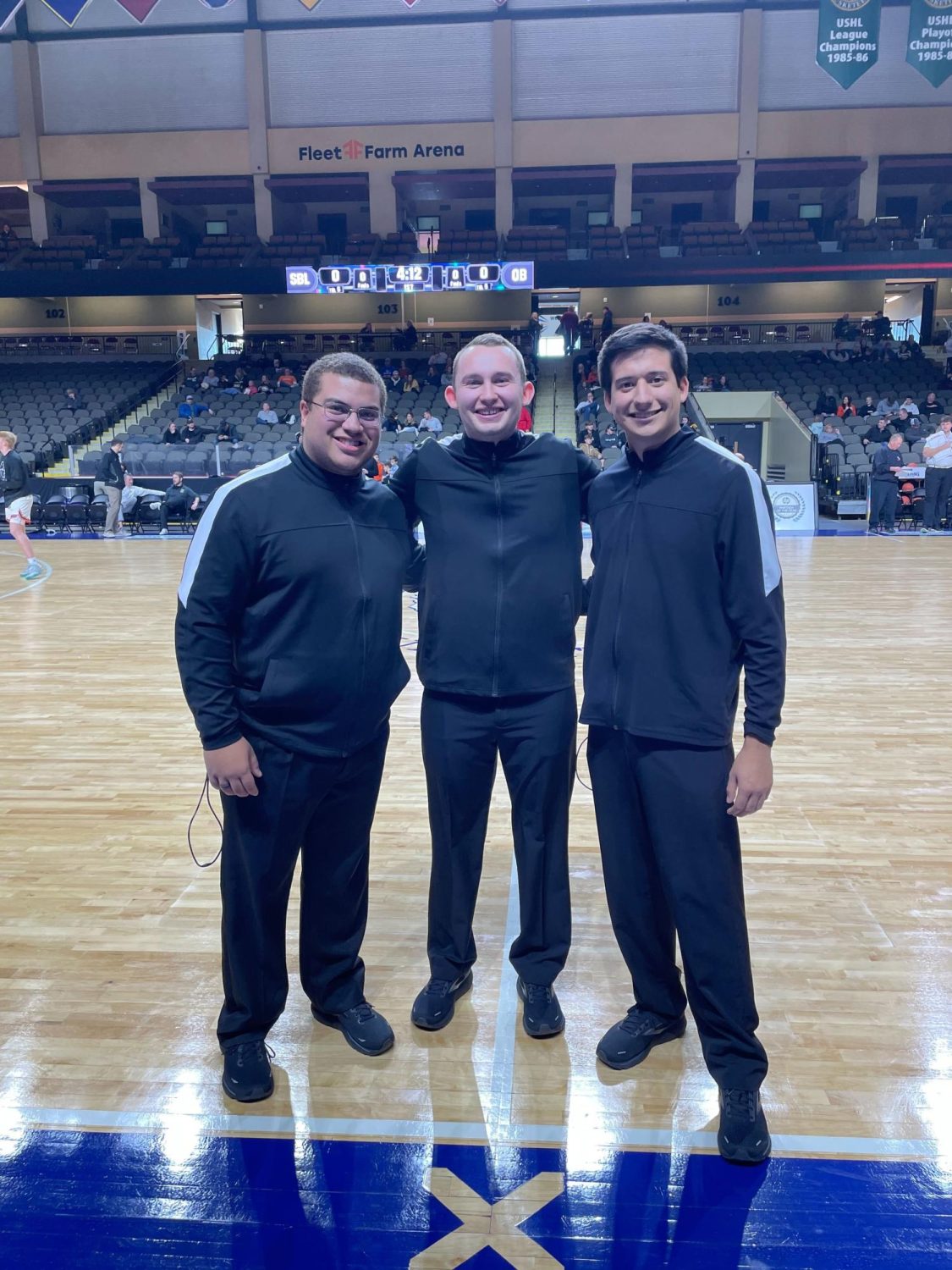
“You want to take deep breaths, not let the game speed up on you, and always remember [that] you’re not out there by yourself,” Riley said. “In a varsity setting, you have two other refs with you, and you’re all working for the same goal.”
Chandler Todd, in his seventh year as an official for football and basketball, discredited notions such as the ideas that officials only work for the money or deliberately favor one side.
“Speaking as me and my crew, we do it because we love the game, because we love being a part of the game in that aspect,” Todd said.
In the eyes of Todd and others, officiating is a way to stay involved with the same sports they once enjoyed in high school.
“We can’t all play the sport forever,” Todd said. “ How we can give back and do what we love with the sport is to officiate.”