
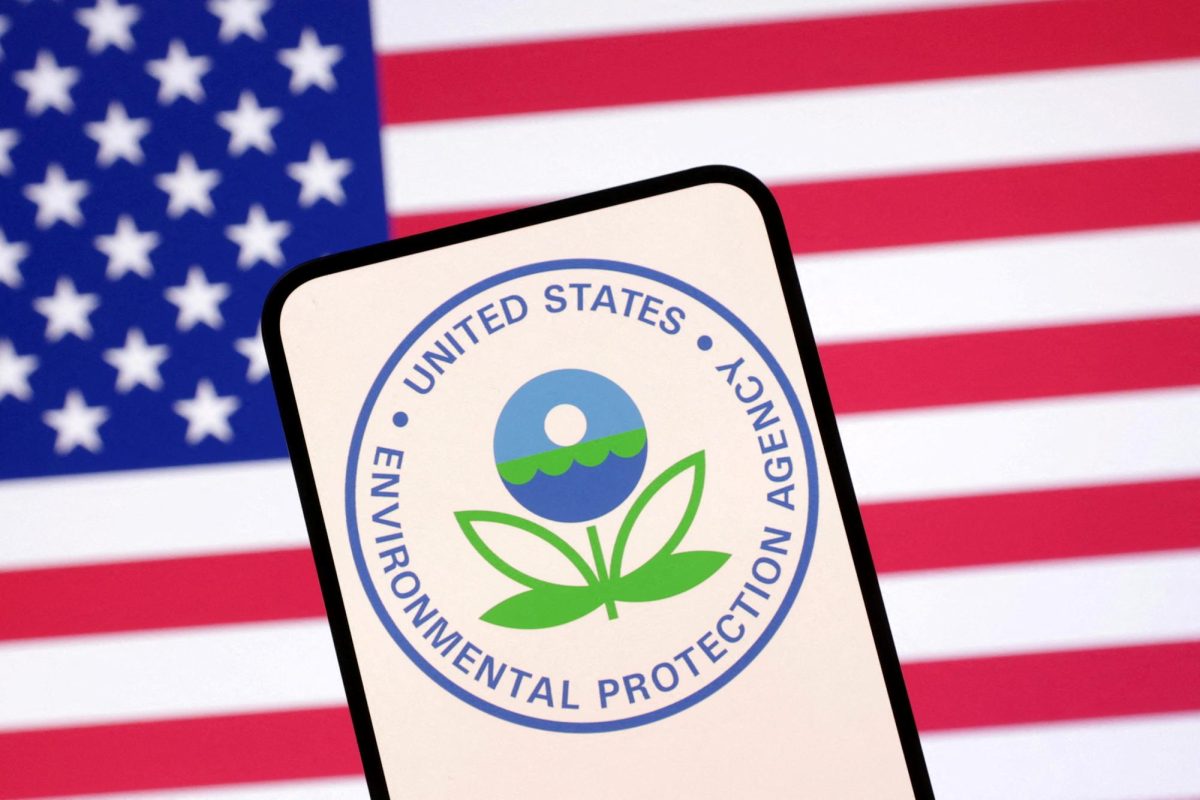
Despite entering the new year a few short months ago, the Environmental Protection Agency, or EPA, has been going back in time. Under President Donald Trump’s agenda, the organization that was initially developed to protect public health, welfare, and the environment has shifted to prioritizing one thing: money.
Interestingly, it has actually never been the EPA’s mission to prioritize the economy over the environment. While Reagan-era policies required a cost-benefit analysis from the EPA, the deliberate prioritization of money at the expense of the environment and public welfare has never been the goal.
Historically, the EPA’s mission has been to remain a politically central agency while working to prevent and fight climate change by ensuring clean air, land, and water. By executing policies like cleanup of contaminated sites, reviewing chemical safety, and conducting research, the EPA has relatively maintained its purpose. That is, until now.
After eliminating the inclusion of calculating the economic benefits associated with the number of human lives saved by safe environmental policy in late January, the EPA took another step. It rescinded the 2009 EPA Endangerment Finding in early February.
These findings established the danger of six greenhouse gases, linking them to health problems like cancer, cardiovascular disease, strokes, COPD, severe asthma, and, in the long-term, death. In 2009, the establishment of these dangers regulated their usage in manufacturing and consumption.
The repeal of the findings dismantles federal climate change regulations in the U.S. — the biggest carbon polluter in history — potentially thrusting the entire world into a future of climate change at rates faster than we have yet experienced.
The recission, though, is not a declaration that these gases are not harmful. In fact, the EPA had actually retreated from its original scientific justification behind the revocation of the Endangerment Findings after scientific experts found serious flaws in the evidence. However, instead of a scientific rebuttal, the EPA relied on a new legal interpretation that claims the agency lacks the authority to regulate them altogether.
“It’s the job of the EPA to use the best science available to underpin all the regulations that they make,” Peter Thorne, a professor at the University of Iowa College of Public Health’s Department of Occupational & Environmental Health and a previous chairman of the U.S. EPA’s Science Advisory Board, said.
So, if not for science, why were the findings rescinded? Unfortunately, yet still unsurprisingly, these decisions were made to eliminate auto-industry regulations, lowering production costs for large businesses and corporations in the U.S., as well as seemingly cutting costs for consumers. EPA Administrator Lee Zeldin stated that these regulations were costing Americans trillions of dollars in hidden costs.
The irony here is that the dollar amount is what the calculation of human lives saved accounted for. It was not “hidden costs,” it was the costs of our lives. With a lack of federal regulation, we are now able to save money by slowly killing the human race.
These shifts being made by “Trump’s EPA” reflect broader trends being seen in the federal government that have worked to turn the country into a “corporate America.” This shift is redefining the EPA not as a guardian of environmental and public health, but as an engine of economic deregulation; a profit agency.
Appointed by Trump and confirmed in January 2025, Zeldin is driving the agency to dedicate its focus on major deregulation efforts of protective policies to boost economic welfare and promote energy dominance, politicizing the supposed central organization. The new era for the EPA is called “Powering the Great American Comeback,” which sounds like bad political theater and a cry for attention, implying that America has something to come back from.
To Thorne, the EPA’s recent changes regarding economic factors in environmental decision-making seem to defy basic logic.
“I mean, how can you assess the cost-benefit of a program to reduce pollution emissions without considering the health consequences? That’s just preposterous,” Thorne said.
The EPA’s retreat from science is a fast track to the worsening climate crisis.
Despite those who are dead set on believing climate change is a lie, the scientific consensus on it is well established and confirmed. For decades, people around the world have seen and suffered from the effects of a rapidly changing climate. From agriculture struggles to excessive droughts or fires to changes in livestock maintenance, these affairs are threatening the entire globe.
In the state of Iowa, our changing climate is hurting our water. Long-term water contamination from agricultural runoff into bodies of water has affected both public and private wells. With drastic changes to our climate, we frequently see heavy rains following droughts, flushing higher levels of agricultural nitrates and pollutants from fields into water supplies. Iowa is also at a higher risk of air pollution, via particulate matter that comes from agricultural dust, livestock operations, vehicle emissions, and more.
So, with these changes, we will see changes in health, air quality, water quality, etc., and increasing rates of respiratory diseases and cancers — all to get rid of the hidden cost to us.
However, I am finding hope in seeing the common sense of the American people. Thorne mentions the importance of the status quo in something like environmental policy; such a drastic change upsets people after years of following the same conventional methods. In the past two months, several corporations and groups have filed lawsuits against the EPA to reinstate environmental protections.
Organizations that have participated in their free will by suing the government include the Sierra Club, American Lung Association, the Environmental Defense Fund, and the Natural Resources Defense Council. The list doesn’t stop here, though, and Thorne doesn’t expect it to stop any time soon.
While corporate America may be fighting back, the people have a part to play too. Because the air we breathe and the water we drink do not recognize political agendas. If federal protections weaken, the consequences will not fall on these politicians; they will fall on families, children, and communities.
If the federal government chooses not to lead, then we must, through informed voting, local advocacy, and everyday choices that demand accountability and sustainability. Because in the end, the cost of silence will be measured with our lives.