As immigration policy continues to shape daily life for families across Iowa, community-led organizations are stepping in to provide advocacy, legal services, and accompany individuals to ICE check-ins for immigrants navigating an increasingly complex system.
Groups across the state include Escucha Mi Voz, Iowa City Catholic Worker, Iowa Migrant Movement for Justice, and the Immigration Welcome Network of Johnson County.
Throughout Iowa and Johnson County, much of that work is being led by immigrants themselves, who have built organizations designed to respond directly to the needs of their communities.
Stretching throughout the Iowa City area, Escucha Mi Voz is a faith-based nonprofit led fully by immigrants across eastern Iowa.
EN ESPAÑOL: Organizaciones dirigen por inmigrantes guían fuerzas del apoyo
Getsy Hernandez, a community organizer with Escucha Mi Voz, said the organization assists its immigrant members with whatever they may need, including teaching English, providing various trainings, and housing.
The University of Iowa graduate student said her parents are immigrants, and they are her biggest motivation for helping provide resources to immigrants and their families in the Iowa City area.
“I grew up seeing a lot of inaccessibility for immigrants, so seeing the struggle that my parents went through, I know that I want to be a change in that,” Hernandez said.
As a kid, she translated for her parents, an experience that made her want to enter into advocacy work.
“I want to make a difference for my community, and especially with everything going on now, that makes me want to be that change and make that difference even more,” she said.
Hernandez said Escucha Mi Voz provides many different trainings, including “Know Your Rights Trainings,” which inform immigrant communities on their constitutional rights and how to assert them with law enforcement.
Clare Loussaert, lead English teacher at Escucha Mi Voz and a third-year student at the UI, said the organization’s English classes cater to members at all proficiency levels.
“It’s a really low point of entry. Everyone can participate, but it’s a high ceiling in that you could go really far with it,” she said.
Loussaert said the class is more than just an English lesson.
“The class is just a unique format in that it’s really community-based,” she said. “And of course, we’re working on the English language in terms of vocabulary and grammar, but we also touch on different social issues, like being bilingual in the U.S., or educating people on their rights.”
Hernandez said Escucha Mi Voz also participates in civic engagement, which includes ICE accompaniments, helping with paperwork, and registering kids into schools. They also attend city council meetings and lobby at the Iowa legislature.
“We stay very connected with local resolutions or bills that are being passed,” she said. “We stay up to date with the actual state government, and we try to push for them to not pass those anti-immigrant bills.”
At the Department of Homeland Security’s Cedar Rapids office, Escucha Mi Voz accompanies immigrant families for their ICE check-ins on the first Tuesday of every month.
“We build community there,” she said. “We’ve had really good turnout with community members showing up every month, and that’s just been a way to show solidarity and support to immigrant families who really need it.”
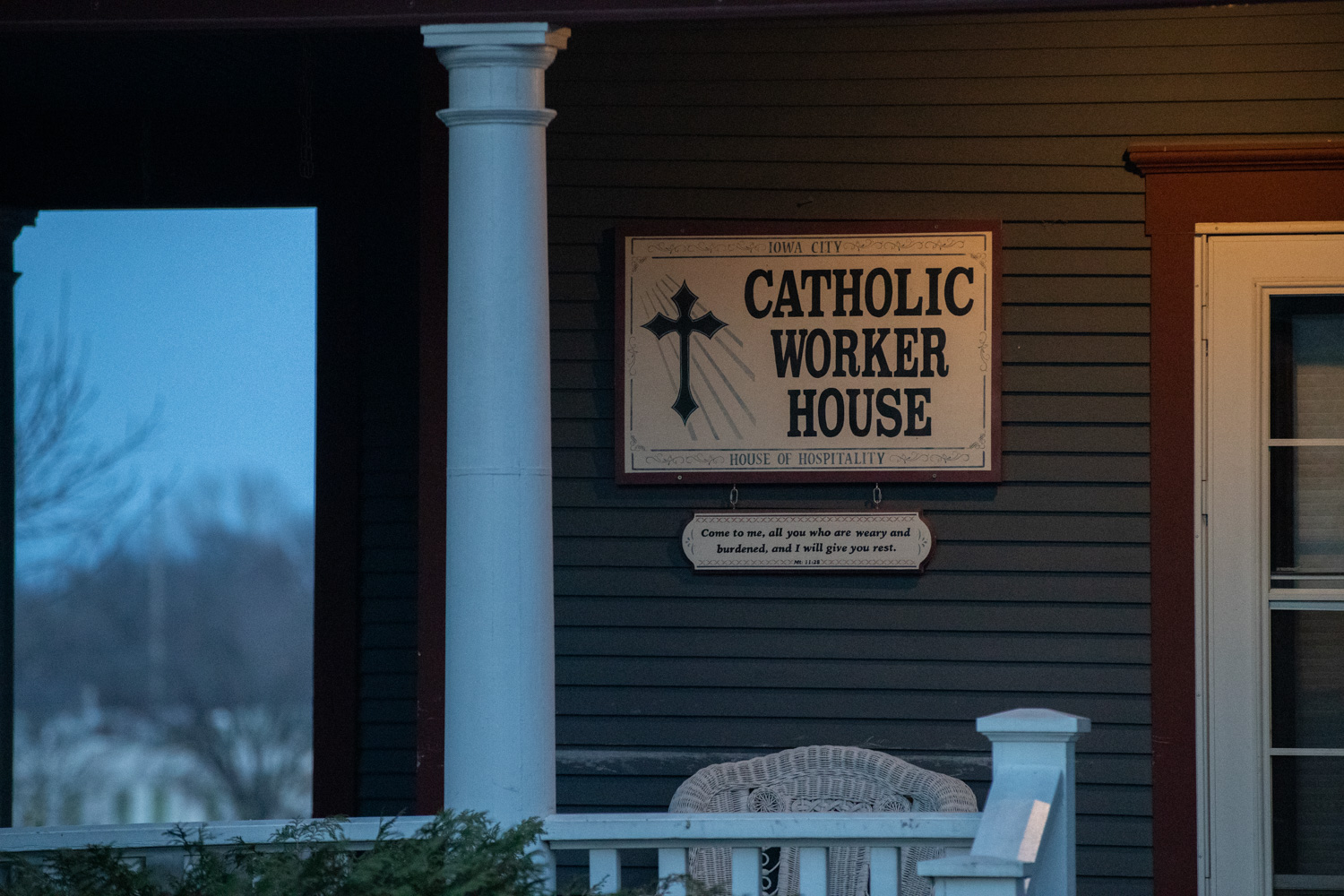
Iowa City Catholic Worker
Iowa City Catholic Worker is a sister organization with Escucha Mi Voz, meaning they depend on each other’s resources to hold protests, training, and affordable housing for immigrants.
Inspired by Catholic Social Teaching, a body of moral doctrine from the Catholic Church that provides a framework for building a just society, the organization is fully volunteer-based and provides meals, showers, laundry, and legal support.
Along with Escucha Mi Voz, Iowa City Catholic Worker has opened two “houses of hospitality” in Iowa City — one on Sycamore Street and a second downtown Victorian home — that offer transitional housing, meals, and support for immigrant and refugee families. Hernandez said these houses currently hold 15 immigrant families.
“That’s just a resource for families who have just come to the U.S., and they need support to get on their feet and gain that independence,” she said.
Hernandez said there are many volunteer opportunities at Escucha Mi Voz and Iowa City Catholic Worker, including driving immigrants to their ICE check-ins, joining a neighborhood rapid response team, or delivering groceries to a family.
“One of the most meaningful ways that goes overlooked, sometimes, of how to support the immigrant community, is simply getting to know them,” she said. “Building those connections with them and finding ways to get involved.”
Immigration Welcome Network of Johnson County
The Immigration Welcome Network of Johnson County is a nonprofit working to provide housing, community resources, and advocacy for immigrants across Johnson County.
The network provides temporary Welcome Houses to help prevent homelessness, and assists with navigating resettlement, job placement, health care, and education, according to their website.
In November 2025, the organization opened a two-unit supportive housing duplex at Catskill Court in Iowa City to support and house immigrant families.
Local community organizations including Houses into Homes, The Housing Trust Fund of Johnson County, and Resilient Sustainable Future for Iowa City, helped the nonprofit secure and furnish the houses.
Mazahir Salih, executive director of the Immigration Welcome Network of Johnson County and Iowa City City Council member, said in a previous interview with The Daily Iowan immigrants come to the Welcome Houses with trauma, but the resources they have help uplift them and give them a sense of belonging.
To get involved with the Immigration Welcome Network of Johnson County, they welcome anyone to volunteer by signing up through their Instagram or Facebook page to assist with direct support, including donating to their Welcome Houses.
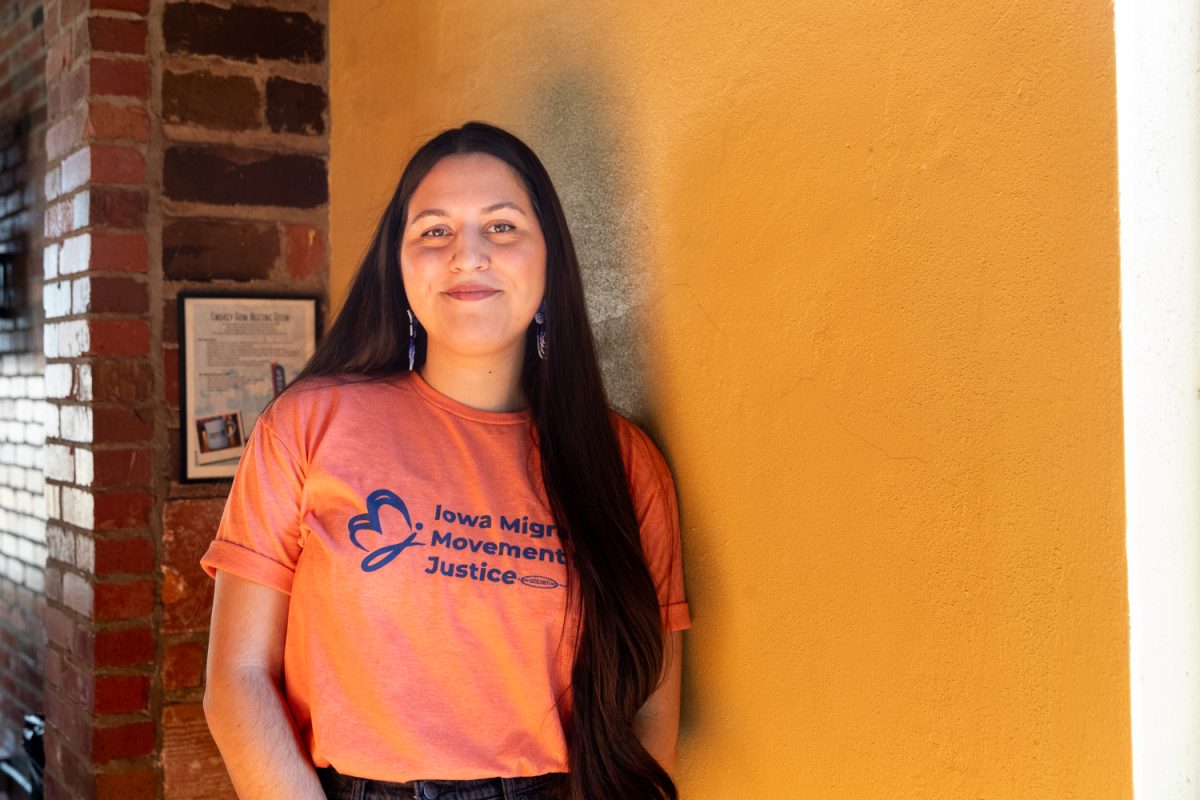
Iowa Migrant Movement for Justice
Headquartered in Des Moines, the Iowa Migrant Movement for Justice is a statewide membership-based nonprofit providing legal services and advocacy for immigrants.
Elena Casillas-Hoffman, communications specialist from the Iowa Migrant Movement for Justice, said the organization works to support immigrants throughout Iowa whenever they need it.
“The idea is walking alongside and being led by immigrants and refugees, not only in their day-to-day, but long-term goals and visions of ‘How can we help?’” she said. “How can we all come together and make Iowa a more welcoming and inclusive state?”
The Iowa Migrant Movement for Justice also provides legal clinics across the state.
According to Iowa Health and Human Services, immigrants and refugees have limited access to legal services, and Casillas-Hoffman said the organization tries to provide more access for those in need.
“We know the ones that are here often are unaffordable for individuals, or, quite frankly, just out of the way, and there is danger that can be imposed on community members who don’t feel safe getting in their car and driving,” she said. “So we try to go to them.”
To get involved with Iowa Migrant Movement for Justice, Casillas-Hoffman recommended signing up for their newsletter, following their social media accounts, or stay updated on their website. To report an ICE sighting, she said to call their hotline number at 515-505-8805.
Casillas-Hoffman said the organization can help create a safer state for immigrants.
“We believe we can and will create an Iowa that is more welcoming and inclusive to all,” she said. “But we only can do that if we work alongside a broad coalition of people that are across the state of Iowa, of all different backgrounds, all different beliefs, and of all different socioeconomic statuses.”