


In a series of readings highlighting University of Iowa faculty, a Book Matters event on Feb. 26 highlighted UI assistant professor Ashley Howard and her first book, “Midwest Unrest: 1960s Urban Rebellions and the Black Freedom Movement.”
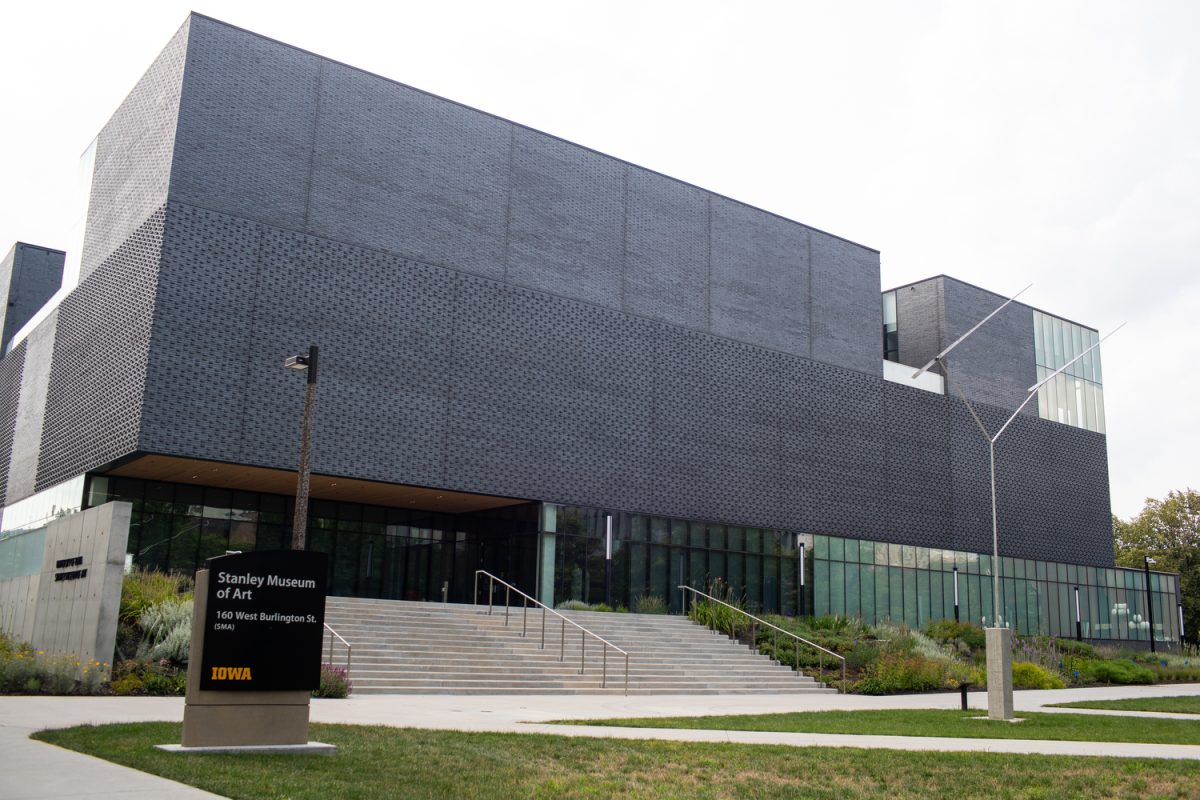
The event took place at the Stanley Museum of Art, where Howard read from her book and answered questions about it. The book focuses on racism and African American uprisings in Midwestern cities during the 1960s.
Howard, assistant professor of History and African American studies, discussed the book at length with Louise Seamster, associate professor of sociology, criminology, and African American studies.
Book Matters is a series of events sponsored by the Office of the Vice President for Research, the Stanley Museum of Art, and Prairie Lights Books and Cafe. According to the Book Matters page on the Office of the Vice President for Research’s website, the program’s purpose is to celebrate the written works of UI faculty members.
University of Iowa Associate Vice President for Research Kristy Nabhan-Warren introduced Howard and Seamster and said it had been a delight to showcase UI’s faculty and their works, and said that Howard’s work specifically is very important.
“‘Midwest Unrest’ marks a necessary and critical intervention in Midwestern studies and history, which has for a very long time, as many of you know, been white and Eurocentric,” Nabhan-Warren said.
Howard began her reading by thanking the audience and saying how beautiful it was to see so many familiar faces from UI and the Iowa City community.
Howard read two passages from her book that focused on a 1968 campaign rally for presidential candidate George Wallace in Omaha, Nebraska. According to her book, this rally was the beginning of a “police-induced riot.”
RELATED: Five UI gender studies professors publish books during year of potential department closure
The passages also detailed the mindsets of white Americans at the time, who thought African Americans were looking for handouts but not willing to work for them. Howard quoted one woman from her book who asked why they did not just pick themselves up by their bootstraps like other immigrants, to which an African American man said, “Why, hell, they’ve taken away my boots.”
Seamster then joined the discussion and began asking Howard questions about the book.
One question focused on Omaha, which is also Howard’s hometown. Seamster asked her if she always knew that she wanted to write a book about the city.
Howard said she had not grown up wanting to write about Omaha, but instead just wanted to get out. She thought she could never understand herself or change the world unless she left her hometown.
Howard said when she arrived at college in Chicago, she finally began to understand her hometown and realized what people from other places thought about it. She said that people would ask her if her family was the only Black family in Omaha, which they were not.
“It’s this idea that Black folks only belong in certain places in America and belong in only certain stories in American history,” Howard said
In the process of writing her book, Howard had to do much of her research using archives. Seamster asked her what surprised her most during her time in the archive.
Howard said she was surprised at the sheer amount of information the archives held. She said that there was so much evidence of racism and civil rights violations that she did not realize was so accessible.
Seamster also asked Howard what advice she would give her past-self about writing a book. Howard said the book has been a long time coming and that she wishes she had trusted herself more in the process of writing the book. She said the biggest piece of advice she has is that the author does not have the final word on your book.
“We build on the scholarship of others, and others will build on us to get the best book done that you can get at that moment, because you’re not the final word,” Howard said.
In the audience Q&A portion of the event, one audience member asked Howard how she steels herself when working so closely with social justice issues.
Howard said the seven years she has been working on this book have been difficult and that some of the things that she used to ground herself are now gone or leaving, such as the Young, Gifted, and Black Living Learning Community, which the university dropped in 2025 due to anti-DEI legislation and the African American studies department, whose closure was recently announced to faculty.
Howard said that despite all of these heartbreaks, she is still able to find hope in the future.
“I take comfort in knowing that what is will not always be, and that people have done this work in places that have not wanted us in times that are hard, so it is not my sole burden to bear,” Howard said.