


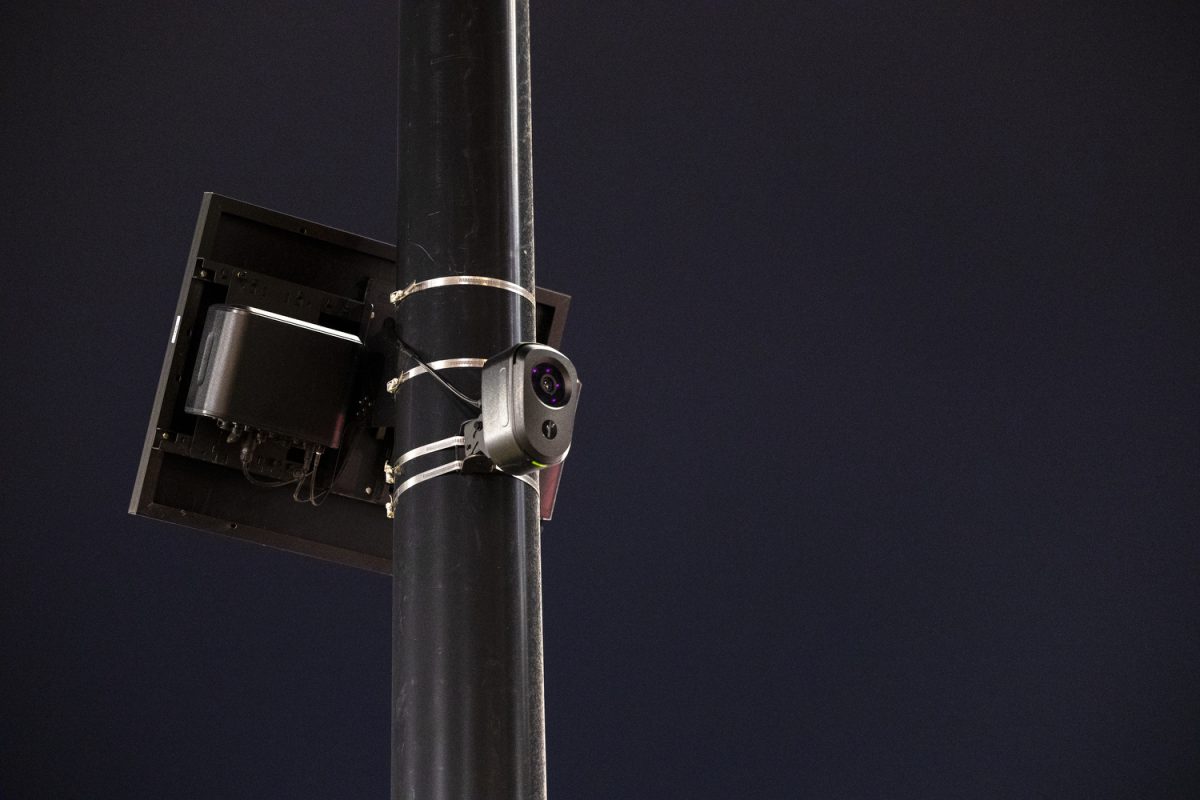
The Coralville City Council voted to terminate a two-year contract with Flock Safety, which permitted the installation of Automated License Plate Readers throughout the city, during its Tuesday meeting.
Only two of the six planned cameras had been installed, with one on First Avenue and the other on Second Street. The council said the cameras will be removed in the next few days.
The resolution was proposed following months of pushback from the public, and a letter from the Iowa Attorney General’s Office requesting the city drop its policy limiting the use of the cameras for immigration enforcement.
The resolution was passed in a vote of 3-1, terminating the contract with Flock Safety. Councilors Katie Freeman, Hai Huynh, and Mike Knudson all voted in the majority, while Councilor Rich Vogelzang voted against the resolution. Councilor Royce Peterson was not present.
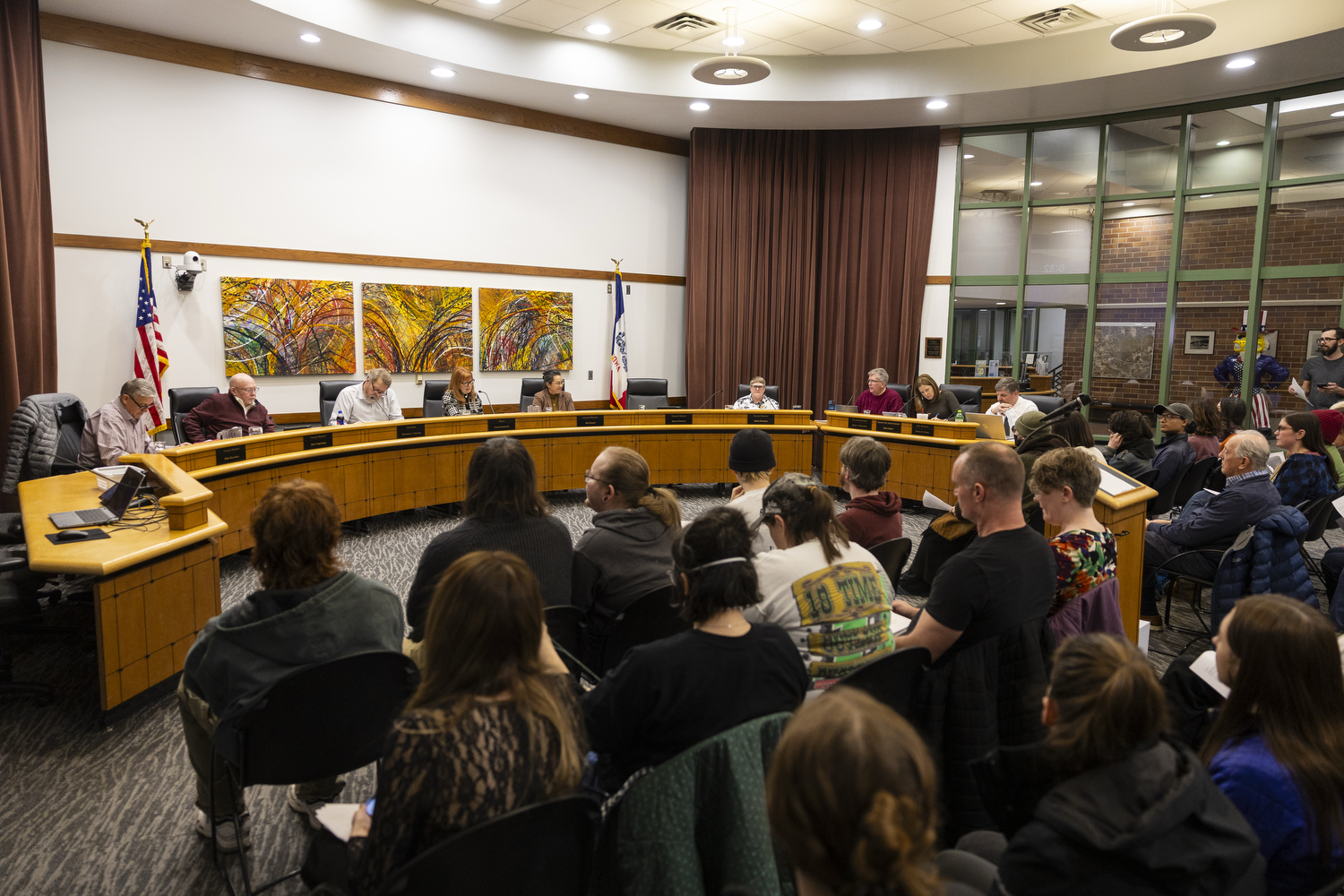
Vogelzang said the cameras have become an invaluable tool for Coralville’s law enforcement.
“There are many, many other communities that understand the value and the logic of having license plate readers in their communities,” said Vogelzang. “They understand law-abiding persons do not need to be concerned about having license plate reading cameras in the community.”
Huynh, who had previously published a letter saying she would vote in favor of the resolution, said she disagreed with Vogelzang. She said that to best represent the needs of the citizens of Coralville, the council must listen to the overwhelming opposition from the public to Flock.
Huynh said supporting the cancellation of the Flock contract does not mean that the councilors do not support the local police department.
“I respect and appreciate the work that our police department and our officers do every day. They put their life on the line every day for our safety, for our community’s safety. I don’t discount that,” she said. “But voting against a technology does not mean that we do not support them.”

Coralville policy bans the usage of the cameras for immigration enforcement, which violates Iowa Code section 27A.4. The code states that local policies cannot prohibit law enforcement from complying with federal immigration procedures.
The cameras take snapshots of a vehicle’s license plate, logging the time, date, and location of when the vehicle is documented, storing that information in a main database.
The information is then checked by an AI software to identify it as a potential vehicle of interest. It is then logged in a database shared among various law enforcement organizations. License plate cameras are designed to assist law enforcement in criminal investigations, particularly in cases of theft, trafficking, and AMBER alerts.
However, license plate readers, and particularly Flock cameras, have been subject to concerns over potential surveillance overreach and a lack of safeguards to protect citizens from privacy violations. The American Civil Liberties Union of Iowa published a report in December describing these concerns and increased usage of these cameras in Iowa.
“ALPRs are being used to create comprehensive records of everybody’s comings and goings,” ACLU of Iowa Legal Director Rita Austen said in the report. “In our country, the government should not be tracking us without individualized suspicion that we are actually breaking the law, and warrants should be required in many circumstances.”
Criticism over the increased application of Flock cameras throughout Iowa also comes from a lack of transparency over the number and location of cameras, inconsistency in how they are utilized throughout the state, and a lack of meaningful regulations on data collection, the ACLU’s report stated.
The report said there were inaccuracies with the cameras, with a study finding they misread license plates 10 percent of the time in some communities.
These concerns have arisen in Coralville, with many of the city’s residents pushing back against the contract with Flock Safety, leading to the resolution on Feb. 24. Protests against the camera system came not only from the same concerns that ACLU Iowa expressed, but also from the nature in which the contract was signed.

The contract with Flock Safety was signed by Coralville Chief of Police Kyle Nicholson on May 12, 2025. The $36,000 contract was not discussed in any city council meetings or disclosed to the public before its signing. It was not until a city council meeting on Sept. 23, 2025, that the policy was officially approved, months after the city had already signed an agreement to join the Flock surveillance network.
Coralville residents were concerned with how the council approached the contract, as well as how it may approach similar surveillance-system proposals in the future.
Linda Mullen, a resident of Coralville, addressed the confusion surrounding the agreement during community comment before the vote.
She said the procedure that Coralville’s city council and police department used to approve the contract was unnatural and was done with little accountability.
“You didn’t even see the contract until months after it was signed,” Mullen said. “When the illegal performance became public, you somehow both said that you had approved of the contract via the general budget approval process and that you had no knowledge of it.”