


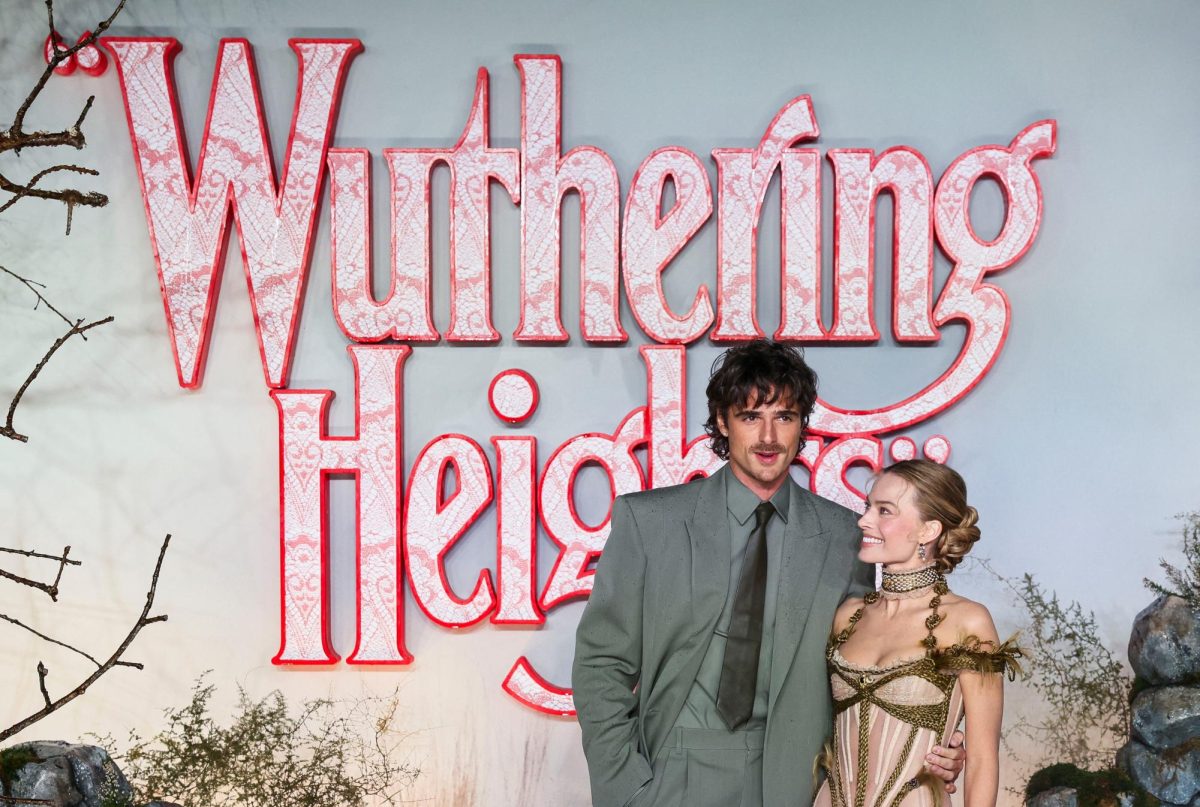
The new adaptation of “Wuthering Heights” has caused a commotion across social media and among students at the University of Iowa. While some argue that the filmmaking makes the movie watchable, others are distracted by the changes made from the source material.
“The cinematography was insane and so fun to watch on the big screen; regardless of the somewhat inaccurate plot, I thought it was just a fun movie,” Jailyn Quinn, a fourth-year UI student, said.
Emerald Fennell’s film lexicon has consistently garnered intense media attention. Whether positive feedback or aggressive criticism, Fennell’s features leave viewers divided. Her films, “Promising Young Woman” and “Saltburn,” were widely successful yet received both criticism and praise. However, her most recent film, “Wuthering Heights,” has arguably created the most opinionated and passionate online discourse between viewers.
“Wuthering Heights,” Emily Brontë’s 1846 novel, is an iconic period piece and a classic novel. The film, based on the novel, was released in theaters on Feb. 13., starring Jacob Elordi and Margot Robbie, with music produced by Charli XCX. This film was arguably set up for rough feedback from the very beginning.
Including two of the most famous actors in the world and a soundtrack by a globally famous music producer, this film didn’t even attempt to be historically accurate.
The UI students who loved the movie argue Fennell did include important aspects of the time, such as the setting, language, socioeconomic status, and fashion. Others who disliked the film argue those aspects alone are not enough to make up for everything Fennell decided to exclude.
Before the film even came out, people on the social platform X and Instagram were calling it “the Dubai chocolate of movies.” People were calling the film this because its roots are so utterly basic — the cast is made up of almost entirely white people. This is not at all accurate to the book, and the music does not match the time period in which the plot takes place.
Some argue Fennell did the book a disservice with her adaptation, while others praise her distinctive directorial vision.
When I saw the film in the theater on its release day, I walked out overwhelmed with emotions. The theater was packed to the brim with girls of all ages, giddy to see the handsome Elordi on screen and watch this new and exciting film with their friends.
In all honesty, I think my experience watching the movie affected my opinion of the film. I thought the film was beautifully shot, and I thought the obscurity of it all made it so unique and fun to watch. But, after sitting with it for some time — and, unashamedly, a second viewing — I had some different thoughts, and so did many others.
Fennell’s directorial style is edgy and different. Unlike Martin Scorsese, who focuses more on the actual art of film in his movies, Fennell likes to shock her viewers and use that shock value to gain traction for her films in the media.
RELATED: Review | ‘Wuthering Heights,’ where abuse is sexy and healthy love is abuse
I took this discourse to the streets. I stood outside Starbucks on Clinton Street and asked people for their opinions on the film, remaining completely unbiased. The overall response I received? 18 out of the 32 people I talked to disliked it.
It has been interesting collecting all of these thoughts and opinions as most of the people I have talked to who are English majors had lots of negative things to say about the film, considering they acknowledge the book more. But, at the other end of the spectrum, students majoring in, for example, psychology or business analytics, really enjoyed the film.
While Fennell may not have cared so much about the book-to-movie adaptation of it all, she nevertheless succeeded in making an entertaining and visually pleasing movie.