
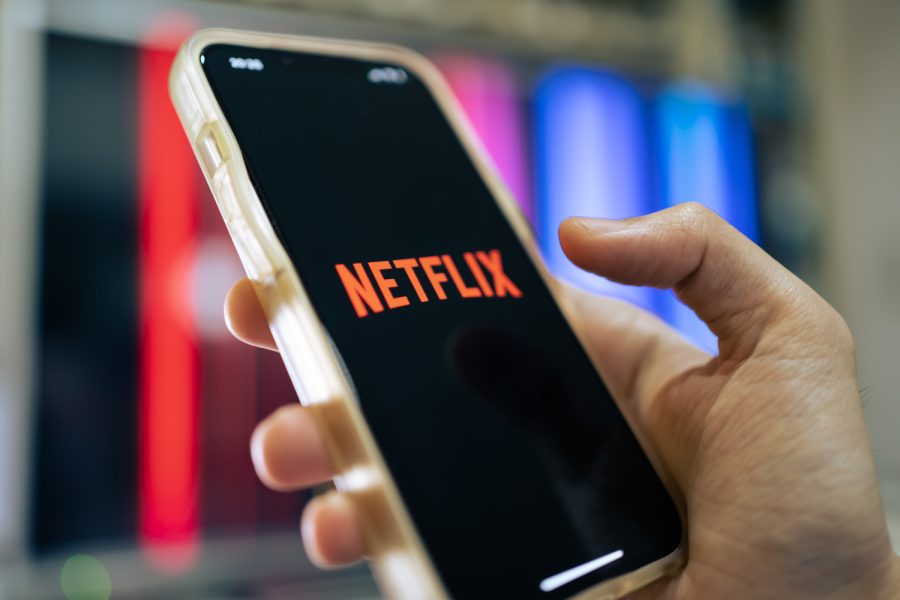
Netflix is a name in the entertainment business that everyone knows. A giant conglomeration worth about 350 billion, it is the premier name in the streaming business. It has a specific roster of TV shows and movies — dubbed Netflix originals — created in-house from pre-production to post-production. These projects have been getting blowback for their apparent “uncinematic” quality.
To clarify, many posts and comments about this subject have gone viral over the last couple of months. One video by content creator Robert Tolppi and another by Patrick Tomasso have garnered millions of views. They criticize Netflix and its productions, claiming the movies “don’t feel real anymore,” and that they have a bland, colorless, soft look.
Netflix and other modern studios run their businesses differently than they used to. Filming schedules are shorter now at an incredible scale. The production staff is forced to run shoots less intentionally and cover less interesting shots for time.
Lighting setups are not allowed to be as complex for this reason, too. For example, films like “People We Meet On Vacation” and “Back In Action” have flat, undynamic setups that only use a direct keylight in most shots, compared to the “chiaroscuro,” or heavy black and white contrast, look of classics.
Another reason this look is so consistent in Netflix projects is the cinematic and recent film trends. To start, you have the use of a shallow depth of field, where backgrounds get that blurry quality, and the only thing in focus is the subject in front. Originally, this choice was made to emphasize an otherworldly quality, or to show the character’s inner world. However, shallow depth of field has become the primary mode across most shots in TV and movies. This has led people to define these shots as unintentional, and the favoring of this type of shot has soured.
Also, the cameras Netflix productions use are all completely standardized. All of them are required to shoot in 4K, proving their technical prowess. However, these cameras also have the maximum dynamic range, which takes away shadows and details. They also have to make sure that what’s shot on these cameras can be watched on thousands of different viewing devices — meaning each camera has to have a similar color bias, complicating matters.
The production design of Netflix media is also carefully planned. Execs have made decisions to make sure every surface is low saturation, costuming is low contrast, extreme colors are ignored, and grays, blues, and other basic colors are prioritized. This makes the film easier to digitally work with, but has unintended side effects concerning chromatic effectiveness and color theory.
Post-production work is just as challenging. To keep the system going, many Netflix editors will be told to use very standard LUTS, lookup tables, color mediums that are plastered over each frame of film, and color direction that’s favored by the people upstairs. When a film has to be finished in about a couple of weeks, it’s hard to perfect.
Altogether, the Netflix look is a very streamlined and effective way to get the most viewers and to disseminate their media across the globe. However, these reasons provide a view into why many people in the cinematic community are starting to criticize how some Netflix projects look.