


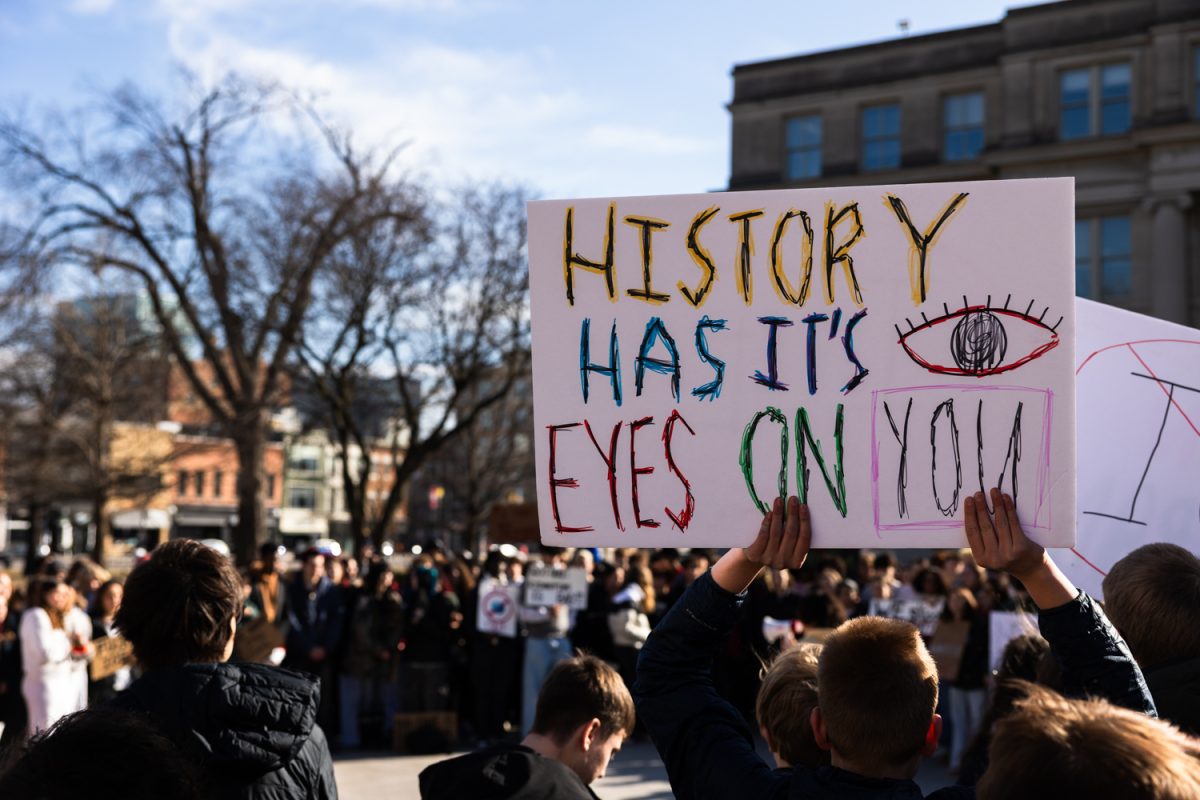
On Jan. 7, Immigration and Customs, or ICE, agents shot and killed U.S. citizen Renee Good in her car. On Jan. 24, ICE agents pinned down, shot, and killed U.S. citizen Alex Pretti.
On the same day of Pretti’s murder, Gov. Tim Walz butted heads with President Donald Trump’s ICE agents when he deployed the National Guard to Minneapolis. The troops were seen handing out donuts and coffee, free of charge, claiming it was an effort to calm tension and keep protests from becoming violent.
ICE agents, acting under Trump, were executing an aggressive federal immigration agenda. Under Walz, the troops’ mission seemed to be centered on de-escalation and community reassurance.
Politics, through pressures, incentives, and orders, is at the heart of most law enforcement misconduct, as systemic discrimination and maltreatment often stem from political directives. If political figures stand idly while cops and ICE act cruelly, it is an incentive to continue.
Law enforcement exists to keep order and protect people in a given area, from campus police, city departments, state control, the National Guard, and even U.S. Immigration and Customs Enforcement. Yet still, public discourse and discontent often flattens all of it to one entity with one institution — especially when the phrase “ACAB” is used.
So, are all cops really bastards? Or are we just pressing them into one plane of moral judgement?
The phrase “ACAB” likely originated in 1920s England, and became popularized by its use by workers on strike. Over the past century, the phrase has shifted to a stronger critique of systemic injustice. It attempts to identify the deep-rooted discrimination among patterns of official behavior, rather than to define an isolated incident.
Essentially, it means the institution of policing is corrupt, and that individual officers, regardless of personal characteristics, are complicit in a racially biased and oppressive system, and that participation in a harmful system makes even “good” actors complicit.
If ACAB critiques the system, then the politics that shape and sustain that system are crucial to understanding how police are deployed and behave.
U.S. law enforcement has long been shaped by political incentives, where the “tough on crime” legislative rhetoric has become increasingly popular with voters. The tactic is reflected in policy changes like the War on Drugs, sentencing reform, and collateral consequences. Arrest numbers and enforcement statistics became markers of success, and leaders built systems that rewarded visible apprehensions over long-term community safety.
Dory Duhownik, a fourth-year student at the University of Iowa who studies criminal justice and psychology, uses her coursework to analyze the history of the “tough on crime” mindset and see how law enforcement has strayed from its purpose.
“For a long time, that mindset shaped policing strategies, sentencing, and how success was measured, often focusing on arrests and enforcement rather than whether communities were actually safer,” Duhownik said.
Law enforcement has become a numbers game, not a force of safety and security, and political disparities are now playing with federal agencies.
This points to something important — policing strategies and practices do not develop in isolation. Instead, it responds to policy from elected officials, prosecutorial discretion, funding, and optics. Mayors determine budgets. Prosecutors decide which crimes are prioritized. Judges hear cases at their discretion. Governors deploy forces. Presidents define federal enforcement agendas. And scrutiny and shifting demands from the community force police departments to frequently adapt.
ICE, as a federal agency, operates under federal executive authority. The agents don’t patrol for general safety as local officers do; they work solely with immigrants, focusing on immigration violations, like deporting those who are undocumented or those with criminal convictions, based on defined federal priorities.
However, the Trump administration’s mass deportation efforts have tremendously politicized the responsibilities of ICE, making the agency even more contradictory than it was before. ICE has taken an aggressive position, conducting raids, administrative arrests, and other highly publicized authoritative actions. They are even racially profiling people on the street, asking them to produce their papers.
In a way, ICE agents are the puppets and the federal government is the master.
Compare that with the Minnesota National Guard troops under Walz. They were tasked with stabilizing communities and providing safety and reassurance to residents. Their intentions were de-escalatory, calm, and nonconfrontational per orders from the governor.
“Organizational culture plays into this as well. Departments that emphasize control, authority, and command presence may unintentionally discourage patience or flexibility. In protest settings, the use of riot gear, military-style equipment, and aggressive posturing can escalate tensions before any real threat exists,” Duhownik said.
The contrast between the Minnesota National Guard and the actions of ICE agents is telling; it is happening within the parameters of one city, both agencies wielded by drastically different officials with drastically different orders. ICE, ordered by federal administrations, acts violently in what seems like a “do it no matter the cost” mindset, which has led to extreme political upset by citizens across the country.
Under Walz’s orders, enforcement officers are engaging in de-escalating crowds and preventing disruptive behavior, showing citizens safety and security. Their mission was stability, not punishment, a contrast to the common “tough on crime” political rhetoric.
I’m not saying that the National Guard is perfect and immune to abuse, but their presence and conduct clearly show that political goals do shape law enforcement behavior.
So, the question isn’t whether all cops are bastards — it’s why our politics lets them act like it?
We need to focus more on what the politicians and their politics are communicating to their law enforcement officers. This isn’t a statement of support for past violent actions of law enforcement agents in the U.S. Rather, it is a recognition that the corrupt bastards aren’t always the issue; it’s what made the system, and what makes them bastards, that is the institutionalized problem we need to address.
“If incentives shifted toward being effective rather than just tough, like rewarding de-escalation, rehabilitation, and long-term harm reduction, I think we’d see more consistent and meaningful change,” Duhownik said.
If we want different actions, then we must demand different policies from the root of the problem, not blame the low-hanging fruit. Hold politics accountable and fight for reform.