


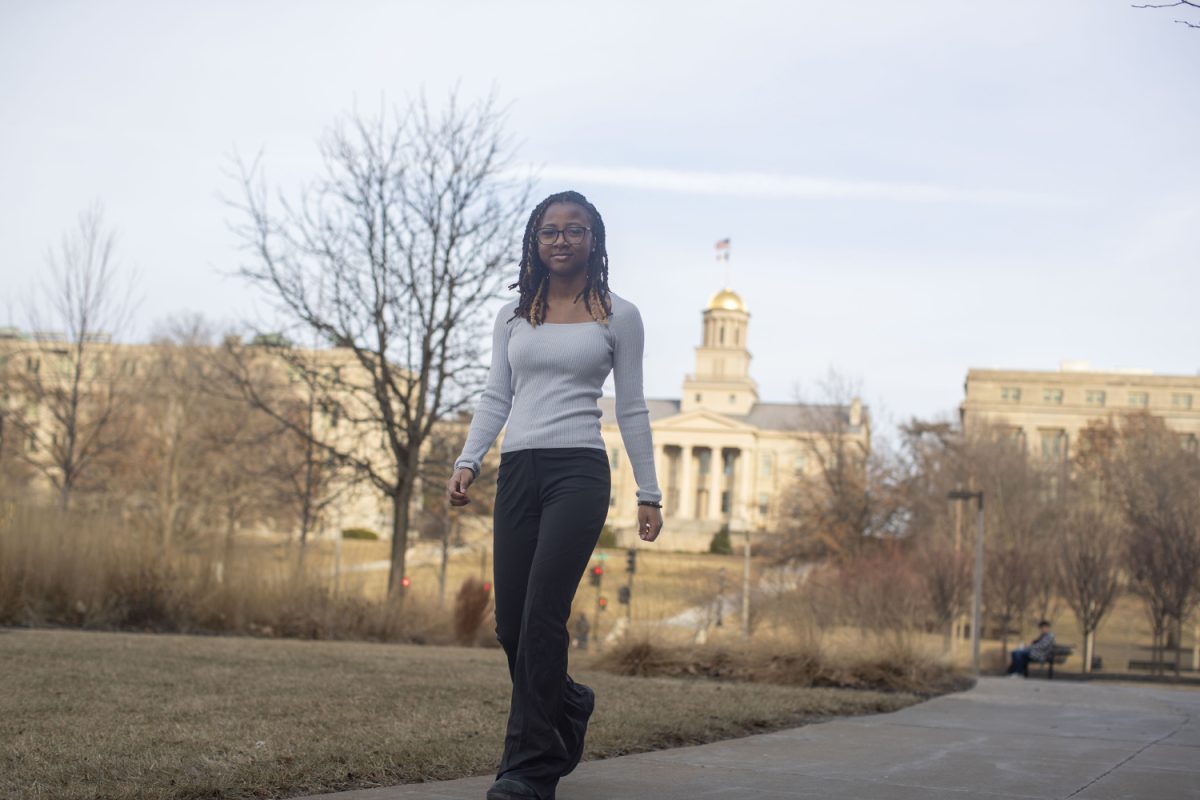
Black History Month acknowledges the achievements, contributions, and obstacles of Black people in academia, sports, music, science, and beyond. On its 100th year of commemorating the success of Black Americans, students and faculty at the University of Iowa share their stories in celebration.
The UI was the first public university to allow admission to students regardless of race. In 2025, UI demographic reports showed Black students made up 2.7 percent of enrollments, while Black faculty made up less than 3 percent, echoing some of the lived experiences of the university’s Black student body and faculty.
Originally developed in 1926 by African American historian Carter G. Woodson, and initially coined “Negro History Week” to challenge the exclusion of Black American contributions in history curricula, it wasn’t until 1986 that Congress passed a law designating February for National Black History Month as a federally recognized observance.
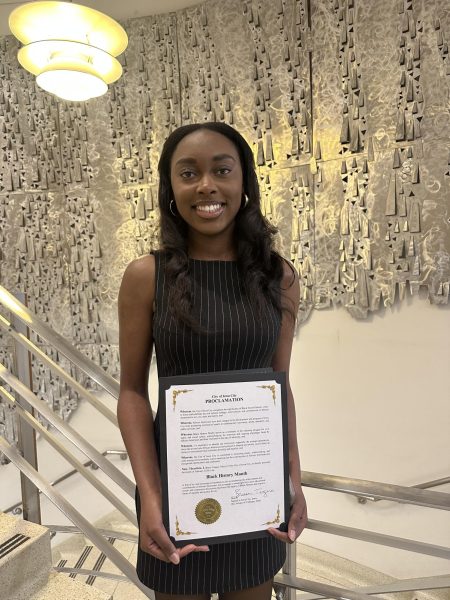
Vanessa Shannon, a UI first-year and a representative for the Black Student Union, said she feels a lack of representation in her classes.
“There are many times when I am one of the very few Black students, and sometimes the only Black girl in the room, which can feel isolating,” she said.
In her classes, she said she feels social pressure, on top of existing academic rigor. However, Shannon said such conditions have strengthened her as a student.
“Because of that, I’ve had to learn how to take up space and advocate for myself in academic settings where I don’t always see people who look like me,” she said.“My classes themselves are academically challenging, but the social dynamic can add another layer of pressure. I sometimes feel like I’m expected to speak for all Black students or that my perspective is seen as different, rather than just another valid viewpoint.”
As a member of the Black Student Union, Shannon also said that to create a more inclusive environment for Black students, the university could increase recruitment and retention of Black faculty and staff to provide mentorship opportunities to students in their respective fields, ultimately making Black students feel more valued and represented.
UI third-year psychology major Ghada Dahab shared a similar feeling to Vanessa. Being Black has made her feel like she stands out from the rest of her friends and peers. Dahab said she sometimes feels pressure to represent more than just herself, but Black students as a whole.
Dahab’s community and accomplishments have made her college experience more than just feelings of subtle microaggressions. In September 2025, she represented the UI at the 6th U.S. Universities Arabic Debating Championship, a competitive four-day contest in New York City.
“I’m involved in student orgs on campus, and I go to events where I feel like my culture is represented most, in organizations like the Sudanese Student Association and Muslim Student Association,” Dahab said.“They give me a sense of belonging in ways that academic organizations haven’t necessarily provided.”
Having the opportunity to connect with other Black students at UI is something first-year student Kanasia Truitt found crucial as well.
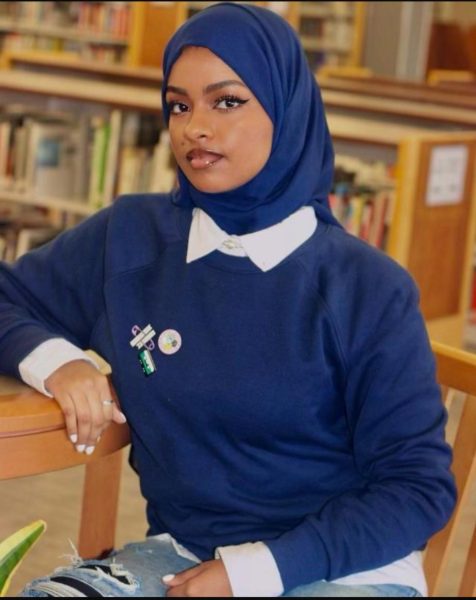
She found it difficult to reach out to other Black students in her first semester. She first attended the UI’s MISSIE Block Party during Welcome Week, but her schedule eventually conflicted with her ability to attend more events.
Truitt has proactively engaged with MISSIE events, ensuring she gets as much exposure to them as possible.
“This semester, I made sure that my classes are scheduled earlier in the day and to stay on top of event dates so I could go to as many as possible,” she said. “And so far, I have been going to a lot more meetings than I did last semester.”
Truitt described how some people are shocked after telling them she studies engineering and computer science, and further details the lengths she goes to participate in Black student-led events, and how her white counterparts are unaware of the significance it plays in her life.
“They don’t understand why I do the things I do because they never had to really go through my experiences,” Truitt said. “They’ve never been followed home or looked down on because they were Black in a mostly white field. And even if they’ve witnessed these events, I don’t think they would understand what the weight of constantly being under fire is.”
Noor Saad, a third-year business UI student, said her participation in Black student organizations has not only helped them build relationships but also prepared them for their career too. As vice president of the Sudanese Student Association and events chair for Black in Business, she’s been able to network efficiently.
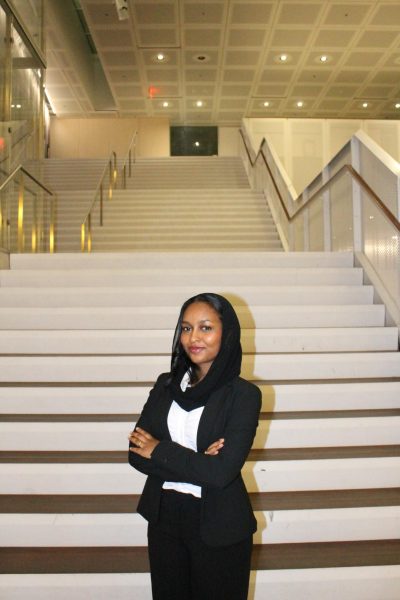
She mentioned her excitement for upcoming events, including the 9th annual networking dinner for Black in Business, which has allowed her to utilize her creative, social, and communications skills.
Black faculty members voiced the impact being at UI has given them as well.
Professor Damani Phillips, director of jazz studies at the UI Voxman School of Music and a former professor of African American Studies, described the most valuable part of working with other Black faculty members as being able to get the support he needed to settle in Iowa as someone who came from a predominantly Black city.
“All [faculty members] were exceptional minds in their respective fields, very accomplished, and most had already navigated the promotion process here. They were an unofficial support group. These relationships made that work infinitely easier, and Iowa feels more like a home. I was very fortunate in that regard,” he said.
In addition to his journey of integrating into his department, Phillips has had a plethora of rewarding milestones from UI.
“The original iteration of African American Studies was an amazing concept that I was proud to be a part of. We’ve built a jazz program here that is stepping forward on the national stage to become a destination for comprehensive and culturally-informed jazz study, in the rural Midwest, of all places,” he said.
Professor Ashley Howard, current history and African American Studies faculty member, also expressed her most rewarding moment at UI, specifically as a faculty liaison for students at the Young, Gifted, and Black Living Learning Community, which ended in 2025 due to federal diversity, equity, and inclusion, or DEI, regulations.
“In addition to teaching their class, offering a rigorous educational experience, I was also able to help them navigate the first year of college with residence hall programming, build community through field trips, and most importantly, stay at Iowa and graduate,” she said. “It’s always such a joy when I run into them around town. They are working as medical professionals, social service providers, and teachers, truly thriving, and giving so much back to the state and local community.”
Another thing Howard is fortunate for at UI is to be part of dynamic programs with diverse faculty.
“African American Studies is so much more than just a degree program, it’s a place that affirms the whole of the individual.”
She gave some advice to students of underprivileged backgrounds, emphasizing that they should know they belong at UI, no matter if they are of minority races or ethnicities, children of immigrants, rural, or veteran backgrounds, by encouraging them to build communities in places, within UI and elsewhere, where they may not see people who share the same life experiences.