


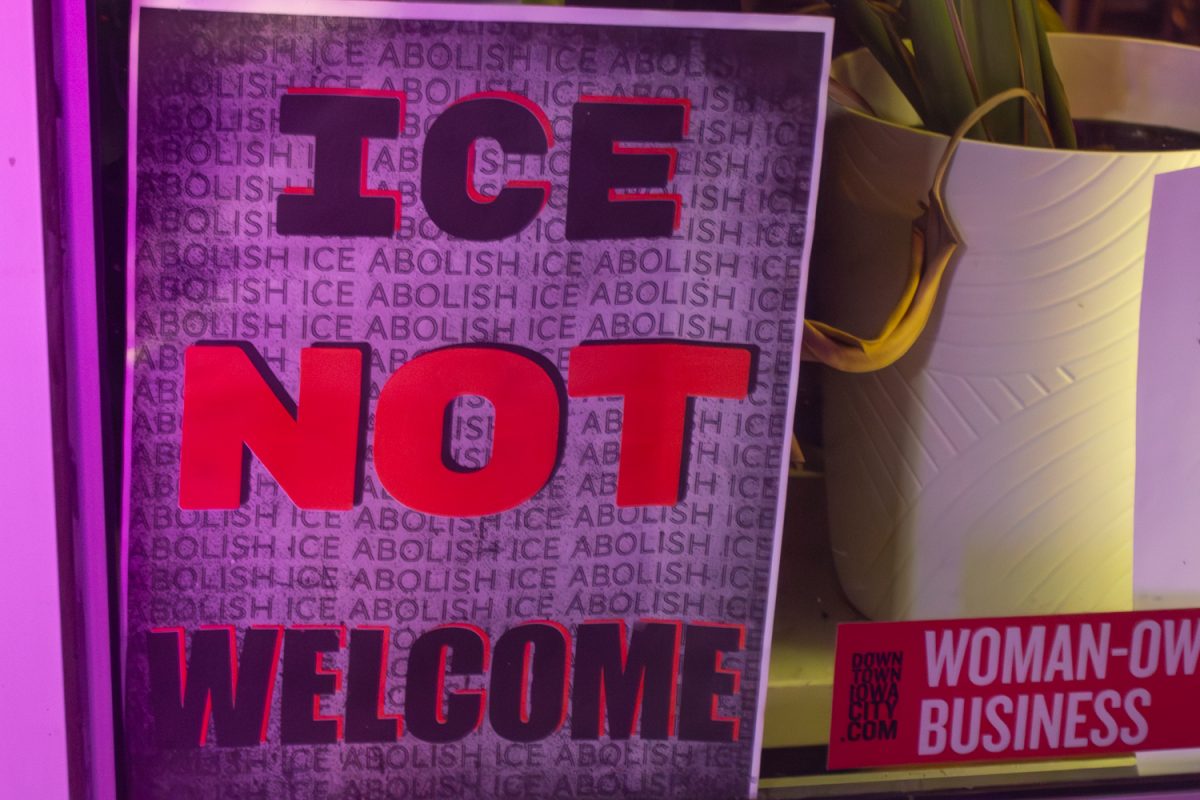
The U.S. has a rich history of protesting. One of the first freedoms the founding fathers decided to protect was freedom of assembly, after all. Protests pepper American history, from civil rights marches to women’s suffrage parades, and they have yielded great change.
Yet it is hard to find recent successful examples. The Dakota Access Line was still built despite the standstill with protestors. Occupy Wall Street barely had a goal to begin with. Even the 2020 Black Lives Matter marches, after the murder of George Floyd, were underwhelming. According to Pew Research Center, 72 percent of U.S. adults believed the protest did not improve Black lives.
The recent anti-ICE protests across the country had mixed results, but they continue to follow this downturn. According to the New York Times, 700 ICE agents might have been withdrawn from Minneapolis, but 2,000 remain, with no indication of reducing raids. That is hardly a de-escalation.
Protesting might achieve a superficial, short-lived gratification, but calling your representatives will achieve so much more. It is easy for lawmakers to dismiss people on the streets, but it’s hard to ignore constant knocks at their front door, so to speak.
Besides protesting, the First Amendment also protects your right to address grievances and petition the government. The most common way to do so is by calling your representatives.
Some of the cynicism surrounding protests also applies to calling representatives. The arguments — or excuses — against it range from fear of making the call, to doubts about whether it matters, or worries about contributing to the senseless shouting that surely already exists. Yet nothing could be further from the truth.
The calling experience is rewarding. While contacting U.S. Rep. Mariannette Miller-Meeks, R-Iowa, office, I was greeted by a patient staffer, who put me in contact with Anthony Fakhoury, the congresswoman’s communication director.
“It’s a job that requires full-time attention,” Fakhoury said. “Our interns are doing that all day, making sure their email, phone calls, and letters are being recorded.”
This staff ensures all complaints, questions, and concerns are heard and catalogued into their constituent management systems. Those that can function as a “mini-democracy” inside the government, allowing voters to express themselves directly. This can be done with general complaints, but the most efficient use of your time is talking about specific pieces of legislation.
“[Calling your representative] certainly has an impact,” Fakhoury said. “We notice the patterns of who’s calling for what. If 20 people are calling in a single day for one issue, the entire team gets made aware, and the congresswoman is made aware that same day.”
One of the greatest advantages of calling a representative is the relatively low barrier to getting a congressperson’s attention. Calling an office about a specific piece of legislation signals real political awareness and engagement. In close or regional races, even a small number of swing votes can make a meaningful difference, keeping constituents satisfied — and motivated to vote — especially important.
This is one reason protests have lost momentum in recent years. Many have failed to apply pressure to specific decision-makers, allowing politicians to avoid action altogether. Protests can also be inflated by non-constituents, making it difficult to gauge how much of the turnout actually represents a voting threat. Calling, by contrast, is far more targeted.
Call-screening systems can give offices precise geographic data, making it clear when pressure is coming directly from voters in a politician’s district, making the possibility of electoral consequences feel much more real.
Sometimes, politicians even listen directly. When I called Iowa state Rep. Adam Zabner to discuss House Study Bill 637, a recently introduced bill about Iowa biking regulations, I was able to speak with him personally. He told me he hadn’t heard of the bill, but after several people in his district said it would significantly impact their lives, which changed how he thought about the issue. He added that while he likely wouldn’t have voted for it anyway, he was now taking it much more seriously.
You may not be able to speak directly to the president or even a U.S. representative, but conversations with staffers and local representatives still matter. Even a single call can make a difference.