
Physical media should stick around
I like to consume media. Almost everyone enjoys some form of it. But my childhood of DVD shelves, game cartridges, and hardcover books is being shifted right in front of me to a less ideal media hub: the digital world. With years of subscriptions and websites and watching my favorite things go poof, bringing back physical media saves what is
easily lost.
Whenever somebody brings up subscriptions, I think of the great HBO Max purge. During the HBO Max and Discovery merger, several Cartoon Network shows were deleted from the site, either for budgetary reasons or because Discovery saw no value in them.
RELATED: Combatting the brain rot era with physical media
Shows like Infinity Train — which was not being shown on the Cartoon Network channel and had no DVD copies — were taken from the site and are still missing from the Cartoon Network section. The only way to watch it for months was a random Google Drive link before it became available through YouTube and Amazon Prime. There were months where the people involved weren’t paid a cent.
In the gaming world, threats of subscriptions and erasure for players already own have hit hard. For The Sims 4, its parent company, EA, has been bought out by a Saudi Arabian company. Saudi Arabia banned The Sims 4, so when talks first started for the buyout, Sims 4 players like myself worried that the game would be severely mistreated or broken by a company that seemed to only want EA for their sports games.
Spotify, on the other hand, has a plethora of music to choose from, but without Premium, it is almost unusable unless you only listen on a computer. And who listens to Spotify on their laptop? With the CEO going back and forth discussing a second paid tier higher than Premium as well as paying artists poorly, it has its own unique problems.
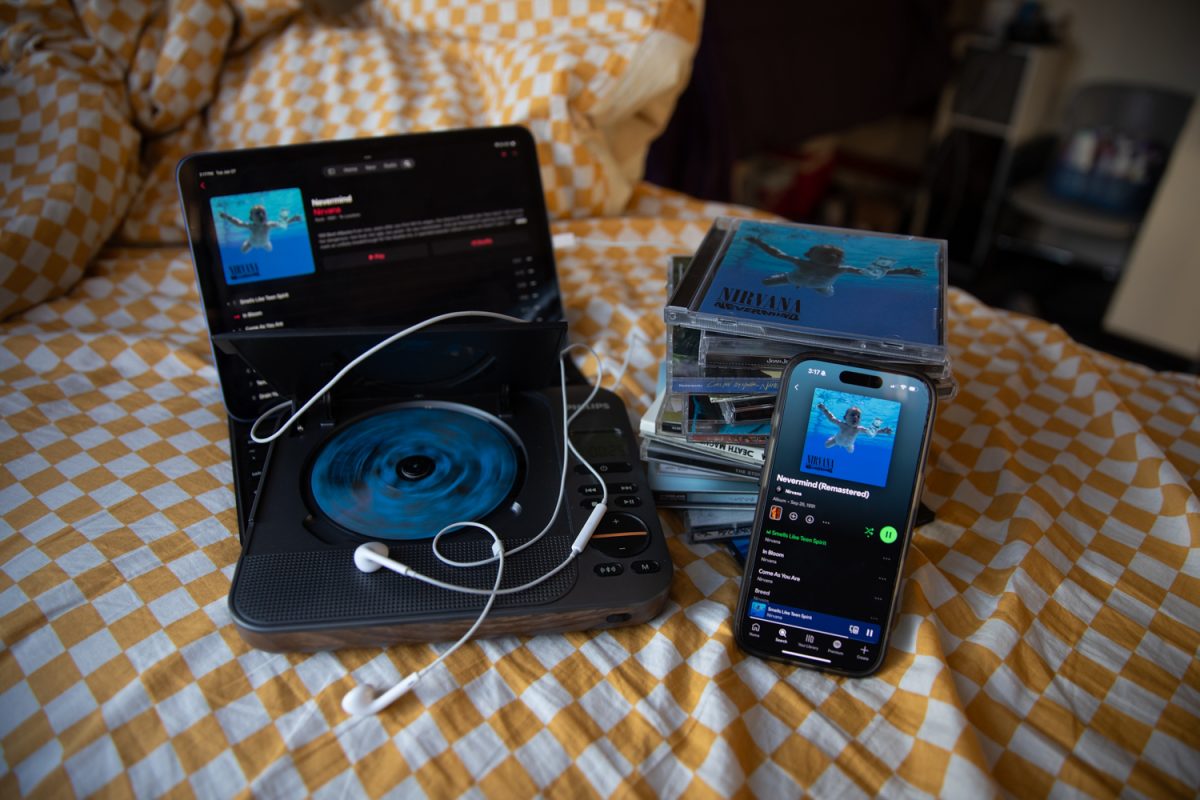
With CDs, vinyls, DVDs, and game cartridges, you can actually own what you have. It isn’t like an NFT where you just pay for the receipt — it’s yours.
Your little piece of art. Back home, I display my vinyls, DVDs, and books on shelves to show off to anyone who comes into my room.
The best way to have some autonomy back and be people-first is to have physical things. It’s time the people on top didn’t control our access to art.
Let’s keep to digital
Setting aside the feelings of nostalgia I have for my old copy of “Kinect Adventures” on the Xbox 360 and the CDs of old Disney music my sister and I used to belt out on the car ride to school, digital media is much more streamlined, environmentally conscious, and accessible. And it is all available at the touch of a button or the click of a mouse.
The vast cyberscape behind the screen serves as an archive of all the information from years past. There are entire groups of people dedicated to preserving and sharing media in digital form, especially old physical media that never lasted long enough to be digitized by its creators.
I wouldn’t be surprised if the future brought a demand for virtual archaeology as a career. Files on a computer cannot be burned, smashed, or forgotten in the back of a storage unit as physical media can. Imagine how many shows, movies, or songs have never been introduced to the current generation because no one bothered to digitize them.
However, my favorite shows, games, and songs probably won’t last as long as a single piece of plastic dumped in the ocean will, a piece of plastic whose original purpose may have been as a CD case or a
VCR tape.
The microplastics that remain still pose a major threat to the health of our world. Furthermore, the end of a product’s lifetime is not the start of its negative impact. We still have to factor in manufacturing and transportation. When you ultimately decide to forgo the physical copies and watch a show on the internet, the impact is considerably less severe.
When you cut out all the extra steps of creating physical media, it becomes infinitely more accessible, too. A human rights organization campaign, Flash Drives for Freedom, takes hard drives donated by U.S. citizens, wipes them, fills them with media from all across the globe, and smuggles them into North Korea to help inspire citizens to stand against their government.
Imagine how much harder it would be to smuggle thousands of books, movies, and informational textbooks across the border instead of a few small hard drives? Digitization can put media in the hands of people who couldn’t get it, for one reason or another.
Whether you like it or not, the complete shift away from physical media has already begun. Having all your entertainment available anywhere at all times is just too convenient.