


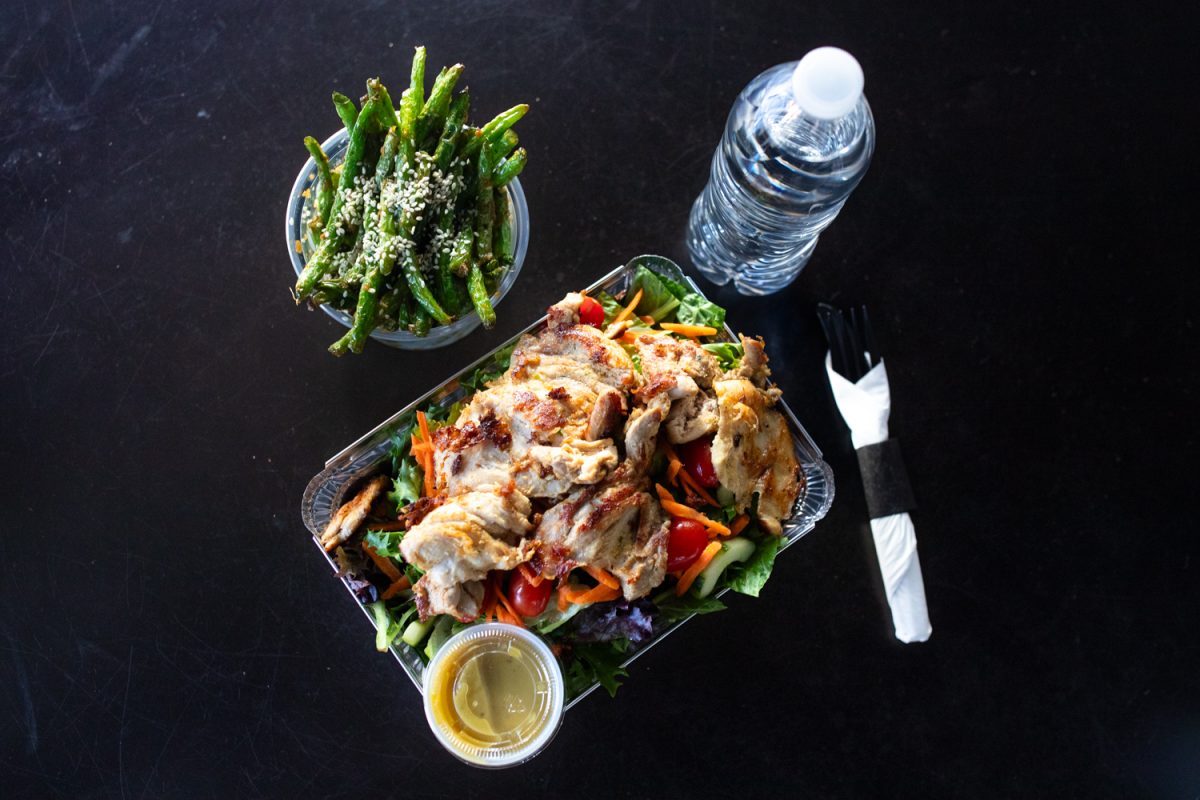
The Iowa City Community School District is navigating changes to the food pyramid by U.S. Secretary of Health Robert F. Kennedy Jr., with an inversion of the pyramid emphasizing protein-filled diets.
The decision comes after the U.S. Department of Health and Human Services announced that after over a decade, the familiar MyPlate model that was recognized by the U.S. Department of Agriculture, or USDA, would be changed.
The new guidelines replace the familiar MyPlate model with a new food pyramid prioritizing protein, dairy, fruits, vegetables, and healthy fats. The new pyramid discourages the consumption of highly processed foods.
Though these guidelines are not law, they serve as a foundation for the standards that govern school meals under the National School Lunch Program and the School Breakfast Program, according to the USDA.
By law, the USDA, which funds these programs, must align child nutrition standards with the most recent federal guidelines. How quickly and to what extent these changes will affect the cafeteria remains unclear.
Alison Demory, the Iowa City Community School District’s nutrition director, said part of her job is to help create districtwide menus, keeping nutrition guidelines in mind.
“I’m not sure how that will ultimately play out for school meals,” Demory said. “We have not received anything specifically yet.”
The district has received guidance on the reintroduction of whole milk as an option allowed in schools. Whole milk had been previously restricted from school meals due to high saturated fat content, but districts may now offer it if they choose.
“Whole milk is higher in saturated fat, so we have to track how many calories come from saturated fat in our nutritional analysis,” Demory said. “We don’t have to include whole milk in the saturated fat calculation, but we do have to count the calories.”
Federal guidelines limit the number of calories schools can serve per week, meaning higher-calorie items will offset something else on the menu. These calorie limits are organized into a tiered system, dividing elementary, middle, and high schools.
Kindergarten through fifth grade students are allowed between 550-650 calories per day, according to nutrition standards for school meals created by the USDA.
For grades six through eight, that number goes up to 600-700 calories. For grades nine through twelve, that number reaches between 750 and 850.
“If we add whole milk, something else has to come off,” Demory said. “Most directors, including myself, feel like students would rather have more food and not just a higher-calorie milk.”
Cost is another factor that the district has to consider. The higher the fat in milk, the more expensive the milk will be. At Hyvee, the cost of a half-gallon bottle of whole milk is $3.29. That same brand and size of
skim milk is $2.89.
While that doesn’t seem like a huge difference in cost, buying in bulk can make cost differences quickly add up. Demory said budget constraints may stop schools from choosing to serve whole milk.
ICCSD school board member Lisa Williams said the board’s role will be ensuring compliance with federal requirements while still supporting the district’s nutritional department as expectations change.
“It will be the board’s responsibility to make sure that we are following all applicable rules and regulations, which includes allocating funding so that our various departments have the resources they need to meet the updated federal nutrition recommendations,” Williams said.
Williams said advocacy beyond the district level will be important as schools adjust to the new standards.
“The best way for the board to advocate for our students and families is by working with the members of the legislature to ensure they are informed about the impact changes will have on our system,” she said.
For University of Iowa first-year student Caroline Benvenuto, the new pyramid aligns with her approach to eating.
“I actually really like the idea of prioritizing real foods instead of eating highly processed foods,” Benvenuto said. “I personally try to get a lot of protein in my diet and eat lots of fruits and vegetables.”
The new guidelines promote higher intakes of protein, saying Americans should be eating 1.2 to 1.6 grams of protein per kilogram of body weight per day.
Beyond protein, the updated guidelines also emphasize reducing highly processed foods. The guidance from the federal government calls to “avoid highly processed packaged, prepared, ready-to-eat, or other foods that are salty or sweet” and “avoid sugar-sweetened beverages, such as soda, fruit drinks, and energy drinks.”
Many school nutrition programs encounter challenges when trying to reduce the use of ultraprocessed foods in school meals. These challenges include limited equipment, staffing, and funding.
According to a national survey of school nutrition directors, 79 percent reported “extreme need” for an increase in funding and resources for their programs.
Many school nutrition programs encounter challenges when trying to reduce the use of ultraprocessed foods in school meals. These challenges include limited equipment, staffing, and funding.
Sara McEleney has three children enrolled in ICCSD, one in elementary school and two at the high school level. She feels that decreasing the amount of processed food in her children’s meals is a step in the right direction.
“I feel like they are making the appropriate choices in regards to trying to improve the quality of food in the schools,” McEleney said. “I hope they can put some tools and processes in place to assist the school districts in making it more accessible to prepare the types of nutritious meals for the students who depend on the food provided by schools.”
McEleney said she is concerned that the vnew guidelines could potentially cause an increase in the cost of school lunch. She said her family wouldn’t be impacted by an increase in the cost of school lunch, but other families may be.
“I think that this could really potentially put families in a bind, especially those who rely heavily on the school provided meals,” McEleney said