


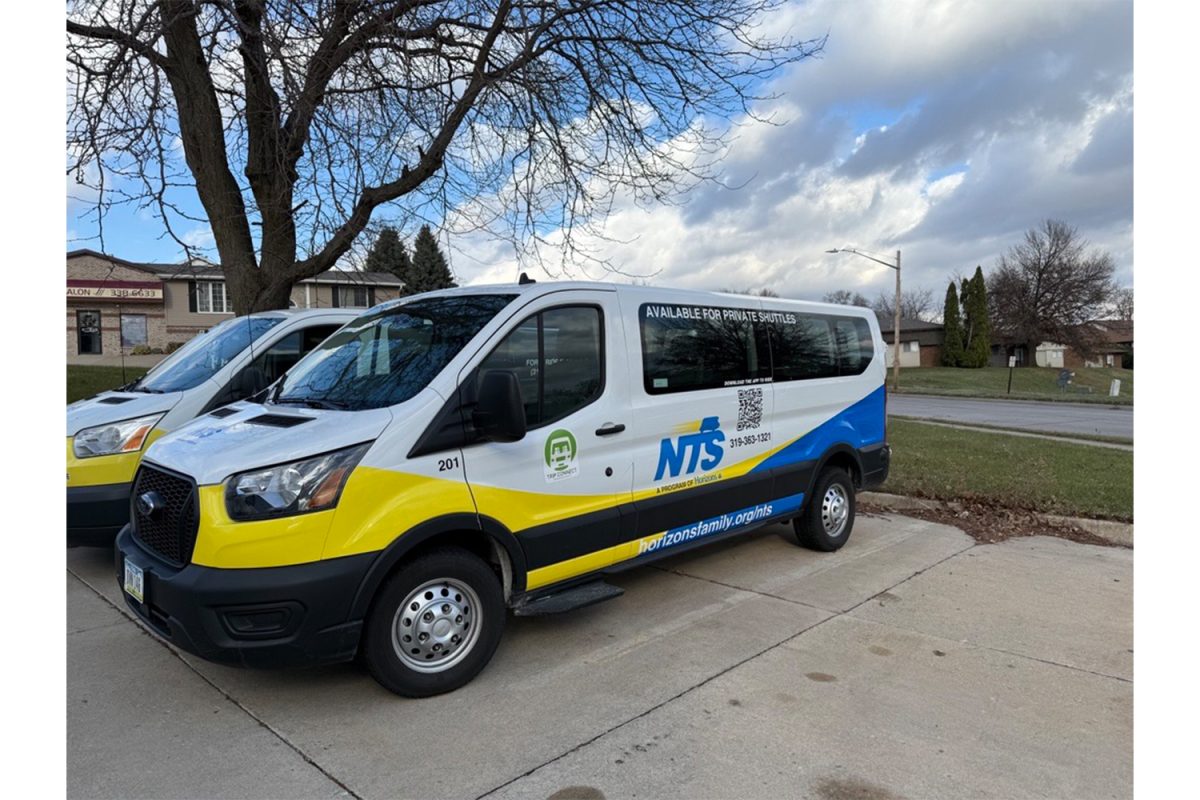
After over a year of driving Johnson County residents, Trip Connect, a transportation network that served residents for late-night rides throughout the county, is shutting down operations.
June will mark the end of the pilot phase, which will not extend into a continually funded program. The program was primarily funded through a $350,000 Iowa Department of Presentation Special Projects grant and $220,938 of American Rescue Plan Act funds, both of which will run out by the end of the fiscal year.
Trip Connect began in December 2024 and the service completed 616 rides in October 2025, according to a joint entities report.
Lynette Jacoby, Johnson County social services director, said while it disappoints county officials to not extend the pilot program, public transit systems often require heavy public investment, something she noted as challenging, as the state restricts the amount of funding counties can secure through property tax levies through bills such as Iowa House Bill 718.
“There really aren’t any public transit programs that are self-sustaining,” she said. “They don’t pay for themselves. They require public investment, and right now, it’s a difficult time for local areas to add new expenses.”
RELATED: New Johnson County ride service serves customers during odd hours
According to a survey polled by Trip Connect, the program saw 128 responses from September to October 2025, 85 percent of riders indicated they do not own a car, and 60 percent reported an income of less than $30,000 annually.
85 percent of riders indicated that the transit service helped increase their work attendance, and 93 percent agreed that using Trip Connect helped them increase their personal finances.
“This is a lifeline for a lot of the riders,” Jacoby said. “It’ll be really hard to replace a service like this.”
Trip Connect gave a total of 4,224 rides from December 2024 to November 2025 according to its Jan. 12 report to the Johnson County Joint Entities meeting.
Iowa City resident Jasmine Hayes and her partner, Travis Brown, are now one of the many riders facing higher transportation costs with Trip Connect’s closing, which offered a low rate of $2 rides.
“We can’t afford to get back and forth without a car right now because of everything going on in the world, on top of rent being high,” Hayes said. “No one’s really hiring, so we’re working part-time jobs, so it’s already a struggle to get to and from.”
Hayes hopes county officials hear enough demand from Johnson County residents to convince them to continue funding Trip Connect.
“Investing in this is only going to help Iowa City and the surrounding area,” she said. “The more people that are getting out there, the more jobs we have access to that are not on the bus line, that all plays a part into people showing up for work and being able to put back into our economy.”
Sandy Weger, the director of community transportation at Horizons, the Cedar Rapids nonprofit that operated Trip Connect, said even as the program nears its final days, riders still request the program to expand.
“People are just asking for more time,” she said. “As you look at the hours we run, we really are only available for a one-way trip because we just aren’t there for the hours. Something [riders] would like to see is more hours — more funding that’s going to be needed.”
Trip Connect averaged 19 rides per night, which, according to Weger, filled up many of the available times residents were able to select a ride.
“We have seen an increase in the number of rides that we’re not able to accept,” she said. “That’s because the slot for the time they’re looking at has been filled by other riders.”
Jim Miller, the vice president of development at Horizons, said riders who wish to see the service continue must remember that elected officials pay attention to their constituents.
“If riders in the community would want to see this continue and have some funding identified, they need to advocate for it,” he said. “We can advocate for it, but the general public, who they represent, that’s what gets their attention.”
Miller said although he understands it is difficult for the county to continually match the funds the temporary grants provided, the decision to cut the program overlooks the hundreds of riders who now must resort to more expensive transportation means such as Uber.
“Money is money, but this is the human impact that people have one less affordable option of ‘how do I get to work or class or whatever I’m doing’” he said. “That’s the really tough part.”