
The thrill of live theater is an unbeatable feeling. Seeing actors in real time and knowing the amount of rehearsal time and work they put in to make sure everything runs smoothly makes the show all the more satisfying.
However, because theater, and especially Broadway, is not easily accessible for most of the population, professionally filmed shoots of shows bring the thrill to those who don’t have the delight of viewing shows in person. Most recently, the “Merrily We Roll Along” revival proshot brought this joy to me.
Now I must add, I did get the opportunity to see the show live last year, and I was stunned from the moment the overture began. Since I last saw the show, I have listened to the new Broadway cast recording over and over again, wishing I could see the show just one more time.
“Merrily We Roll Along,” which contains music and lyrics written by Stephen Sondheim, initially opened in the 1980s on Broadway. The show was initially a flop and ended up running for less than a month.
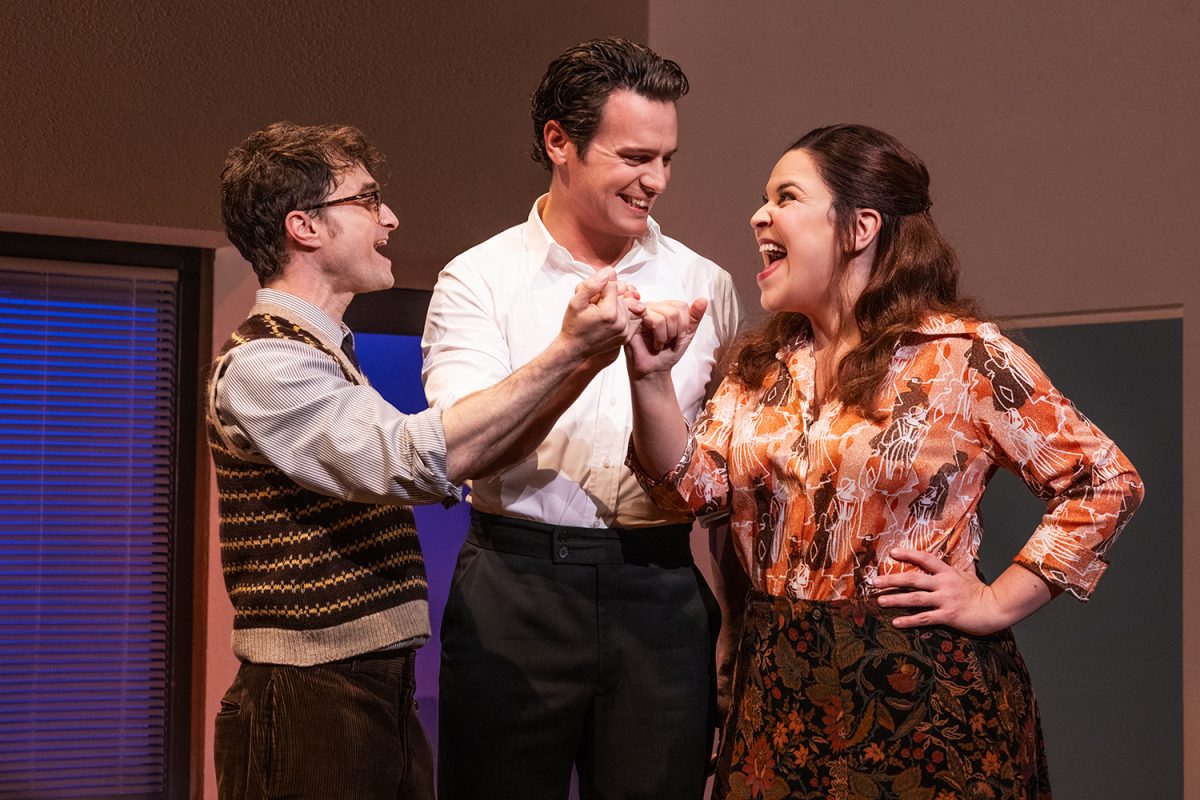
The revival, starring Jonathan Groff as Franklin Shepard, Daniel Radcliffe as Charlie Kringas, and Lindsay Mendez as Mary Flynn, was immediately a hit. The show, which was only supposed to run for a few months, ended up extending twice and running for nearly a year.
The musical also won several Tonys, including best revival of a musical, and Groff and Radcliffe both won their first Tony awards.
When it was announced the musical would be filmed and released in theaters, I put the date in my calendar and started annoying everyone around me. As a major theater kid and someone who prefers to watch filmed stage productions rather than movie adaptations of musicals, I was bouncing off the walls waiting for the musical to be released.
RELATED: Point/Counterpoint | Does ‘Wicked: For Good’ earn its acclaim or end up overhyped? – The Daily Iowan
So, this past weekend, I grabbed my roommate and forced her to go through the musical experience with me.
“Merrily We Roll Along” tells the story of three friends, writers and composers, as they deal with fame. However, the story is told in reverse, as it begins at the end and slowly moves backward through time until the day the group formed.
The way they tracked time was built into the music, with the ensemble counting down the years between scenes while the actors performed quick changes backstage. However, in the filmed production, the years are displayed on the screen during the scene changes, except for one scene where the year is built into the set.
The show opened with Franklin Shepard walking onstage alone in silence, before the ensemble started to sing the opening song, and it seemed he was reflecting on his life while holding a folder of the last show that he and Charlie had written; a folder snuck into many scenes throughout the show.
When I saw the show in New York, I was sitting in the balcony and couldn’t fully read the actors’ faces, so the film version led me to see things I missed when watching the show live.
For example, there are moments where the characters’ microphones are off, but they are whispering to each other, which is something I missed in-person, but I had fun trying to read their lips while watching the filmed version.
I also got to see my favorite song, “Franklin Shepard, Inc.” in action again. The song, which requires actors to sing very quickly and meticulously, as is often seen in Sondheim’s musicals, is considered the most difficult song to sing within the show, and Radcliffe executed it perfectly.
After the show, I got to debrief everything with my roommate, and knowing that she enjoyed the show too was almost better than seeing the show.
Now, I’m counting down the days until they release the musical on streaming services so I can watch it on repeat.