


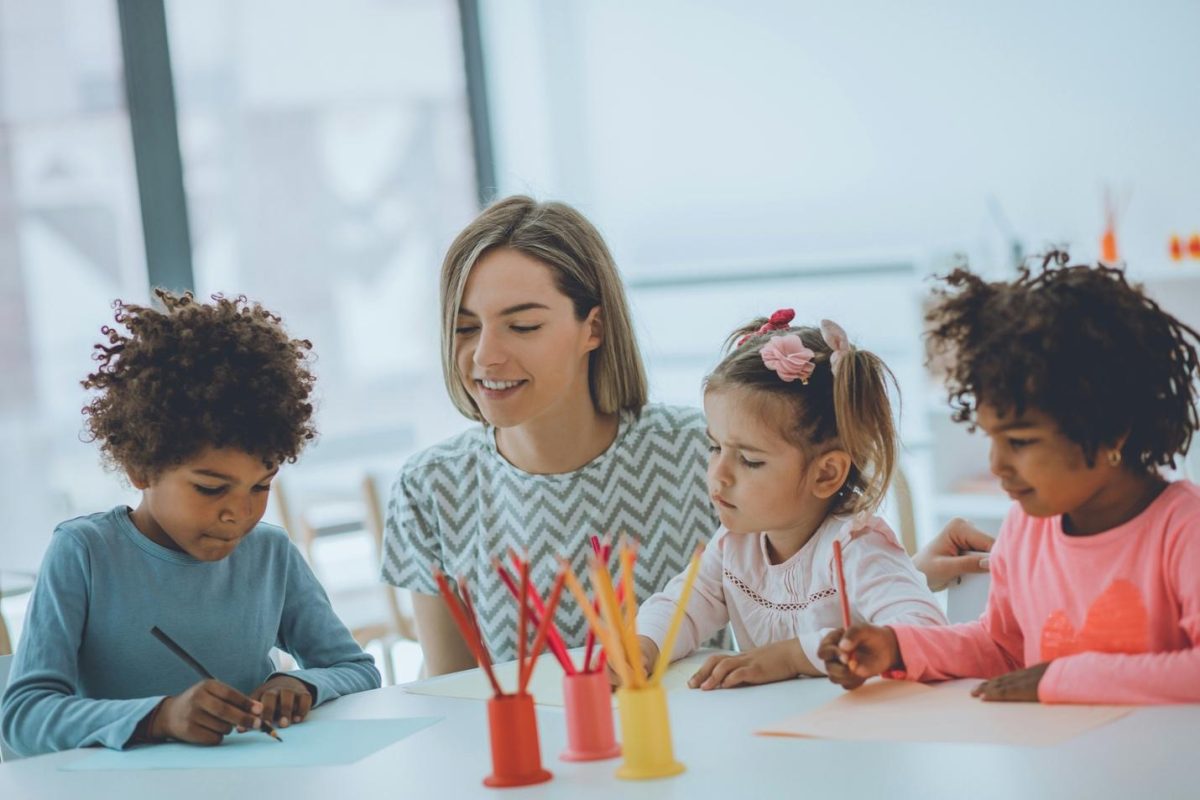
Most school leaders describe students as the future. Crissy Cáceres, head of Brooklyn Friends School since 2019, assigns them a more immediate role: chief architects of institutional vision and purpose.
“Children are my greatest dream architects,” Cáceres stated during a conversation about her leadership approach. “They give me every ounce of, not that I need the permission, but the affirmation of this is worth the good fight, this is worth the boundary, this is worth the solicitation of a donor, this is worth the reconstruction of a policy, this is just worth it.”
Her philosophy stems from nearly 30 years working with young people, beginning when Cáceres was 14 years old as a camp counselor. She taught third grade for a decade before moving into administrative roles at Georgetown Day School and Abington Friends School, ultimately arriving at Brooklyn Friends School as its first head of color and first woman to lead in more than three decades.
Relationships with students differ from conventional administrator-student dynamics. “I view children as dream partners, because if a child brings dreams to me, and they do all the time, including protesting, because they’re learning about activism, so children might do that in the context of learning about it,” Cáceres explained.
Protests as Affirmation
When Crissy Cáceres first arrived at Brooklyn Friends School, colleagues alerted her about student activism. “People talked to me about that as a warning, ‘Crissy, the kids might come and ask you for protests, the three-year-olds, the five-year-olds, the 12-year-olds, the 18-year-olds,'” she recalled. “And I said, ‘That’s amazing.’ They’re like, ‘What are you talking about?’ I said, ‘That’s my favorite.'”
Her response reflects an understanding of what student activism signals. “Children remind me of who I am still as an adult. That was me, that is still me,” Cáceres stated.
Student requests arrive as wishes rather than demands. “They are always more curious than certain, and so they don’t bring forth demands,” she observed. “What they bring forth are wishes and hopes and dreams in the context of what they believe is going to be for the betterment of something.”
Unfiltered Truth-Tellers
Crissy Cáceres credits students as her primary teachers throughout her career. “They are the best teachers, they’re the primary teachers,” she said. “I’ve been officially in this landscape now going into my 30th year, but I’ve been a camp counselor since I was 14, or I’ve been involved in directing student programs when I was in college.”
Young people possess qualities adults often lose. “Children are unfiltered in the most beautiful of ways,” Cáceres explained. “They are able to sense energy and body language uniquely so. 80% of what we say, we say with our body language, and a child knows if you are there in support of them, they know if you believe in them, they know if you’re taking them seriously.”
Capacity for reading adults shapes how Brooklyn Friends School operates. “Children have taught me that their voices should never ever be less than those of the adults,” she stated. More than 700 students from two years old through 12th grade attend the institution, which structures itself around this principle with circular classroom arrangements and regular opportunities for student voice.
Students demonstrate qualities many adults struggle to maintain. “Children have taught me that they are immensely courageous because they are willing to speak to those needs,” Cáceres observed. “Children have taught me about empathy. No adult can come close to a child recognizing when someone is in pain, and that they either need to stand closer to them, invite them to play with them, make space for a conversation. They know how to communicate a connection to pain.”
A Standard for Better
One conversation captures how student perspectives inform institutional decisions. A child explained to Cáceres why a particular change mattered: “Just it will be gooder. It will be gooder if you do this, Crissy,” the student told her.
That statement became a guiding principle. “I’m always striving to be selfless enough to understand what is it that is not necessarily within my realm of immediate need, but that if I do, makes it gooder for somebody else, and the children do that,” Cáceres explained.
Inclusive Dreams Never Harm
Student requests at Brooklyn Friends School share a common characteristic that distinguishes them from adult demands. “They never come and say, ‘Do this because it’s going to be hurtful, do this because it’s going to exclude,'” Cáceres noted. “Children always have a need because they think it will make something better.”
Observation informs her receptiveness to student activism and proposals. When young people identify areas for improvement, their motivations center on creating better conditions for everyone rather than personal advantage or exclusion of others.
Perspective extends to how the school measures success beyond traditional metrics. “The measure of our success is who they are as 30, 40, 50, 60-year-olds in the world, it’s who they are and continue to be in relation to the privileges that they hold,” Cáceres stated. “All of us hold privileges in different ways, the question is, how are they utilizing it?”
Brooklyn Friends School seeks graduates who use privilege for positive social impact, think expansively about their sphere of influence, and consider how their decisions alter others’ lived experiences. Quakerism spreads not through proselytizing but through how people live their lives, reflecting core testimonies of Simplicity, Peace, Integrity, Community, Equality, and Stewardship.
Third-Grade Sweet Spot
Crissy Cáceres taught third grade for a decade, a developmental stage she considers particularly significant. “The first half of the year, they’re still incredibly concrete learners,” she explained about eight-year-olds. “They are saying, ‘That’s what’s in front of me, that’s what this means.’ They are thinking about the world of everybody else.”
Transformation happens mid-year. “In January on, the second half, what you see is a popcorn experience, where they understand they’re part of something greater,” Cáceres observed. “What I do affects everybody else, and they become hugely curious, why, why, why, how come? And that is the way they build their agencies. So third-grade to me is just a sweet spot, give the world over to third-graders and we’re on.”