
This is an installment in a multi-part series.
Colorful oil paints and markers line the shelves of Blick Art Materials, drawing in Iowa City residents and university alike.
But across the country, several art supplies and art retailers have seen rising prices for their colorful materials since President Donald Trump’s administration began implementing reciprocal taxes across all markets and countries.
Several local suppliers are left to face uncertain futures and find creative ways to continue supplying materials to their communities.
The Trump administration has enacted a series of tariffs, or a tax on imports, over his second term in an attempt to negotiate relationships with various global U.S. trade partners. These tariffs have led to increases in the cost of imported goods and national supply chain issues, affecting a wide range of U.S. markets, including for art supplies.
Specific tariffs imposed on paints and coating raw materials range from 15 percent to 45 percent, according to Cognitve Market Research. These materials are heavily sourced from China and Germany, and with both countries facing high tariffs, U.S. manufacturers could see costs increase by 28 percent.
Andrew Black has been the assistant manager at Blick Art Materials for three and a half years and said the store has seen an increase in cost, but so far, prices have not been as bad as expected.
Blick Art Materials, a family-owned company in downtown Iowa City, has been selling art supplies since 1911. Blick has worked to keep costs low despite the rising prices.
“One of the things that’s nice about this, about our store in particular, is that we supply products that students and artists really want, and they’re still very affordable,” he said. “When the tariffs started, we all just kind of thought this [was] terrifying.” he said.“But while prices have gone up, we’ve been sort of cautiously optimistic.”
Black said their main concern would be supply chain issues. Materials made in other countries would be harder to gain access to, slowing down the supply chain. Several different kinds of supplies, including watercolor paper and paint, are shipped in from overseas, but so far they haven’t seen much of a disruption.
Black also said this could be due to suppliers stocking up beforehand, so they still have inventory to pull from. But as time goes on and tariffs remain in place, this could change.
“There are a few products that we’ve seen that might take a little bit longer to get in, but nothing massive to this point,” he said. “It’s sort of a wait and see.”
Black also said the arts can be uniquely affected, as art supplies like canvases are generally expensive, getting up to $125. He said this makes him nervous, as he wants to ensure artists always have the supplies they need to create art.
“Even as an artist myself, I want to make sure I can afford the things that I use so I can keep creating artwork,” he said.
Black said despite the tariffs, Blick has seen an increase in sales and traffic, which he attributes to how art helps people process hardship.
“That made me happy,” he said. “I feel like we’re providing that service to people that need it.”
Black said the art store has worked on slowly increasing prices when they need to, and has made keeping prices stable a priority.
Art supplies, like paint and watercolor paper, are not the only kinds of products affected by the tariffs.
Metals and special packing, specifically for jewelry making, have also seen rising prices.
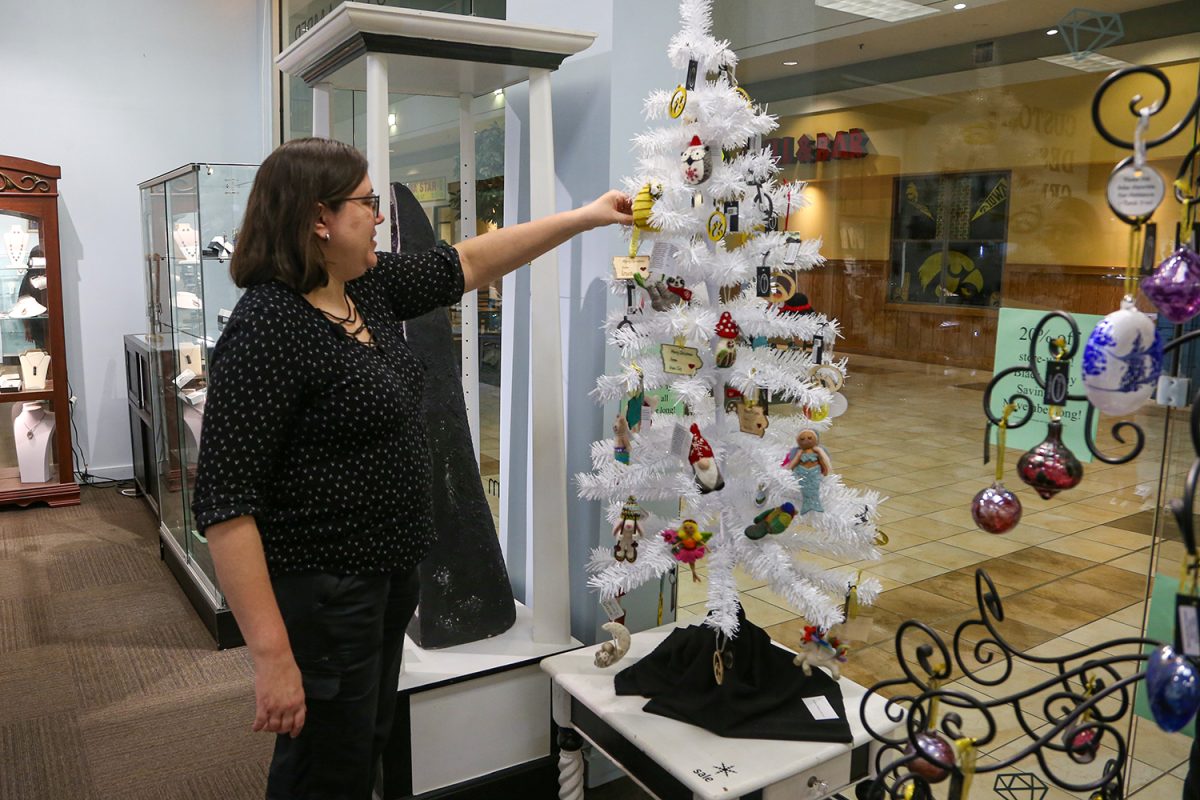
Glassanodos, a local jewelry business that sells handcrafted jewelry, has also been affected by the tariffs. Abby Restko, the company president, said the business stocked up on supplies before the tariffs were enforced, which has helped them save money. She said the store will eventually run out of the items they purchased ahead and will have to face higher pirces.
Restko said she believes people’s drive to create will not be affected by the higher pricing.
“I think people always need an outlet,” she said, “If anything, if people are upset about something like, say, a tariff, that may honestly drive them to create.”
Wendy Dorn-Recalde, co-owner of Wren and Purl, a local yarn shop in Mount Vernon, made an effort to buy U.S.-based products and isn’t expecting to see a large increase in prices until the spring. However, the company has made decisions to cut certain brands in preparation for those increases.
“We have made the choice to not carry a brand that we had carried for a while on the craft yarn side because it is from a company in the EU,” she said. “The reason we brought that one in was because it was a craft yarn, that’s well made and affordable, and [the tariffs] made it unaffordable. So what’s the point?”
Dorn-Recalde said it will be hard to predict what brands the shop will carry, as tariffs are not stable anywhere. She said this will especially affect ChiaoGoo knitting needles, which are entirely produced in China, meaning the needles are currently facing a 10 percent tariff.
“Our distributor for needles [Knit Pro] has been in a constant freakout fest via email,” she said. “They’re always updating us, but it’s very panicky sounding on their end, and so I think that’s where it’s going to hit harder.”
She said she wasn’t nervous about people’s creativity dwindling.
“I think handcrafts, crafts of any variety, actually usually do pretty well in times of stress,” she said. “People turn to those things.”