


This is an installment in a multi-part series.
As global tariffs drive up alcohol costs, Iowa City breweries say the real impact is hitting harder on the price of barley, malt, and even the aluminum cans their beer comes in. According to The Washington Post, tariffs imposed by President Donald Trump put a 20 percent duty on all goods imported from the EU.
On March 13, Trump posted on X, formerly known as Twitter, that he would impose a 200 percent tariff on alcoholic drinks from EU nations unless the bloc dropped a planned 50 percent tariff on U.S. whiskey.
ReUnion Brewery, located on the Pedestrian Mall in Iowa City and Second Street in Coralville, has been brewing its own craft beers and distilling liquor since 2015.
ReUnion’s Chief Operating Officer Kris Mondonaro said despite brewing their own beer, tariffs are still impacting them, saying the 25 percent to 35 percent tariff increase has affected their prices as well.
“We were brewing a German Pilsner, and then there are tariffs with Europe, so then you have to look into, do I change my Pilsner and buy different wheat or barley?” she said. “Also, a lot of our malt has come from Canada.”
Mondonaro said tariffs also impact the aluminum cans the brewery imports.
“A lot of people buy our cans overseas, so the shipping costs and tariffs have been extraordinary, and that definitely affects everybody,” she said.
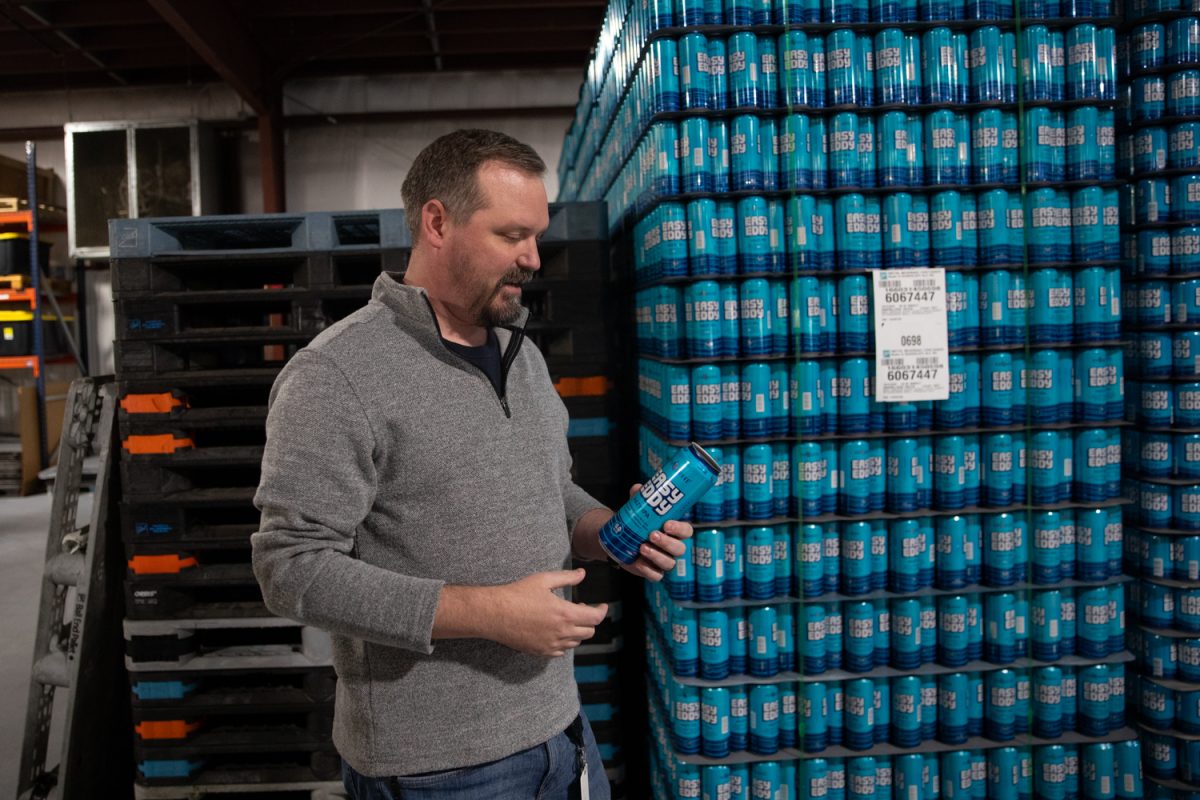
Big Grove Brewery and Taproom also brews its own beer, with popular crafts served in other bars and restaurants, such as Mickey’s Irish Pub, in Iowa City, including the Easy Eddy and the Citrus Surfer. The Iowa Chop House, located in downtown Iowa City, serves the taproom’s brew as well.
Will Farmer, brewery production analyst at Big Grove Brewery and Taproom, said the brewery’s aluminum can costs have seen a 10 to 20 percent increase due to tariffs.
He said the cans themselves can increase in price as well as the parts that go into manufacturing them, including the tab and the body.
“We get hit twice on those,” Farmer said. “The other thing is that some of those cans are actually made out of the country. Our 19-ounce cans actually get made in Mexico. So on top of the aluminum prices themselves, every truckload of those that we buy, we actually have to pay an additional tax on top to get those across the board.”
Farmer said the hops and barley the taproom uses in its beer are domestically sourced, but some of the specialty malts, including a German Pilsner, come from Europe.
However, he said those ingredients were able to bypass the tariffs.
“There’s a lot of barley that gets farmed there, and a lot of those companies that do the malting in that area get it from both sides of the U.S. border,” he said. “We are lucky that we didn’t see any incidents from that, but there are definitely a lot of breweries
that have.”
As of right now, Farmer said the taproom has not had to drive up the prices of its beer to customers, but it might be an issue in the future.
“It is something that we have discussed as a trade-off,” he said. “We got lucky that we were able to negotiate some other cost savings throughout our process to kind of offset that, so we were able to keep our prices consistent. But going forward, if prices keep going up, that’s going to be something that we seriously have to look at.”
Bars like The Airliner, The Summit, and Brothers Bar & Grill, located in downtown Iowa City, that don’t brew their own beers have avoided impacts from tariffs.
Carson Justice, general manager of The Airliner, said the bar’s prices have not increased at all, as they only serve brands sourced in the U.S., including Budweiser, Coors, and Busch.
“I have not noticed any change with the cost of our liquor for the bar,” he said. “The price of liquor has been very consistent because most of the products we use are American brands.”
But that stability still hasn’t carried over to the brewery side.
To avoid the rising costs of imported ingredients hit by tariffs, Mondonaro said ReUnion Brewery started turning to local farmers, using Iowa corn in their amber ale.
“It’s kind of chaotic, honestly,” she said. The tariffs keep changing, so you’re always chasing your tail — trying to find what’s available, what’s affordable, and what’s even worth brewing next.”