


A lot of people could use more social anxiety. Or at least some social awareness. People who behave as if it were their first day on Earth could care a little more about how they’re being perceived.
I’m generally a socially anxious person. I think every person is laughing at or whispering about me, and I feel overly conscious of everything I’m doing, wearing, and saying. It’s also worth noting that I’m rather easily annoyed or displeased with people for small, petty reasons. If I’m constantly worrying about how I’m being perceived, why isn’t everyone else?
Apparently, this is asking too much. I’m surrounded by people with no regard for social cues and conduct, who talk and yell from down the street, or who laugh so loudly and profusely you’d think they were hearing a stand-up comedian’s best joke.
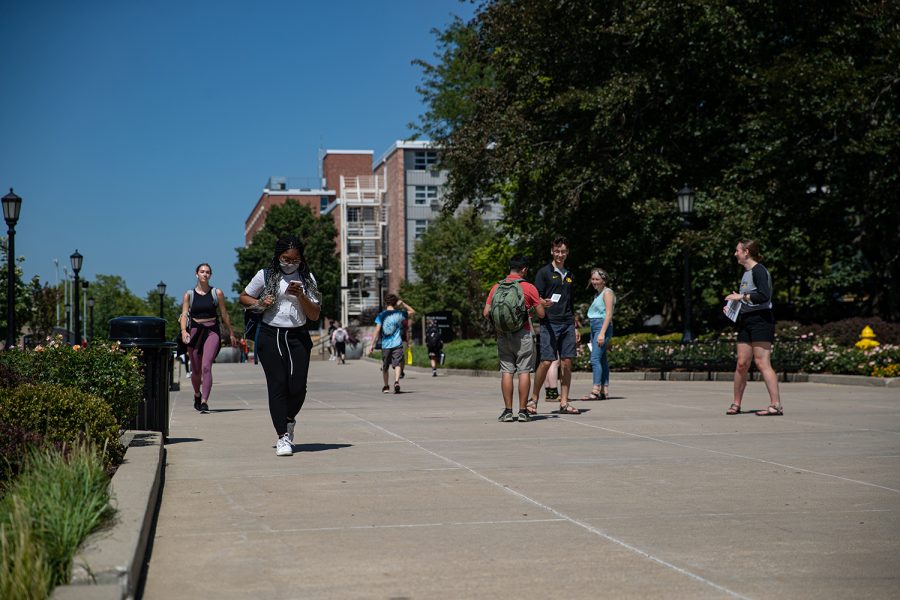
I can go on and on. These people have no awareness of personal boundaries. They walk too slowly, or, by contrast, speedwalk everywhere. They walk down the middle of the sidewalk or down the wrong side and don’t attempt to move over. Get a clue.
Wishing social anxiety on someone might sound like too much. It can be a crippling and paralyzing disorder. But just a little bit, just some social awareness and concern, could be of use.
“A balance between [social anxiety and social awareness] is needed,” University of Iowa second-year student Julia Neal said. “I recognize the difficulty of creating this balance, but it would lead to more connected and kinder communities.”
A Psychology Today article from April 2024, written by Robyne Hanley-Dafoe, acknowledges the importance of social awareness in being able to connect, communicate, and collaborate with others in our personal and professional lives. The article lists the benefits of strong social awareness, including support for effective communication, promotion of empathy and compassion, strengthening relationships, and constructive conflict resolution.
I understand some people genuinely struggle to interpret social cues and behaviors, or can’t help their behavior and have a reason for it. But I also know there are plenty of people who are more than capable of taking a hint and adhering to the norms.
Some people just need a little more social awareness. The article recommends improvement in this area via self-reflection, a greater sense of presence, active listening, as well as practice of communication with empathy and compassion, and observation.
“I feel like there has been a lack of social awareness because people just don’t care as much and only care about themselves,” second-year UI student Rose Peden said. “If people had more self-awareness there wouldn’t be so many problems in day-to-day activity.”
Neal recounted a problematic experience of her own working on a group project where a member would continually interrupt everyone and dismiss other ideas without truly listening to them.
“If this individual had more social awareness, they might have noticed the hunching of our shoulders and avoidance of eye contact, or the awkward silence that hung in the air when they were done talking,” she said.
More social awareness in this situation may have led this person to realize how their words and actions were affecting others, and they could have adjusted so that everyone felt comfortable.
Pay attention to what others are doing. Don’t be needlessly loud, distracting, or attention-drawing.
I know I sound like a total buzzkill, but I promise I’m not asking everyone to give up all quirks and aspects of individuality. Maybe just those that are problematic. Sometimes it’s more productive for everyone to be a member of the crowd.