


The leaves are falling, the temperature is getting colder, and it’s finally acceptable to flood your home with scents of apples and cinnamon to ring in the fall season. Houses in the neighborhood have orange and purple lights or inflatable horror characters in their front lawns.
A carved pumpkin sits on every stoop, but my excitement for the season started when I placed the Shein order for my Halloween costumes.
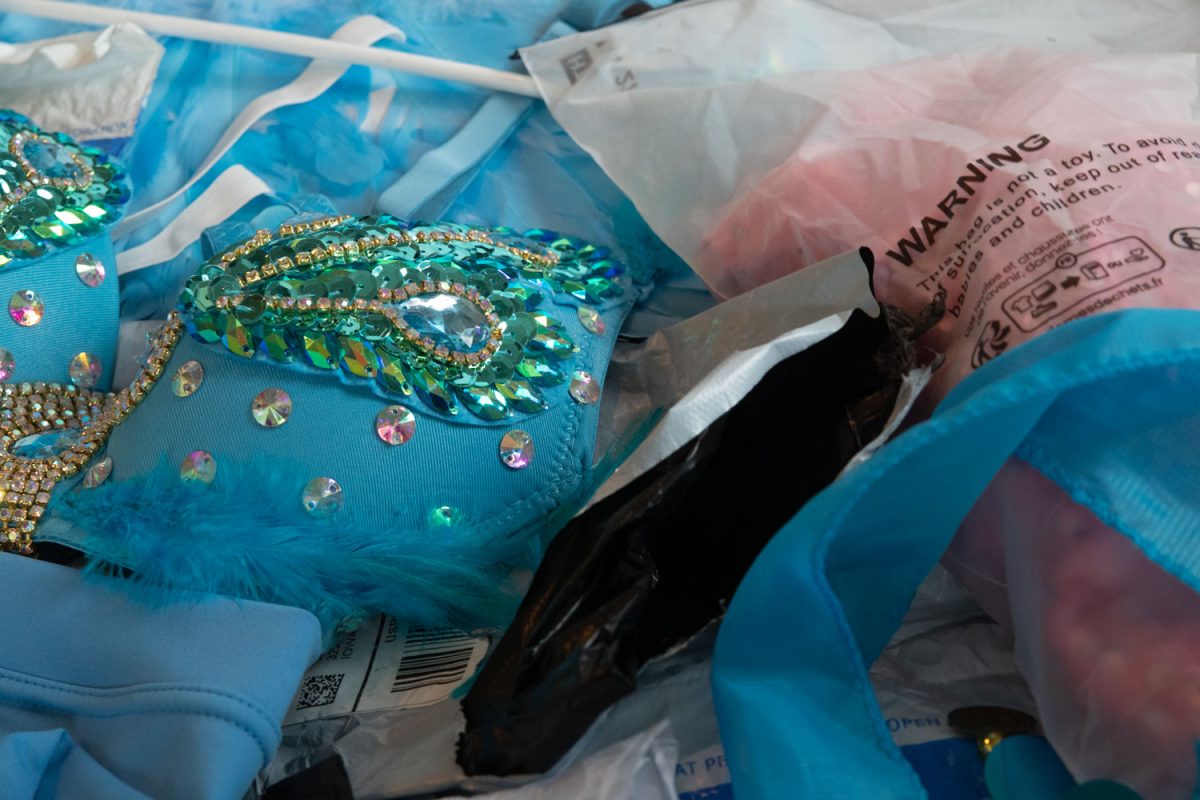
Despite the fun and excitement surrounding the holiday, we — with cheap, trendy costumes and accessories — fuel an industry built on exploitation and environmental harm, and we justify it “just because it’s Halloween.” More often than not, we buy something for a costume, use it, and then stash it somewhere unseen for the rest of eternity.
As a college student, Halloween is one of the best experiences to take part in. Whether it’s coming up with niche characters for your friend group to dress up as or trying to find a funny but still sexy
couples costume, October gets people thinking creatively about what to wear. This year, I’m taking the funny route: I’ll be a White House plumber while my friend struts as Richard Nixon, Drake and Josh, and a surfer with a shark.
These costumes, however, often don’t contain practical items I have on hand, so I’m stuck looking through catalogs and websites to find the exact top or necklace to make the costume. Hoping each item won’t cost too much, the looming financial obligation of needing three costumes for “Halloweekend” influences every choice.
The novelty making Halloween’s fast fashion consumption extra detrimental, though, is the social culture surrounding the day and the impracticality of many costume garments. As broke Gen-Zers looking for a one-time get-up, we take advantage of the less-than-ethical, but ever-so-tempting option of fast fashion. I can get the exact outfit I want off a site like Shein for roughly $20. I feel confident, I look good, and I saved a few bucks.
“The least practical thing I purchased was probably a choker with pretend blood on it for a vampire costume. I obviously never used that again,” Fatima Alabdulrasul, a University of Iowa second-year student said. “I absolutely think college influences fast fashion costume habits because people want things that are quick, cheap, and trendy.”
Fast fashion is a method of creating, pro ducing, and selling products following no seasonal rhythm. It prioritizes fast production, low quality, and cheaply priced items, allowing consumers to be financially stable while participating in the hottest micro-trends of the month. It is a system of an increased scale of production to yield greater economic results.
Quicker trend cycles require brands to have various options available to cater to a wider audience. It’s the definition of being trendy on a budget, but there’s actually so much more being risked for that perfect costume you’ll never touch again after Oct. 31.
Now, social media has taken over fashion trends. Brands like Temu and Shein are prioritized for their speed in production and collection release, with new items coming out within days of each other. While many people are aware of the ethical implications of this kind of consumption, they still don’t financially have many options to steer away from it.
“I try not to be super into fast fashion outside of Halloween, but as a broke college student, I don’t judge people who are,” Alabdulrasul said.
The biggest contributor to the non-biodegradable clothing items we can’t stop purchasing is the cheap material they are often made of — plastic polymer, which, in its oil-based form, can take an estimated 20 to 200 years to decompose, according to an April 2024 Vogue article by Alyssa Hardy. Around 83 percent of Halloween costumes use non-recyclable materials, dooming them to live out their life in a landfill, according to Hardy.
In Seoul, South Korea, environmental health officials have been conducting weekly inspections of items sold on online platforms like Shein, Temu, and Aliexpress, according to a World Health report from Le Monde in August 2024. They found many products failed to meet legal standards for chemical composition, with one pair of shoes from Shein containing 229 times the legal limit of phthalates. A chemical used to make plastics more flexible, phthalates can cause reproductive harm in both men and women.
Other chemicals found in Shein’s products include formaldehyde, which is used in home building products; dioxane, a possible human carcinogen causing liver poisoning; and high methanol concentrations, according to reporting by Yahoo! Finance in August 2024.
Additionally, brands like Shein and Temu faced a 120 percent tariff on their packages entering the U.S. due to the “end de minimis” exemption, which allowed goods under $800 to be exempt from tariffs for packages hailing from Hong Kong and mainland China. So, honestly, is it even still worth it?
From decorations to candy wrappers alone, Halloween produces roughly 2,000 extra tons of waste, according to a 2025 report by WasteManaged.
I’ve already mentioned the creativity and fun encapsulating the costume-deciding process, but it’s also a method of self-expression and adhering to social trends, which allows people to simply change identities and bask in anonymity while still
being themselves.
However, acknowledging the issues with our habits isn’t the end of Halloween. In fact, it isn’t even the end of an affordable Halloween. Other options, like thrifting, buying secondhand clothing, DIY-ing accessories or clothing articles can help combat unethical consumption.