


As Iowa domestic violence homicides reaches the largest numbers observed by the state in three years, Iowa City’s Domestic Violence Intervention Program is continuing its services just over a year after the Rape Violence Advocacy Program and DVIP merged in September 2024.
According to a 2025 report by the Iowa Coalition Against Domestic Violence, from 2022 to 2024, there was a 52 percent increase in domestic violence homicides in Iowa.
DVIP is now managing new grant funding and an increasing number of survivors that are being housed at an emergency shelter in Iowa City, which opened last year. The shelter can house 65 to 70 beds, allowing DVIP to turn away less people. Many of these survivors are seeking services from the eight counties the nonprofit serves, including Johnson County, Lee County, and Cedar County.
Alta Medea, who will take over as co-executive director for DVIP in December 2025, spoke about the many services and events DVIP hosts for survivors and their families. These services are meant to help survivors through all stages of leaving an abusive situation, including court proceedings, counseling, and finding permanent housing. DVIP also provides mobile advocacy, a program allowing clients to meet with advocates anywhere they feel safe.
“We do everything from safety planning, to attending judicial, medical, and social service types of appointments, to hearings, assistance with getting into very no contact orders. As well as helping people identify their needs and what the plans they need to make for what a safer future might look like,” Medea said.
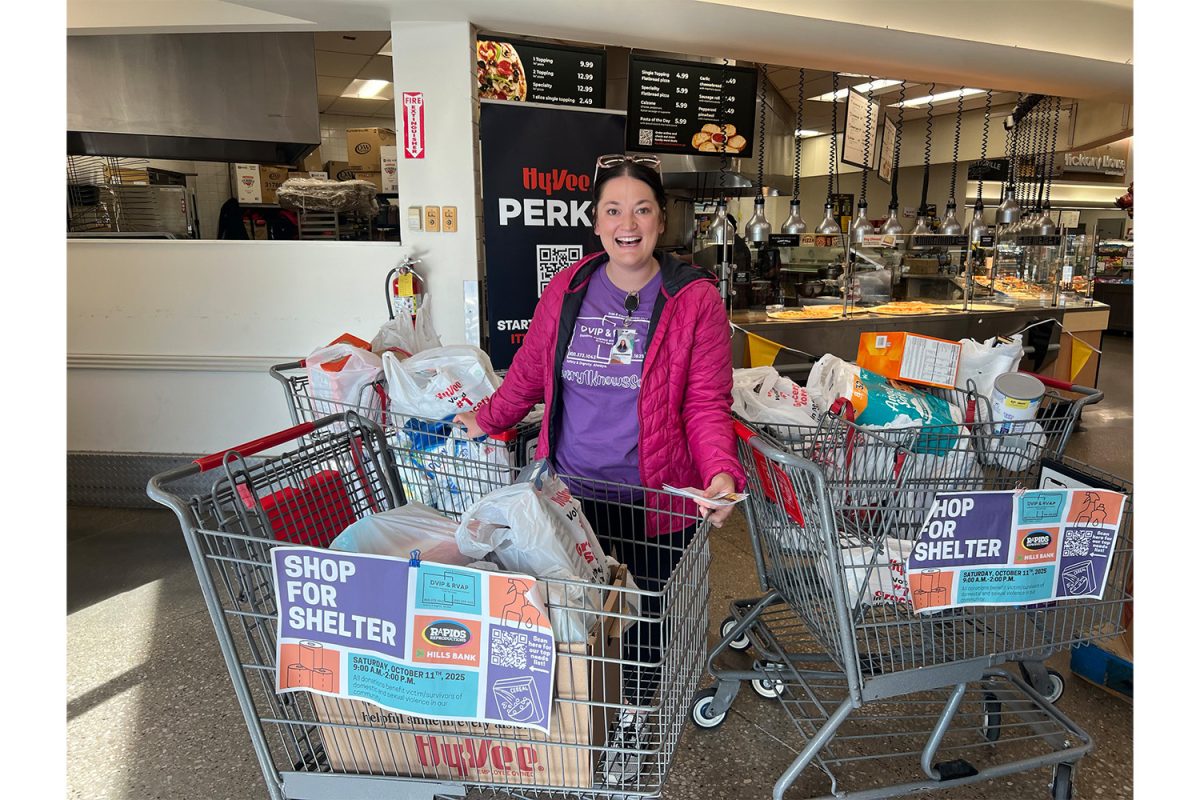
Medea also highlighted the many events DVIP hosts both during domestic violence awareness month and year round. On Oct. 21, the program hosted The Clothesline Project, an awareness activity, where shirts made by survivors are sold and people are welcomed to share experiences and resources. The program also recently held its Shop for Shelter event, where it raised over $16,000.
The Iowa City emergency shelter is also one of only two shelters in the state providing pet services and emergency pet sheltering to clients.
Johnson County Supervisor Mandi Remington, said this can be incredibly important, as abusers often use pets as a means of control. 50 percent of survivors report fear for their pets’ safety, which can become a barrier to leaving an abusive situation if they cannot take pets with them.
Andy Bontrager, who sits on the DVIP board of directors, spoke at a Johnson County Board of Supervisors meeting about domestic violence awareness month and the services the shelter provides.
“On top of the 656 individuals we’ve provided shelter to since last year, we provided shelter to approximately 40 to 50 animals,” he said. “That is able to be maintained through the support of the community, through various different stores, and ongoing support.”
Medea explained that the combination of DVIP and RVAP services has been extremely successful, helping 221 individuals with sexual assault support services. One challenge the program has been facing is ensuring that people know that RVAP services are still available.
RELATED: DVIP and RVAP announce new executive directors
“Letting victims, survivors know that services for sexual assault, sexual violence, sexual abuse victims still exist in the community here locally in Johnson County, as well as in those eight service counties that we provide,” Medea said, “Those services are still here, even though the university is no longer managing them.”
When DVIP merged with RVAP, taking on all their operations, Remington called it a “monumental task.” In August, the Iowa City shelter was awarded an almost $2.5 million HOME-American Rescue Plan grant to construct six townhomes to support survivors of domestic violence.
The shelter offers a range of services, including youth programs, staff assistance with finding permanent housing, and emergency child care services. The latter of which, Remington highlighted as something she did not know existed but was “amazing” in assisting her after leaving an abusive situation, as she was still working full time.
“Survivors are trying to navigate all of these systems and figure out all of these pieces while also being in a constant heightened state of threat,” she said. “Having those calm professionals who know how to navigate the system and are able to just kind of be by your side as a supportive presence and walk you through, that makes a world of difference.”
Remington, who was a client of DVIPs in 2019, spoke highly of the program and the shelter. She described how vital having support can be for survivors, especially when they first leave an abusive situation.
“It’s a wide combination of things that folks have to navigate when they are leaving an abusive situation like that,” Remington said. “There’s not only the practical things, where you have to figure out — how do you file for a protective order? How do you go about seeking emergency custody, making sure that yourself and your children are safe?”