
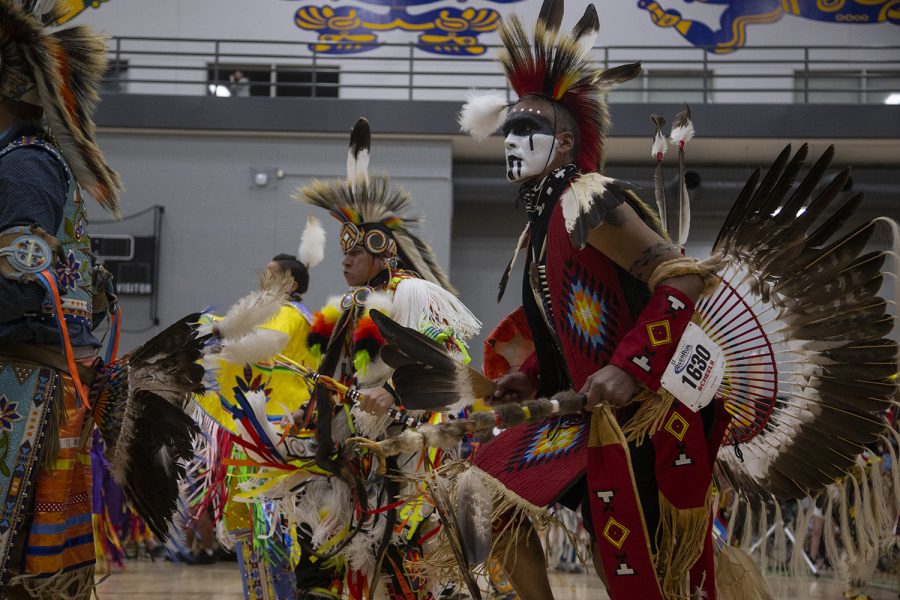
The University of Iowa Native American Student Association, or NASA, announced April 5 that its 29th annual powwow, originally scheduled for this month, has been postponed.
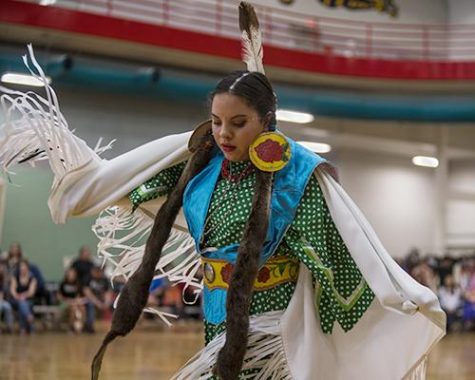
Last year’s event, held April 20 at the Johnson County Fairgrounds, drew a large crowd, nearly two dozen vendors, and featured drummers and dancers from the Meskwaki Nation, along with a graduation celebration for NASA members.
“Due to fundraising challenges stemming from recent legislative changes affecting the university’s ability to fund cultural events, we regret to announce that this year’s powwow will be postponed,” the statement read.
NASA president Joe Maxwell said the group learned in February that new guidance from the Iowa Board of Regents prohibits UI departments from making donations to student groups.
“That is where the majority of dollars for powwow have come in recent years,” Maxwell said. “We were hopeful that we would be able to find enough community partners that aren’t affiliated with the university to fill that hole, [but] we weren’t able to find enough people.”
According to last year’s powwow budget, which Maxwell provided to The Daily Iowan, NASA received donations — ranging from $100 to $1,000 — from nearly a dozen UI departments, as well as the UI Center for Human Rights, Undergraduate Student Government, UI Human Resources, and the now disbanded Council on the Status of Women.
NASA also received donations from six community partners, including local businesses and nonprofits, and a few individual donors, according to the budget.
Maxwell said he does not have clarity on whether UI departments cannot donate to any student organization or if the new rule only applies to cultural student groups amid sweeping legislation against diversity, equity, and inclusion, or DEI.
In a statement to the DI, the UI stated all student organizations are still eligible to apply for student activity fee dollars. The process for applying for that funding is outlined by Iowa’s undergraduate student government and graduate and professional student government.
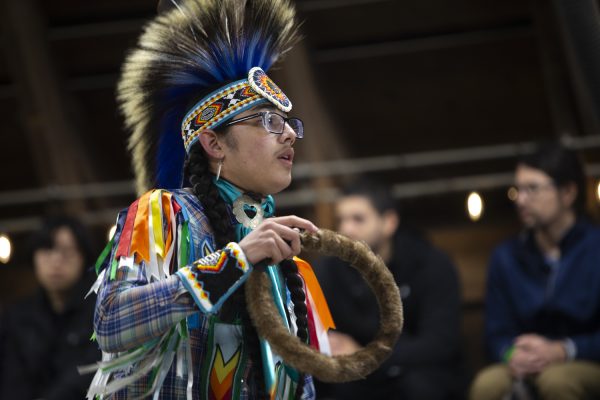
In a stated effort to comply with Iowa state anti-DEI laws, the UI disbanded its diversity councils, eliminated living and learning communities for students of similar interests or identities in February, and closed its Division of Access, Opportunity, and Diversity at the end of March.
“What it feels like, from my perspective, is the attacks on DEI are unpopular on their face,” Maxwell said. “So, they need to find a way to make attacks on DEI popular with people who have general empathy. A great way to do that is doing it in the name of fiscal responsibility.”
Alicia Velasquez, owner of the Iowa City jewelry store the House of Dotł’izhi, was responsible for vendor organization as a member of the powwow planning committee. With over 20 vendors selling food and goods at last year’s event, Velasquez emphasized the multiple ways losing the UI powwow impacts the Indigenous community.
“It’s not just a school event. This is affecting the livelihood of the vendors who rely on the powwow to make a living,” Velasquez said. “It’s a big deal for the Indigenous community because now they don’t have this resource.”
In addition to the economic impact, Velasquez said this is a spiritual loss, both for the dancers and drummers who participated in various powwow dances and the local Indigenous population by extension.
“It’s also a place of healing, a religious act where we come to feed our souls,” Velasquez said. “We get to see other family members, reconnect with community — even sitting in the stands if you’re Native is healing.”
Marie Krebs, managing director of the Indigenous-led nonprofit Great Plains Action Society, emphasized the powwow’s deep significance to the Indigenous community and noted that powwows are open and welcoming to all.
“It’s frustrating because when you go and you look at the crowds, it’s not an [entirely] Indigenous crowd,” Krebs said. “People from all over the community are coming to support this. So, it doesn’t just affect our marginalized communities. It affects everyone.”
Krebs, who has been outspoken against anti-DEI legislation in Iowa, said she is beyond feeling sad about recent cuts to DEI at the university and described her reaction to the news of the UI powwow being postponed as furious.
“Why would any marginalized group come to the school? What would make anyone come to this school?” Krebs said.
At the UI powwow last year, Krebs represented the Great Plains Action Society at an informational booth, which she said drew interest to the nonprofit and provided an opportunity to connect with others.
“This was one of the events that brought Indigenous organizations together to one event where we could all support each other and be around each other,” Krebs said. “It was a beautiful event that everybody really loved.”
Maxwell stated that the now-disbanded Native American Council, which assisted NASA with powwow planning last year, has continued to meet in an informal capacity outside of UI affiliation and is helping NASA determine its next steps. Recognizing the importance of the powwow, Maxwell said he and NASA members are working to find an alternate way to host the event in the future.
“We’re looking into avenues for crowdsourcing funding that’s in line with university rules,” Maxwell said.
Editor’s note: This article was edited on April 23 to include a statement from the UI.