
On the University of Iowa campus, a small group of students and faculty is joining a growing movement in higher education.
A new brand of institutions, scattered between campuses, is taking on different names and identifying with varying ideologies. There is one salient need that leaders of these organizations identify: discourse and free speech.
At the University of North Carolina at Chapel Hill, it is called the School of Civic Life and Leadership. At the University of Florida, it is called the Hamilton School for Classical and Civic Education. The University of Texas at Austin calls it the Initiative for Laws, Societies, and Justice.
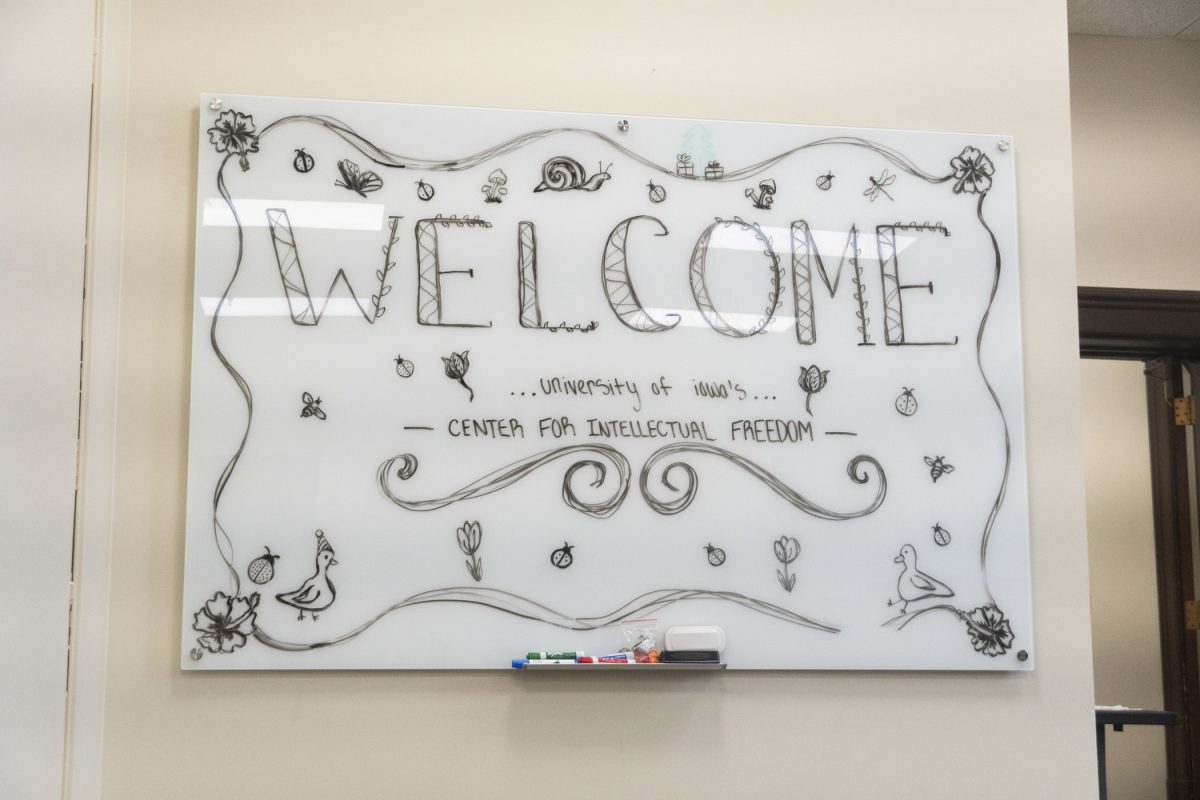
The UI calls it the Center for Intellectual Freedom.
The center at the UI is intended to be “a dedicated hub for exploring the foundational ideas, texts, and traditions that have shaped the American constitutional order and free societies.”
Mandated by a law signed in 2025, the center joins the Center for Cyclone Civics at Iowa State University and the University of Northern Iowa’s Center for Civic Education, funded by $250,000 and $1.22 million, respectively.
The UI center recently began two courses at the UI, designed in the first few months of 2026. They have a distinct emphasis on American values, which has trended more and more during President Donald Trump’s first and second administrations.
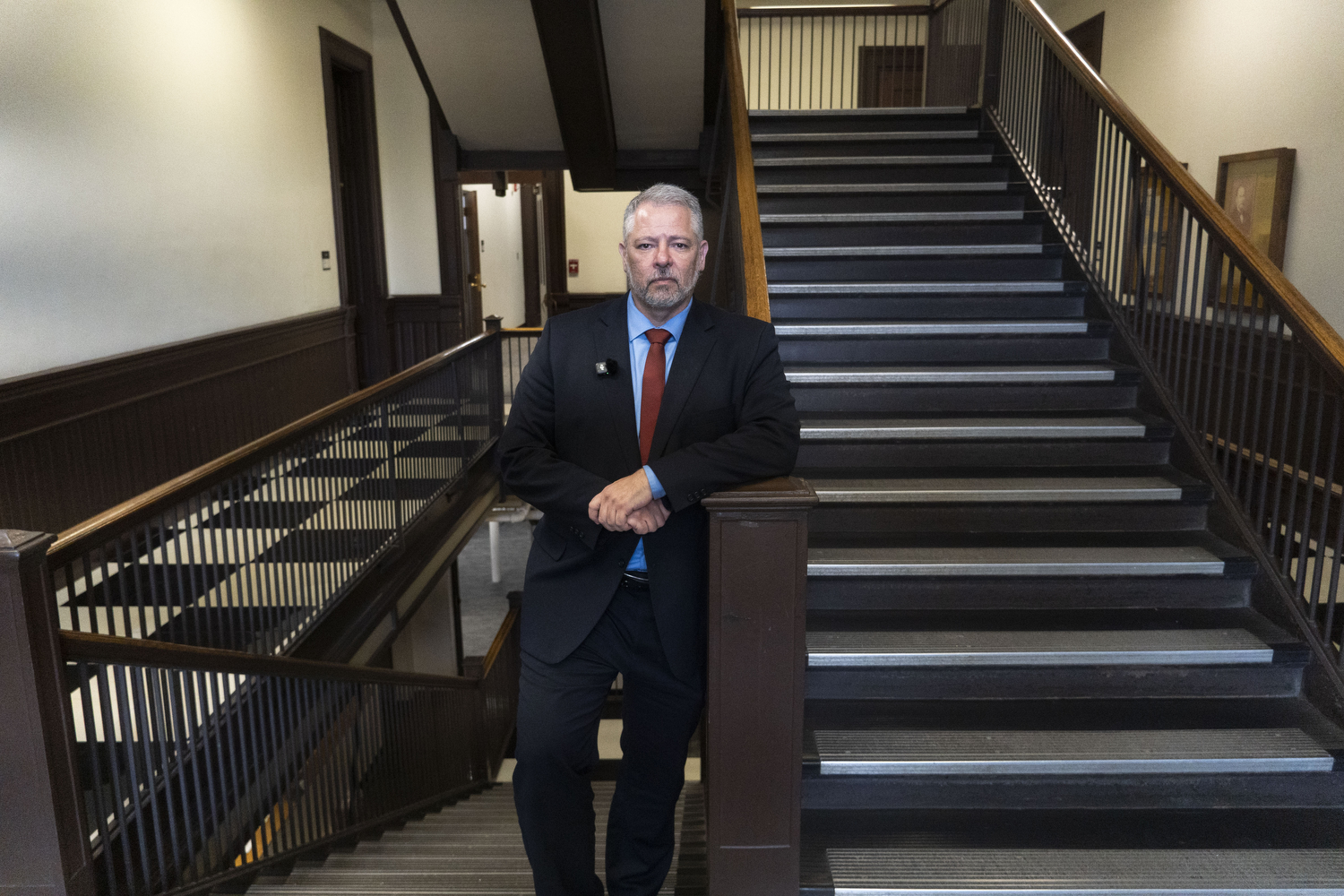
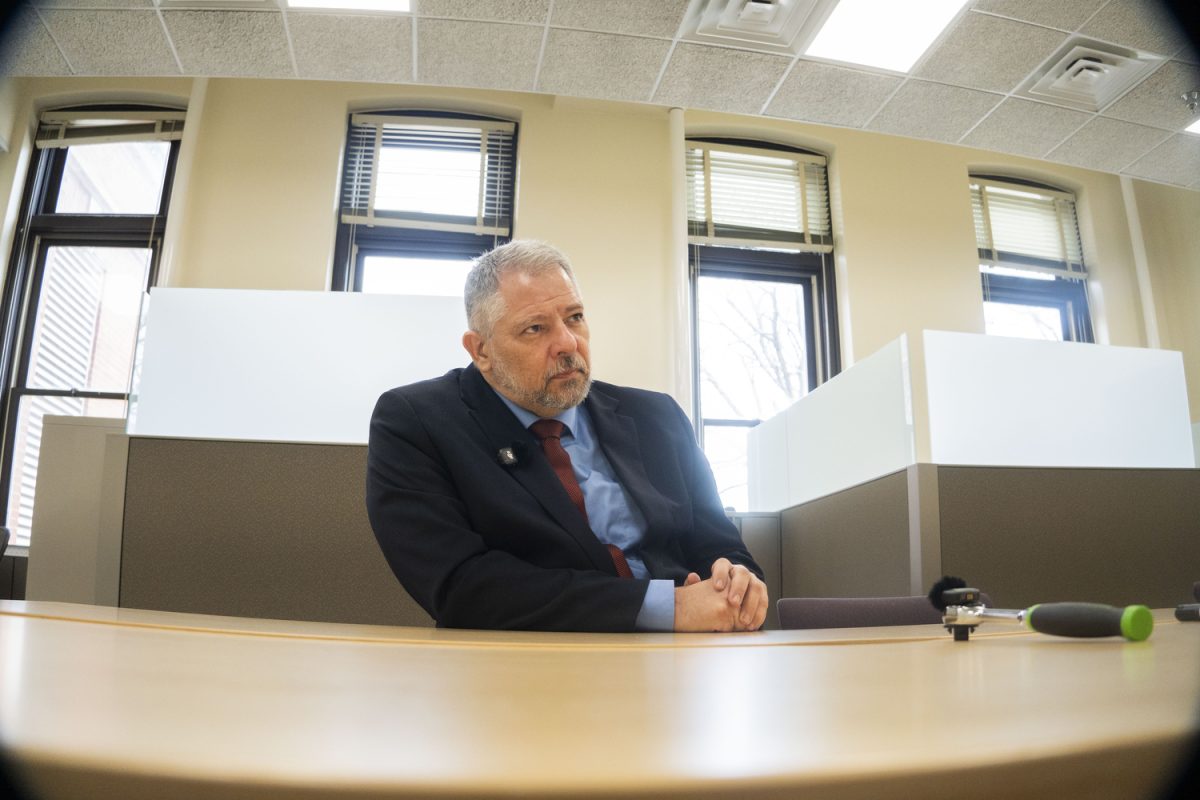
However, leaders like Iowa Board of Regents Member Christine Hensley and UI economics professor and the center’s Interim Director Luciano de Castro do not view the center as inherently political.
Rather, they believe the college-age youth in the U.S. need discourse, discussion, and broadened perspectives to prepare them for a changing world, and that celebrating free speech and free market beliefs fundamental to the U.S. is the way to achieve this.
Funding and initial challenges
The UI Center for Intellectual Freedom first entered the realm of possibility during the 2025 Iowa legislative session. Introduced by Iowa Rep. Taylor Collins, R-Mediapolis, in February 2025 and signed into law by Gov. Kim Reynolds in June, House File 437 set the framework for an independent but affiliated civics and free speech institution at the UI.
Governed by the Iowa Board of Regents instead of the university itself, the center’s goals, as stated in the bill, are to create a space at the UI for education “in the historical ideas, traditions, and texts that have shaped the American constitutional order and society.”
In August 2025, the center moved into Calvin Hall, just off of T. Anne Cleary Walkway, which routes through the heart of campus.
According to a fiscal note by the Iowa Legislative Services Agency, an estimated operating budget would require $1.5 million in funding annually.
This includes $400,000 for an annual director salary, $875,000 to pay annual salaries of up to five full-time, tenure-eligible faculty, and $174,000 for annual admin staff salaries. In his capacity as interim director, de Castro is earning a $140,000 annual salary, Hensley wrote in an email to The
Daily Iowan.
The center received $1 million in state appropriation funding for fiscal year 2026, allocated out of the state’s general education fund by Senate File 647, passed in May 2025.
UT-Austin’s civics initiative is funded by $100 million in state education dollars, compared to Iowa’s $1 million.
At the UI, the center is among the top earners of state appropriations funds, according to the Office of Budgeting and Planning. Others include the university’s cancer assessment, which received $1 million, the Iowa Flood Center, which received over $1.2 million, and the College of Nursing, which received $2.8 million in appropriations.
Lower-funded programs include $200,000 for the Iowa Geological Survey’s groundwater surveying project, $143,410 for the State of Iowa Cancer Registry, and $41,667 for the John Pappajohn Entrepreneurial Center.
Hensley, Iowa Board of Regents and center advisory board member, highlighted the center’s need for additional funding at their Feb. 25 meeting. In an interview with the DI, Hensley said the center could need up to an additional $2 million in funding to cover long-term faculty and course design plans, bringing the total bill to $3 million.
In response to Hensley’s comments during her report, Regent Kurt Tjaden, who also sits on the center’s advisory committee alongside board President Robert Cramer, said conversations about future plans and additional funding would require more data and clearer targets.
This need for clarity is an ongoing concern for Hensley, who, alongside de Castro, has referenced “challenges” in launching the center since its inaugural event in December.
The center also delayed its courses from January due to low student enrollment.
One of the prevailing factors is student interest in the center. In the first three months of 2026, the center has designed two courses, taught in partnership with the university.
The first is Political and Economic Institutions in the United States, taught every Tuesday at 6:30 p.m. in the Pappajohn Business Building. The second is American Culture and Values, taught also at 6:30 each Thursday evening.
Total enrollment between the two two-hour lectures is 19 students, with 11 in the former and eight in the latter.
Despite de Castro hiring a dedicated marketing team, launching the center’s Instagram page, and attending club events across campus, Hensley said outreach with students has proven difficult.
Hensley said pushback from faculty on campus has created rifts in potential hiring and course design.
“It’s not been easy,” she said. “It has been more of a challenge, I think, than any of us recognized at the time, and it’s been more of a challenge for a few reasons. One, just understanding the administrative process and how best to communicate with students. That’s not been as clear to, I guess, Luciano and others as I thought it might be.”
Plan and execution
The first item on Hensley and the advisory board’s list for the center is the hiring of a dedicated,
full-time director.
During Hensley’s Feb. 25 update, she said a nine-member executive committee, chaired by UT-Austin Associate Professor Richard Lowery, is heading a national search for the permanent director.
In October 2025, Lowery lost an appeal to U.S. Court of Appeals for the Fifth Circuit after suing the UT-Austin for requesting he temper his speech on campus and on social platforms such as X, where he frequently spoke out against the university’s DEI and critical race theory curriculum, according to a legal briefing by policy think tank The Cato Institute.
Hensley said during the meeting that the committee was finalizing a contract with a Chicago-based executive search firm, Heidrick & Struggles, to begin building a network of candidates.
However, Hensley said in an interview with the DI that the deal with Heidrick & Struggles fell through during contract negotiations.
“We are looking at some other firms right now and trying to keep this as tight and streamlined as possible,” she said.
The committee still expects to perform the search, conduct interviews, and make a selection by July 1. The Board of Regents will perform the final round of interviews. The regents meet next in late April, which Hensley said is unrealistic for their timeline.
Ideally, she said, the search will yield a handful of candidates who can be interviewed, and the board can make a selection during their June meetings in order to have a director starting July 1.

De Castro has expressed interest in continuing his tenure as interim director into a full position. Hensley said protocols have been put in place to separate de Castro from the search process.
Another priority placed upon the advisory committee and, by extension, de Castro by HF 437, is that the center conduct a “market assessment” to gauge student interest and identify how much staffing and faculty it will need.
As of mid-March, Hensley said the board has an early draft of the market report and plans on presenting it to the legislature before its session adjourns. In designing the center’s programming, Hensley said it has been an uphill process, though overall, most of their initial goals have been met.
“There were specific requests or items that we had to fulfill, as that was in the legislation, i.e., identifying the board, hiring an interim director, market research, and getting an event or two up and running,” Hensley said. “So we really have met all of those goals.”
The event Hensley referred to was the center’s two-day inaugural event in December, which featured panels and discussions led by professors from institutions across the U.S. and a speech from Reynolds.
Panels at the event consisted of “What is wrong with universities?”, “Can universities be reformed?”, and “Possible actions and next steps.”
Assistant Secretary for the U.S. Department of Education and former Board of Regents member David Barker spoke at the event, saying the Trump administration’s priorities in higher education, which the center represents, are “a civic necessity.”
Other speakers said there is a need for a national push in civics discourse in higher education, specifically using the killing of conservative activist Charlie Kirk at Utah Valley University in September 2025 as an example of intolerance against free social discourse, necessitating that institutions like the center exist.
As for the center’s near future, Hensley said maintaining momentum in its first semester active on campus is most important.
“We are just completely focused on making sure that we have a solid foundation,” she said. “And we’re beginning those discussions about what’s going to be the course of action for next fall, the classes that will be there.”
Political alignment
Created by a Republican-majority legislature — and requested to be named the Charlie Kirk Center for Intellectual Freedom by Iowa Republican U.S. Rep. Mariannette Miller-Meeks, R-Iowa, in a Sept. 11, 2025, post on the social platform X — detractors of the UI’s center and of those at other universities claim these institutions’ goals are to grow conservative influence in higher education.
Students aware of the center have expressed views that it is specifically designed to push conservative ideologies on campus.
UI third-year student Landen Freeman said he has never interacted with the center, whether through advertising in clubs, classes, on social media, or through tabling events. Freeman said the dichotomy between the center’s desire for outreach and the seeming lack of it suggests the center is instead promoting exclusivity in its recruitment.
Referring to one lesson plan for the American Cultures and Values course, “Why Capitalism Rocks!”, Freeman said the course design is inherently biased and socially unaware.
“There are a lot of people in the local community who are suffering directly by the hands of capitalism,” he said. “So, for you to present this rhetoric, in this message that capitalism rocks, I cannot trust you. I cannot take you seriously.”

In an interview with the DI, de Castro said the center and its curriculum are focused on expanding students’ minds and embracing the benefits of American culture and not on catering to either side of the political aisle. He referenced Catholic philosopher Michael Novak and his teachings on democratization.
De Castro said Novak’s beliefs describe three main pillars in American culture: political institutions, capitalism as the economic pillar, and social values.
“And these three go together,” he said. “Freedom, that’s a value here for America.”
De Castro briefly described his upbringing in an economically unstable Brazil, tying the rise of socialist ideologies in Europe in the mid-19th century, and their eventual progression to South America, to corruption and economic instability that continues in the modern day.
For him, America’s free market, democratic capitalist economic and political systems are a bastion.
“We saw everywhere, it is the erosion of freedom, poverty, and lack of perspectives,” he said. “And I feel very hard because I have relatives there in Brazil. I have friends. I saw how their lives are going through a lot of difficulties. I see, I have a lot of friends that express that, ‘Well, if I could, I would leave Brazil.’”
De Castro said he has observed a phenomenon on the UI campus, which he said is occurring on campuses across the U.S., where perspectives are narrowing, especially by university faculty, particularly in academic research.
“There is a tendency in disciplines, academic disciplines, to become very isolated and focused because this is how research progresses,” he said. “You focus on a specific kind of problems, and then through this process of specialization, you lose the focus, the broad focus on society and the broad problems.”
Besides the center’s inaugural event, in its first several months, its primary offerings are the two classes that began on March 24 and 26, in which generating student interest is among the challenges Hensley has described in finding its footing.
The courses, whose content was not made viewable to the DI by center admin staff who referred to UI policy on protecting intellectual property, feature lectures on free speech, civics, and American history as it relates to the rights of citizens and modern social discourse.
Intended as an alternative amplification of existing UI history and civics education, each course will feature a lecture from one of a list of Iowa leaders in business and politics.
Hensley said names include Mike Whalen, founder and CEO of Heart of America Group, which owns Iowa restaurants and franchises such as Hyper Energy Bar; former Iowa Republican Rep. Greg Ganske; and U.S. Ambassador to China and former Republican Iowa Gov. Terry Branstad, all of whom are also on the 26-member advisory council.
UI faculty are also involved in the courses, including UI political science professor Tim Hagle. He taught the first lecture on March 24, which focused on the Federalist Papers, and plans to lecture at the April 2 session of American Cultures and Values, focusing on free speech and issues like cancel culture.
Hagle said political discourse needs to begin with a solid definition of free speech. He said free speech has exceptions, as in how the U.S. Supreme Court has defined fighting words and obscenity, and finding those lines is important for students.
Once those are understood, Hagle said he will transition to the modern day, covering things like hate speech. He said he will entertain hypotheticals like whether or not hate speech should be illegal.
He referenced doxxing, cancel culture, and Carson King, an ISU student whose handmade sign asking for money for beer at an ISU football game ballooned into a donation of over $3 million to the University of Iowa Health Care Stead Family Children’s Hospital. King was later “canceled” after racist tweets from his years in high school were discovered and published by a Des Moines Register reporter and were referenced in an article on cancel culture published by UT-Austin.
He said misapplications of free speech and privacy are important delineations to make to college-age youth.
“We’re talking about doxxing more generally,” he said, describing a hypothetical discussion on the applications of free speech. “You talk about with ICE agents in places that don’t want them to wear masks. And the reason may be so that they can identify them and do things, and maybe threaten them in various ways. So maybe anonymity is appropriate under the circumstances, even if you don’t like it.”
These fundamental beliefs, de Castro said, are increasingly important. Despite the effort exerted to get the center up and running and the potentially bumpy road ahead, that importance has maintained his enthusiasm.
“I believe this is really valuable, and I’m passionate about this, about this objective, and therefore all the challenges, all the effort that is required from me, I’m happy to take because I will feel in my heart that it’s something that’s worth pursuing,” de Castro said.