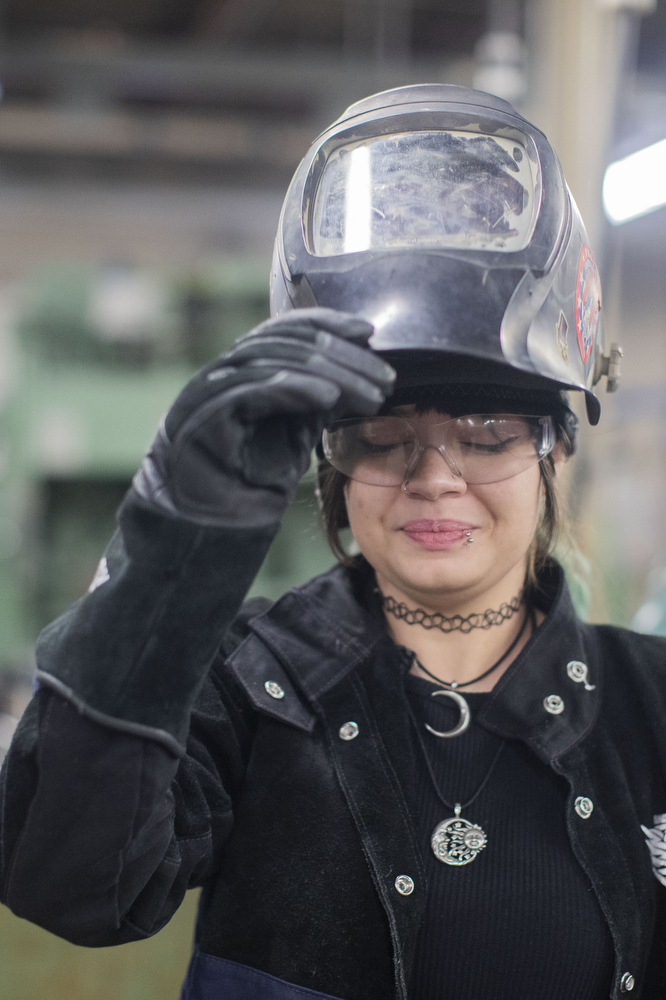



When Carley Neustel started at Kirkwood Community College’s diesel program in fall 2024, she was the only woman in a class of 22.
While Neustel was learning how to run a forklift, she would find slips of paper on her computer or attached to her notebook containing the phone numbers and Snapchat handles of the men in her class.
“At first it was a little awkward. I mean, go figure all the boys had to pick on me a little bit to see where I stood, and I just kind of made it clear I’m here to stay,” Neustel said.
Now, three months from graduating and completing her program, Neustel’s relationship with her male counterparts in the trade has improved.
“Now a couple of them will come up to me during class and ask me questions, and I prove that I know what I am doing. So if they need help or something, I’ll help out, and he’ll do the same for me,” Neustel said.
Neustel’s experience is common among other women entering into a skilled labor field or pursuing a career in the trades.
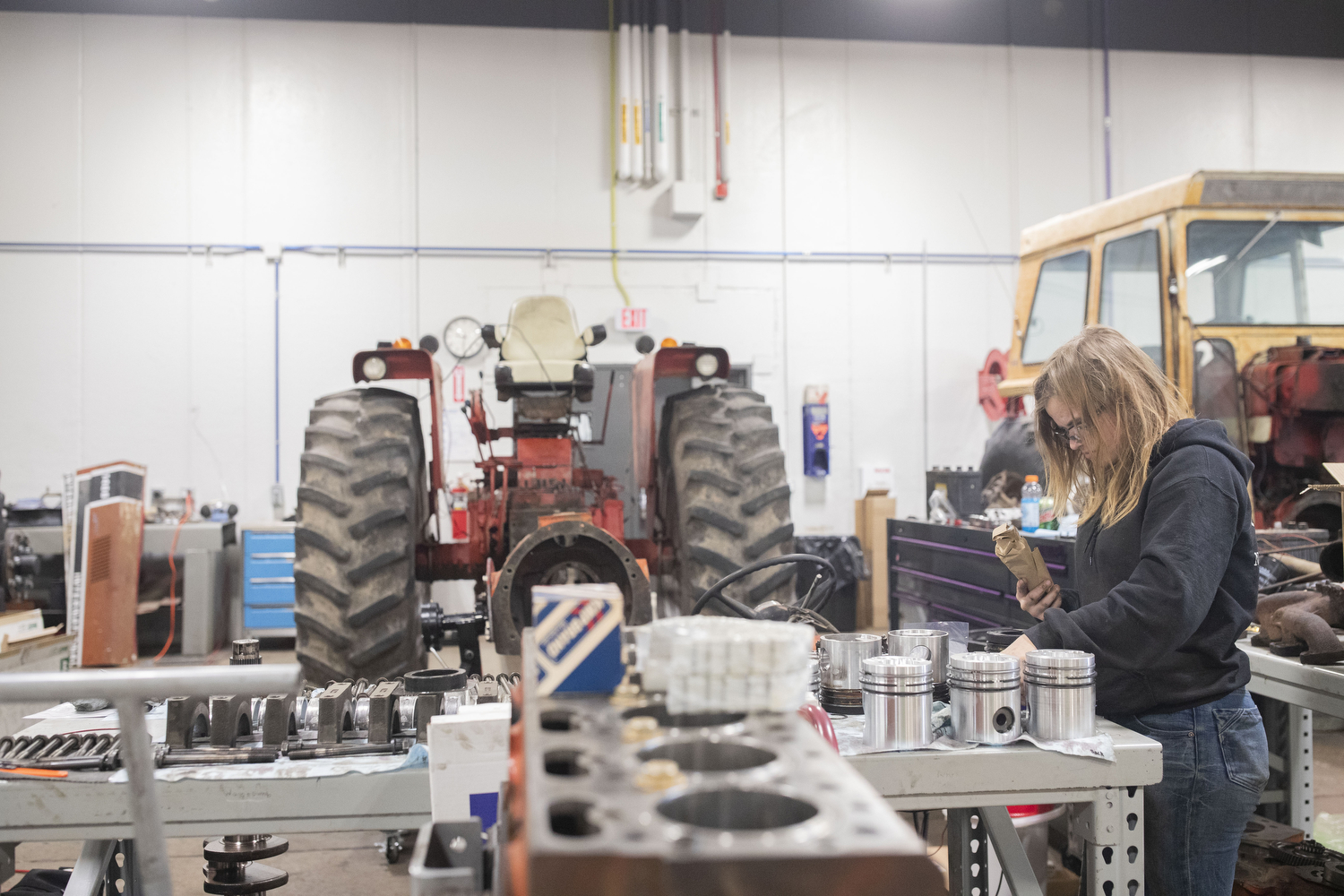
The gender divide in trades, however, continues to shrink, as more women enter the labor workforce, with the demand for more trade workers increasing.
According to the Institute for Women’s Policy Research, the number of women in construction trades saw its highest numbers since 2015, with over 350,000 women working in the industry in 2024. The number of tradeswomen as a whole has been steadily increasing by a total of 77.3 percent from 2015 to 2024.
According to Iowa Workforce Development, the number of women in the labor force in December 2024 saw the highest increase, with age demographics from 40-54 and 20-24.
Nationwide trends reflect a similar uptick. According to the U.S. Bureau of Labor and Statistics, the number of women in construction was 1,193 in January 2026, roughly 14 percent of all employees in construction. In the manufacturing sector, women made up roughly 28 percent of all employees.
Holli Gericke, an instructor in the Advanced Welding Technologies program at Kirkwood, said she is fortunate that she has not had to deal with many challenges relating to her gender.
“You may get the occasional student or somebody outside the industry that you deal with that might have some preconceived stigmas about women in trades, but overall people are kind of changing their tune regarding that,” Gericke said.
Now a full time faculty member and welder, Gericke had an unconventional start in the trades, entering the welding field at the age of 30.
“I just kind of got tired of working at my desk job and the kind of monotony of corporate life, so I decided to make a change for myself,” Gericke said.
Gericke said she has always liked working with her hands and being physically active in her day-to-day life. With a longtime interest in welding, Gericke began taking classes within the program she now instructs.
In 2023, Gericke began working as an adjunct instructor, teaching night courses after working her day job in the corporate sector.
Gericke said many of her classes are primarily male-dominated. During her time instructing at Kirkwood, however, she has seen more and more women enrolling in the program.
“I had several women in my classes at the start of this school year, which was really exciting to see,” Gericke said.
Many of the difficulties she and her students face within the welding field don’t center around gender but rather around the physical demand of the program.
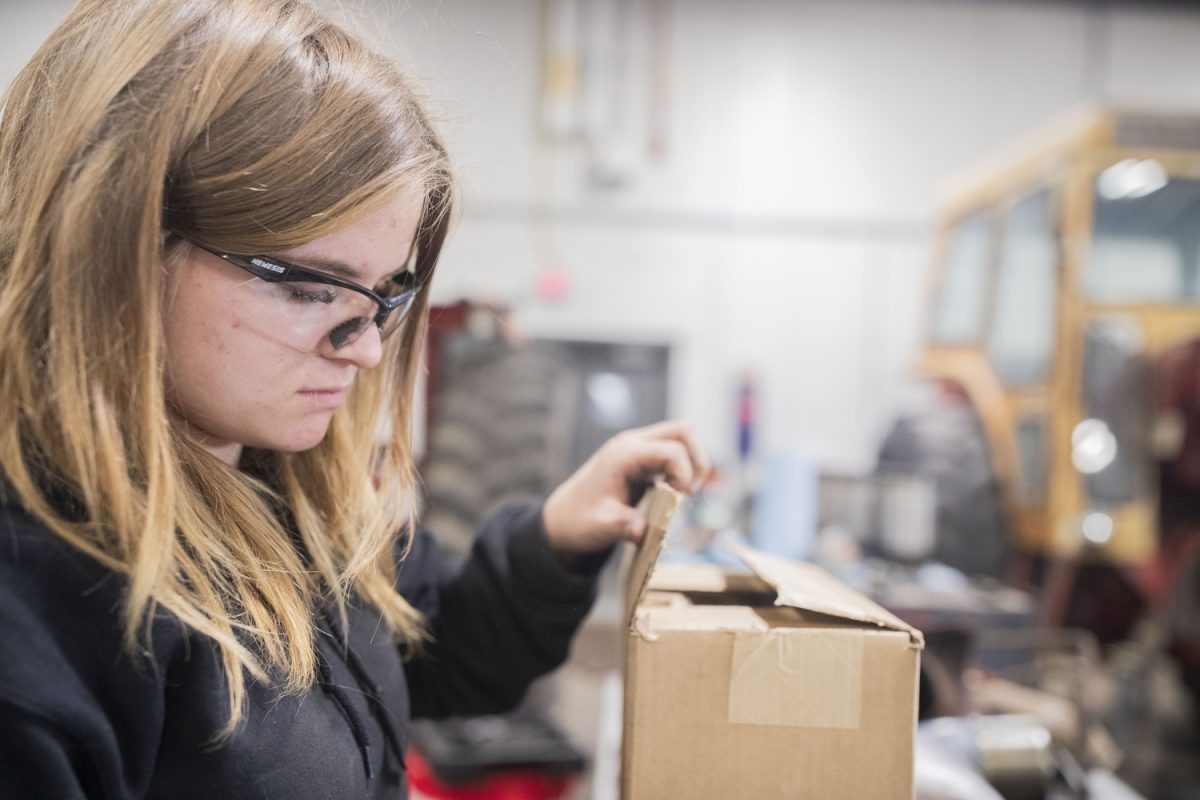
Physical changes shape workforce experience
According to an economic impact report conducted by Bring Back the Trades Inc., a nonprofit organization that works to advocate for the skilled trades, and the F.W. Webb company, a nationwide plumbing and HVAC company, who analyzed a total of seven trades, there is an expected 1.4 million jobs in those trades that will be open by 2030.
As the demand for skilled labor and tradespeople increases, Gericke said there is a consistent need for people in trades, and she has seen job stability within welding.
Itzy Avalos, a mold shop technician, a specific type of welder working with rotational molds, has seen the trades in high demand, with a sizable age gap between her and her coworkers.
“Many of my coworkers are near retirement, and it’s just me and one other gentleman that’s about my age, so it’s definitely needed,” Avalos said.
Avalos attributed her company embracing her from the start to such demand, saying that those prepared to retire in the coming years taught her how to do the job well.
“It’s definitely a space that you’re going to get welcomed into pretty well because they need those positions filled,” Avalos said.
However, Gericke said the physical demands of the job, such as health risks and physical wellbeing, are often worth noting when considering entering the field.
Gericke said adequate ventilation for respiratory health, hearing protection, and the proper personal protective equipment is needed to get through day-to-day challenges affiliated with welding.
Gericke said it is important that individuals work in a place where their concerns are taken seriously.
The longtime welder said she hasn’t considered leaving welding and wants to continue developing her skills.
“There is always room to grow and improve within this field. There are so many different avenues that you can transition into, and I don’t see myself getting bored with it,” Gericke said.
Avalos said her work is often labor intensive as her job requires her to maintain aluminum molds, welding any mold damages, placing weld clamps on, and keeping them looking nice.
“You’re going to get dirty, you’re going to get burned, you’re going to get some scrapes and cuts. That just comes with the trade. But as you get more familiar, especially with my tools and not being scared of them, it becomes less and less,” Avalos said.
Despite the support the mold shop technician has, her job can feel isolating. Working in her own shop, she spends roughly eight hours a day by herself, something that she said has made working in the industry difficult.
“I’m used to talking to people and having more social interactions with my previous customer facing opportunities,” Avalos said.
Avalos received her associate’s degree in welding from Marshall Community College, where there were only six women in total, compared to 30 to 40 men in the class.
Now, Avalos is the only woman the company’s mold shop has ever had.
Stigma, biases frame workplace ideologies
After pursuing her two-year degree at Marshall Community College, Avalos decided to take a gap year, as she had yet to decide what career she wanted.
“I wanted something that I could learn quick and make a decent amount of money in, especially because if I was going to pursue it long term, I wanted to be financially stable,” Avalos said.
As boredom began to creep into every crevice of the technician’s life, she stumbled upon the trades. After talking with her counselor and realizing there was more to welding than she had anticipated, she took the leap.
“I’ve always liked learning new things and being creative, and once I got into it, I ended up really liking it. I had two instructors who were super supportive and encouraging, who didn’t treat us, the guys and girls, any different,” Avalos said.
The biggest barrier for Avalos was the preconceived notions of what the career path would be like, believing she would have been treated differently just because she was a woman in the trades.
“I was scared to ask questions because I didn’t want to seem dumb, but, I was still learning, and everyone was extremely helpful in teaching me the tricks of the trade,” Avalos said.
Similar to diesel program student Neustel, the technician experienced downfalls of the profession with men making sexual remarks.
Avalos learned how to push back on those remarks and, eventually, get them to end.
“It’s easy for me to shut it down right away, but for the most part it has been pretty amazing. I was not expecting to be welcomed as much,” Avalos said.
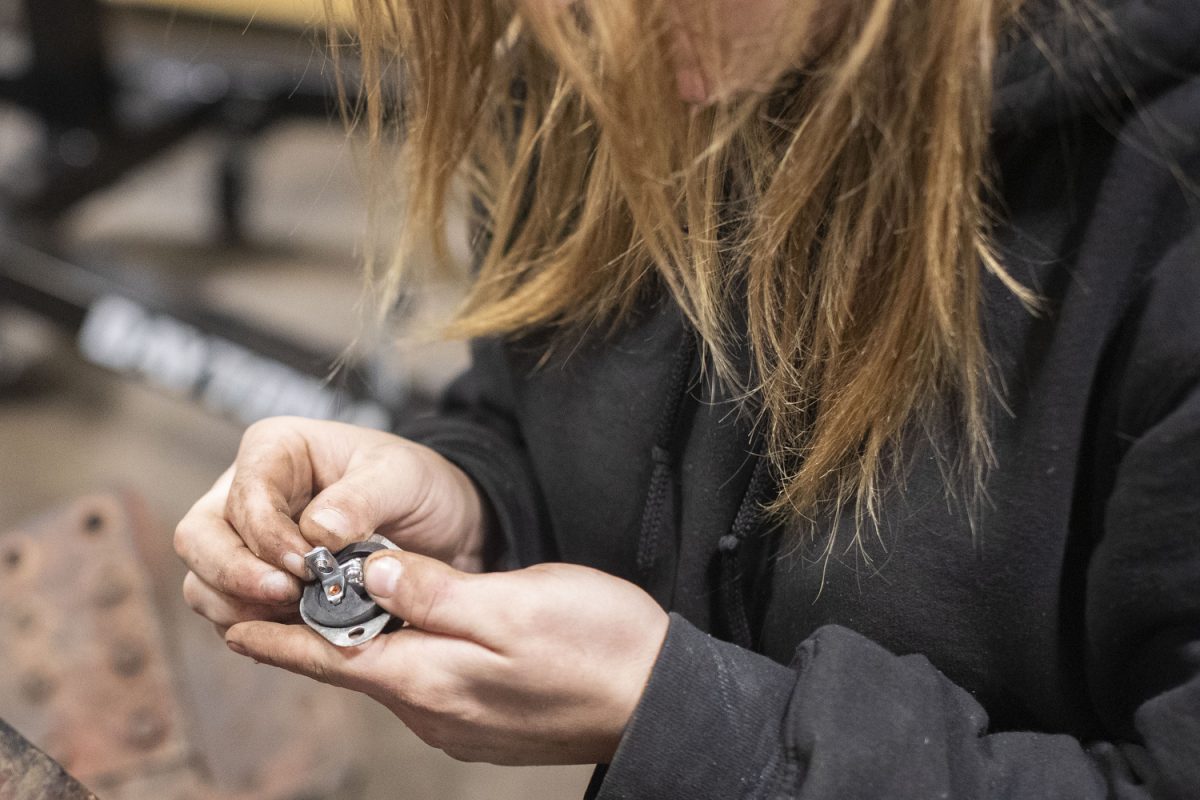
From the get-go, Avalos said she has never felt like she was hired because she was a woman. Rather, they looked at her skill set and what she could provide to a given company.
Though Avalos did not come from a construction background and had never worked with power tools before going to school for welding, those with experience were able to help her develop the tricks of the trade.
Connections, relationships affect interest in the trades
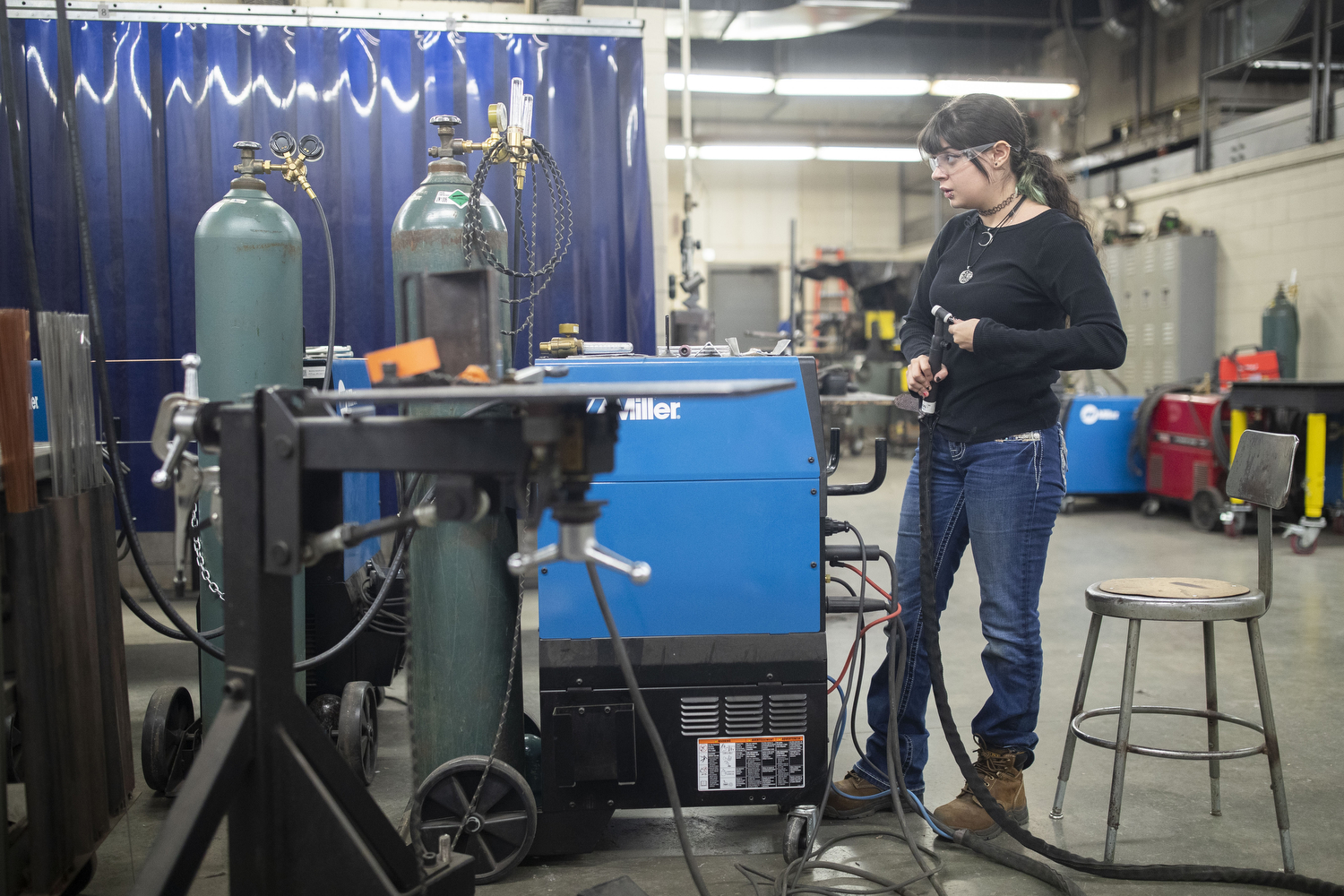
The trades were always in the back of Jessica Broadwater-olds’ mind from a young age, with the passion for skilled work strong and continuous.
Broadwater-olds’ father worked in the trades, and the second-year advanced welding technologies Kirkwood student knew she wanted to do something similar, as long as it wasn’t the same as her father, who does manufacturing and industrial work for Quaker Oats.
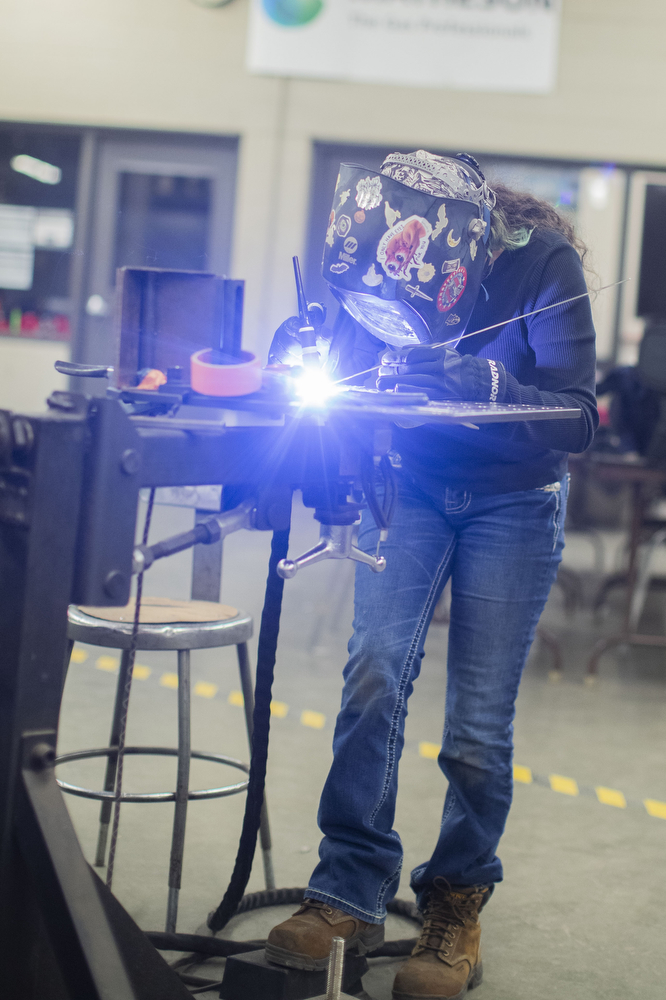
“I have always been interested in the trades, and I just never knew which one would fit me, and I fell in love with welding. As soon as I tried it, just once, I was immediately hooked,” Broadwater-olds said.
Growing up homeschooled, Broadwater-olds first became interested in welding when she was in high school. Because she was homeschooled, she didn’t get the opportunity to take the welding classes she wanted, but she continued to research and learn more about the field.
Starting out in the trade, Broadwater-olds felt scared and intimated. She didn’t know how to use a wrench and did not have the same welding experience as her male peers.
“When I started, there were only three women in my class. As time has gone on, there are only two now. So there’s not a lot of females in these fields, which makes it a little harder,” Broadwater-olds said.
The welding student finds that often, it is hard to connect with others in the field, making it more difficult to get used to a profession with few women.
According to Welding Workforce Data, which is a welding employment statistics model collected by the American Welding Society, 5 percent of welders nationwide are women.
Broadwater-olds said when blueprints are shown in class, she often finds herself not knowing what is being shown.
“I really want to show other people that, ‘Oh I can do the same thing as you,’ even if I am a woman. I can weld just as good, I can cut metal just as good. So I’m trying to not allow there to be that difference,” Broadwater-olds said.
Growing demand for more women in the trades
Broadwater-olds said as new classes come into Kirkwood for the 2026-27 school year, there are aren’t any women, a fact that makes her sad.
The Kirkwood student acknowledges the intimidation that comes with being a woman welder in a male-dominated field as well as the other difficulties that come with being a student in the trades.
“Everyone plays it to be this really hardworking field. But so is nursing, so is doing restaurant business, so this is really just another thing women should try. Not even just welding, but maybe construction, electrical,” Broadwater-olds said.
One of Broadwater-olds’ favorite parts of being in the profession is getting asked what she is going to college for.
“When I say welding, their faces just light up, and it makes my heart so warm. It is one of my favorite factors of being in this field where people actually think it’s cool,” Broadwater-olds said.
Neustel finds her everyday work to be rewarding. She comes from a farm family in Iowa and hopes to one day take over the property.
“When I started, I thought I would take what I learned back to the farms, but now I am looking into engine machining shops. A job like that would help me in so many different ways,” Neustel said.
Neustel said the diesel field is demanding but will allow her to pursue future endeavors, such as working in an engine machine shop.
“I’ve learned a lot of things about where this can take me, even if it’s not the easiest thing in the world,” she said.
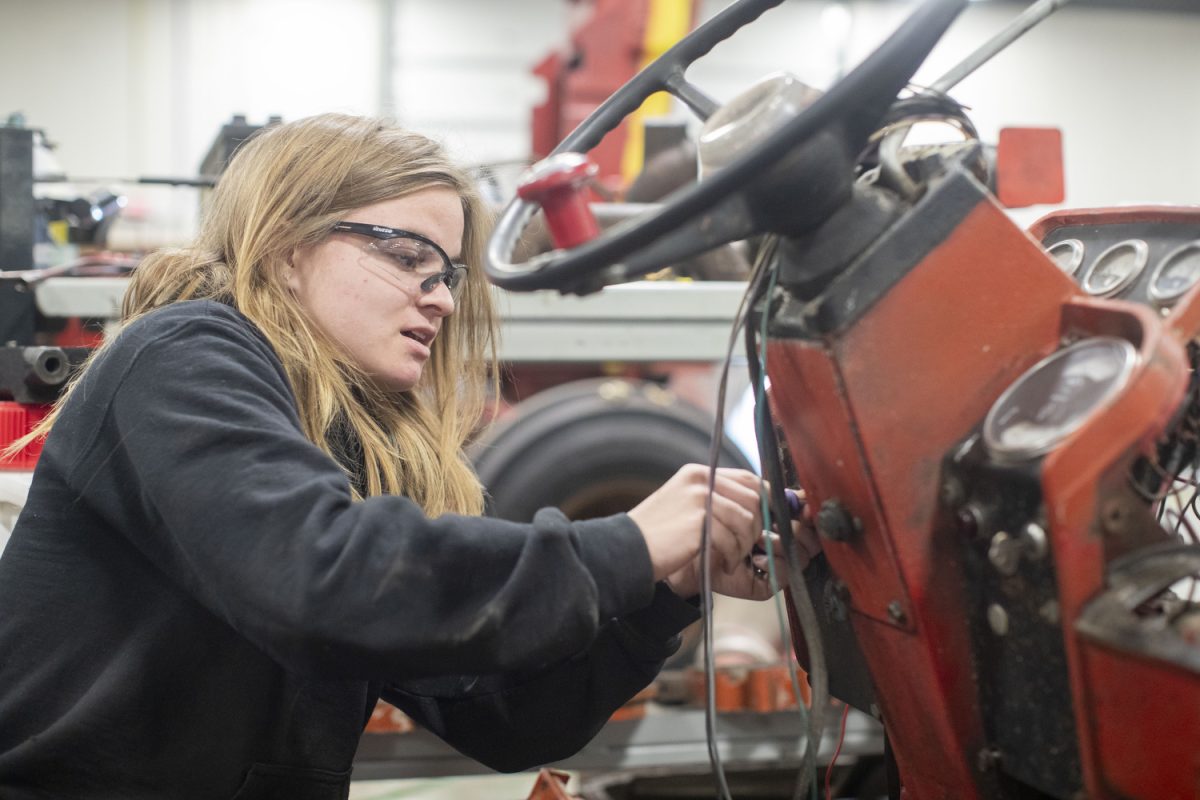
One day, Neustel hopes to open an engine shop, potentially one she could run out of her home, while continuing to maintain her family farm, allowing her to remain in the trade she enjoys while keeping her values close.
For Gericke, being a woman in the trades has been empowering, allowing her to pursue research and other opportunities, regardless of her gender.
“It is important that we continue to have strong, smart, capable women in the industry. It’s really powerful to be able to prove yourself and show others and yourself what you are capable of,” Gericke said.
Gericke said women bring unique abilities and levels of experience to the trades, but the workforce is a rewarding experience for men and women.
“For me personally, it broke up the monotony I was experiencing in the corporate world, and it also gave me a lot more autonomy over my day-to-day. My overall quality of life has greatly improved since I made that switch,” Gericke said.
Avalos said she wants to support women going into the trades, and the gender divide should not stop them.
“There’s only more and more women going into the trades, so if you are curious, dip your toes in it, because you might end up doing something you really like. It has been one of the best, most sporadic decisions of my life, and I am glad I took it,” Avalos said.
Before Broadwater-olds entered the welding field, she didn’t think she would be able to attend college for affordability reasons. Now, Broadwater-olds hope to pursue underwater welding.
“Welding has brought up my expectations, my confidence, and love for myself because I know what I can do,” Broadwater-olds said.
As Broadwater-olds looks at what her career prospects might look like in the future, being a woman in the field has not deterred her, despite the long hours and late nights.
“Not allowing your fear to get in the way of something that could literally change your life. We can get blueprints done, we can be hard workers, we can do everything a man or anyone else can,” Broadwater-olds said.