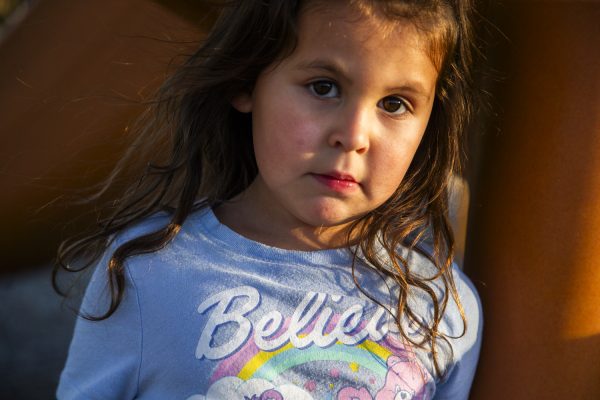
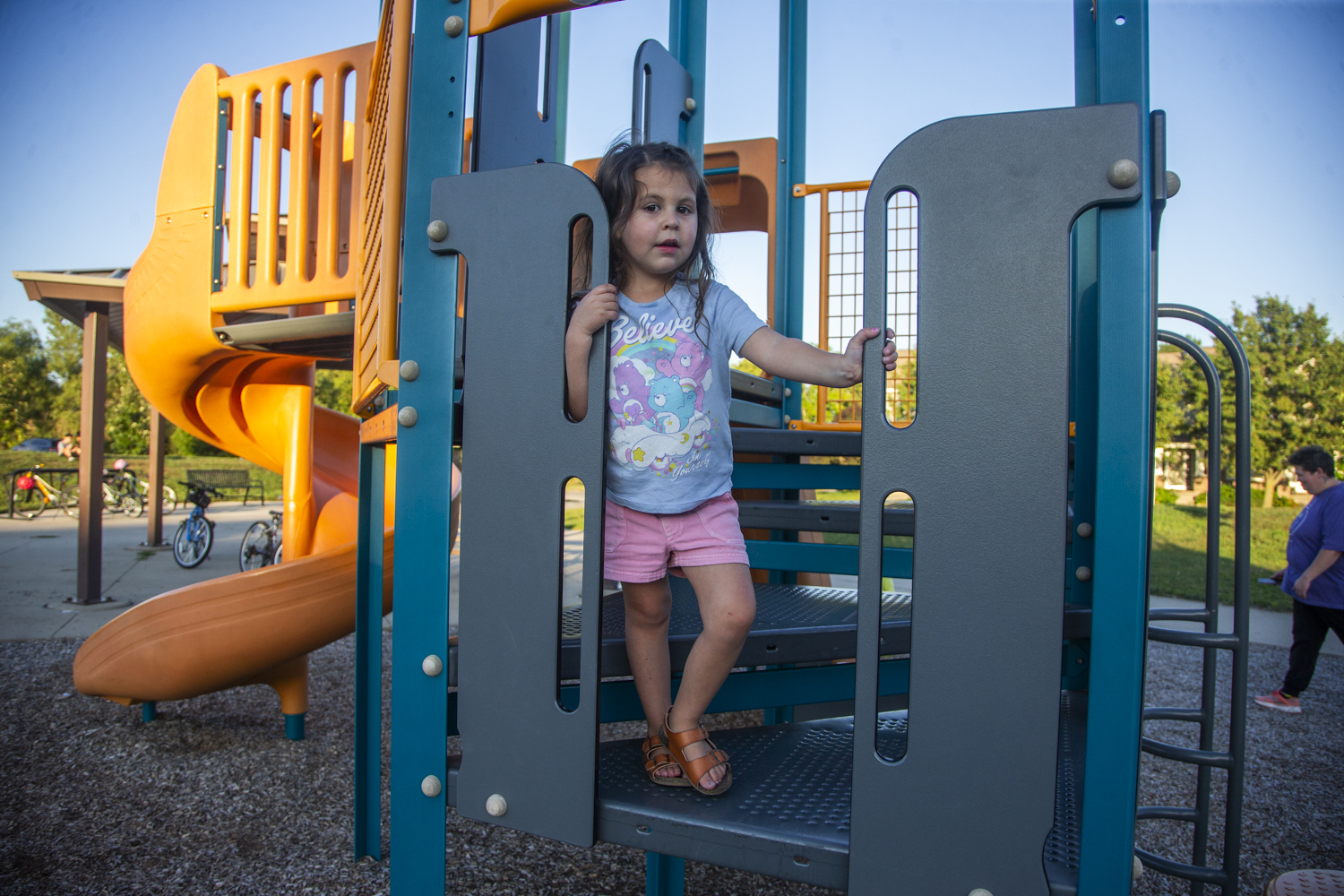
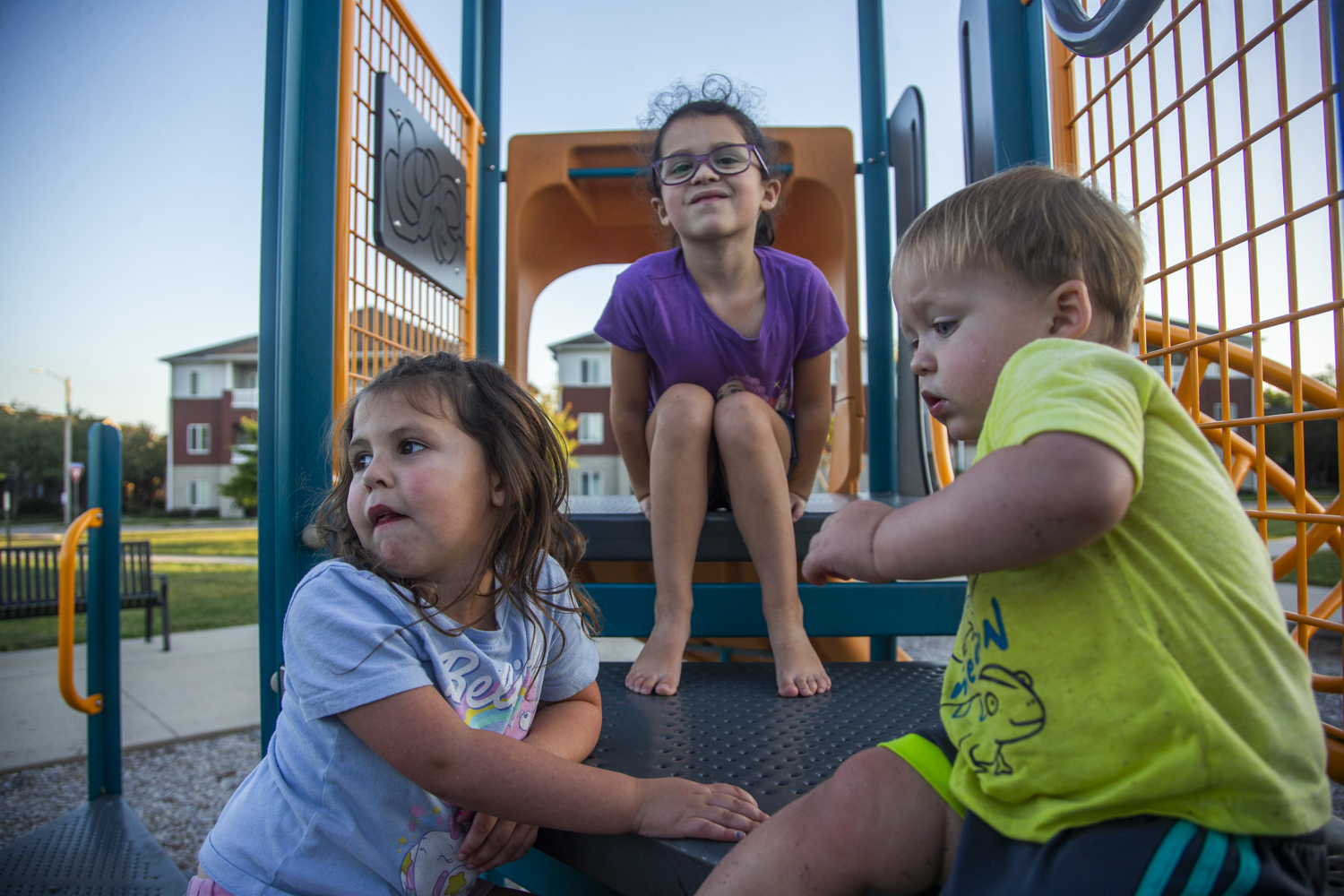
Rhiannon McNulty, now 4 years old, has been hospitalized three separate times for a number of infectious diseases. On two of the three occasions, the young girl had contracted respiratory syncytial virus, or RSV, for which a vaccine was not yet available.
The rate at which vaccines are being administered in the U.S. and across the state of Iowa has decreased following the COVID-19 pandemic.
In Iowa, 69.6 percent of 2-year-olds in 2023 received the recommended series of vaccines, a percentage typically at the 90 percent mark, according to the Iowa
Immunizes Coalition.
The recommended series in the state of Iowa, laid out by the Iowa Department of Health and Human Services, includes diphtheria, tetanus, and pertussis, or DTaP; polio; measles, mumps, and rubella, or MMR; Hepatitis B; Haemophilus influenzae type B ; varicella, the pneumococcal conjugate vaccine, and the RSV vaccine for those eligible.
Nationwide, these numbers reflect a similar downturn. According to the National Library of Medicine, the number of 2-year-olds in the U.S. who received four doses of the DTaP vaccine dropped from 89.5 percent in 2019 to 82.5 percent in 2023, and those who received one dose of MMR dropped from 79.9 percent to 72.1 percent.
This impact has been felt on a local level as well. Samuel Jarvis, community health division manager at Johnson County Public Health, said during the 2024-25 school year, roughly 7.7 percent of children in licensed child care were
“Vaccines are one of the most rigorously attested and closely monitored preventive medical advances,” Jarvis said.
Jarvis emphasized the importance of vaccination not only for children, but for employees within schools and day cares in the area, with children who have been vaccinated seeing a reduced number of absences from school or day care.
Megan McNulty, Rhiannon’s mother, said at nine months old, Rhiannon caught human metapneumovirus, a virus impacting one’s respiratory system, for which there is no vaccine.
“I remember telling my wife, ‘Oh, she’s going to be fine. It’s not COVID-19, and it’s not RSV,’” McNulty said.
But, just 24 hours later, McNulty was in the hospital with her baby, being told by multiple doctors her daughter would need to be intubated, the process of inserting a tube through one’s nose or mouth in order to aid with breathing because of her metapneumovirus.
“Making that decision to intubate our baby because she couldn’t breathe was horrible. She fought the intubation and the tube. They had given her a paralytic, and yet nothing worked. She always looked terrified and scared,” McNulty said.
Less than a year later, McNulty and an 18-month-old Rhiannon were back in the hospital after Rhiannon contracted RSV. At the time, there was no vaccine for RSV.
Michael Pentella, a clinical professor at the UI and director of the State Hygienic Laboratory, said RSV is a respiratory virus that can cause a type of pneumonia in infants.
A research study conducted by the American Academy of Pediatrics found 13,524 — 31.4 percent — of children under the age of 5 nationwide were RSV positive in 2024.
According to the Food and Drug Administration, the first RSV vaccine was approved on May 3, 2023 for individuals aged 60 years or older.
Two months later, on July 17, 2023, the RSV vaccine was approved for use in babies under eight months.
Rhiannon spent a week in the pediatric intensive care unit. Once the RSV vaccine became available, Rhiannon was no longer eligible for it, as she had aged out. At the time, McNulty said, the vaccine was only being given to the elderly and babies.
“We felt if the vaccine had been available to us when she was a baby, we would have given anything for her to have been able to have it… so our vulnerable kid who just can’t breathe when she has a cold wouldn’t have to go through that,” McNulty said.


At age 3, Rhiannon was hospitalized for the third time due to contracting RSV again. McNulty said Rhiannon was hooked up to breathing tubes because she was unable to breathe on her own.
McNulty said Rhiannon is a normal, healthy, four-year-old girl who simply cannot breathe when she gets sick, as she is asthmatic.
McNulty’s wife was able to get vaccinated for RSV around the time Rhiannon was hospitalized, while she was pregnant with their son, Archer. Once born, Archer was also given the vaccine.
“For our other two daughters, who are four and seven, they are just out of luck. And the same for me. I am just a normal, healthy adult, and they don’t offer it for those groups right now,” McNulty said.
McNulty said in her job as a blood bank specialist at St. Luke’s Children’s Hospital, in the past few years, many kids have been hospitalized for RSV.
Within McNulty’s lab, influenza A and B, as well as COVID-19 and RSV, are tested. This year, numbers for these infectious diseases haven’t been particularly high, but the season when these rates tend to skyrocket is quickly approaching.
When Rhiannon contracted RSV, she was one of the children in Anita Schuckert’s care, owner of Little Steps and Beyond, an in-home day care. Schuckert remembers how difficult the experience was for the family.
“It was really sad because before she got sick, she was cruising around the furniture and everything,” Schuckert said.
Child care in the wake of decreasing vaccination rates
Little Steps and Beyond Daycare plays a key role in Schuckert’s 28-year career in child care. Currently, Schuckert cares for a five-month-old, a 17-month-old, two two-year-olds, and a three-year-old.
Schuckert said all children enrolled in her day care are required to produce an immunization record. Although the COVID-19 vaccine and the influenza vaccine are optional for Schuckert, she requires vaccine records, as her son, who lives with her at home, has asthma.
Many of Schuckert’s day care families also have family members who are in a higher risk category, with autoimmune and respiratory issues.
“As soon as they [students] are able to get the RSV vaccine, boy, they got it,” Schuckert said.
If a child were to contract an infectious disease, Little Steps and Beyond has a specific protocol set in place, particularly for COVID-19. Schuckert said when a family member of a day care child had contracted COVID-19 and was exhibiting symptoms, they had to stay home for 10 days and show zero symptoms before returning to day care.
Schuckert said Little Steps and Beyond is lucky as they have not had hand-foot-and-mouth disease, a highly contagious virus children tend to be susceptible to, causing sores and rashes on the body and in the mouth.
“Vaccines are one of the most rigorously attested and closely monitored preventive medical advances.”
Samuel Jarvis, Johnson County Public Health community health division manager
There is no vaccine for hand-foot-and mouth disease, according to the CDC. However, the practice of proper hygiene and thorough disinfecting of all surfaces can aid in prevention.
Deborah VanderGaast, child care consultant with Johnson County Public Health, audits immunization records for various child care programs.
Provisional certificates, VanderGaast said, are administered when a child has received at least one of the required vaccines but has not received all vaccinations required to attend a child care program.
Often, however, families who moved into Iowa from out of state do not have an Iowa certificate. To be eligible for enrollment in Iowa’s public schools and many day cares, children must have an Iowa certificate, which requires a doctor’s appointment — a process VanderGaast said can be challenging to obtain.
For those who choose not to get vaccinated, VanderGaast said there is an entirely different and separate process in order to obtain the necessary requirements.
Religious and medical exemptions
Religious exemptions and medical exemptions, VanderGaast said, count in place of a vaccine certificate for enrollment.
According to Iowa HHS, religious exemptions can be made when they directly conflict with a “genuine and sincere” religious belief. However, in the event of a disease outbreak, a child can be excluded from child care or school as a result.
During the 2023-24 school year, Iowa had 15,903 religious exemption certificates. In 2024-2025, the number increased to 18,729.
The number of medical exemptions in 2023-24 was 1,106, with a drop in 2024-25 to 1,004 certificates.
In the event Johnson County experiences an outbreak, such as measles, unvaccinated children will be excluded from child care or school for 21 days, VanderGaast said.
“If someone walks in that building with measles, the entire building is exposed because most buildings are on the same ventilation system and they are all walking in and out through the same door and entryway.”
VanderGaast said every parent chooses to sign an exemption certificate and often she will see religious exemptions on top of prior immunizations.
Despite this decrease in exemptions, VanderGaast stressed the importance of ensuring children are immunized.
“My two college-aged children have chronic health conditions. They were able to get vaccinated, but what about for people who maybe don’t meet one of the criteria, maybe don’t want to get sick again,” VanderGaast said.
Influenza, MMR, and RSV
JJ Neiman-Brown was almost three years old when he lost his life to influenza. JJ had been vaccinated for the flu in 2020, the year he died, and in years prior. His mother, Maurine Neiman, an evolutionary biologist and professor at the University of Iowa, could never have imagined her son would be with her one day and gone the next.
Neiman’s son had already been vaccinated for the flu when he caught the infection, exhibiting symptoms such as a low-grade fever.
That morning, when JJ woke up, Neiman said he seemed fine. As the day progressed, JJ’s demeanor remained cheerful. When Neiman and her husband put him to bed that night, all seemed normal, as JJ was showing no signs of distress.
“When I checked on him in the middle of the night because he had been very quiet, I found him dead,” Neiman said somberly.
Sudden unexplained death in childhood, or SUDC, is often associated with infections such as JJ’s, causing a sort of silent seizure. That seizure, Neiman said, can then cause one’s breathing to stop.
Neiman said what happened to JJ isn’t clear, but likely involved an infection-related trigger that interfered with his breathing.
Neiman said several hundred young children die each year under similar circumstances, and there is a growing consensus an otherwise mild viral infection is involved in most of these cases.
“All evidence indicates the child has no awareness that they are not breathing and does not experience pain or distress,” Neiman said
Neiman said the influenza virus evolves quickly, and it is difficult for vaccines to keep up with this evolution.
“The best way we can protect ourselves against the flu is through regular vaccination, always a challenge, but especially in light of the incorrect assumption that the flu does not kill healthy people,” Neiman said.
Both Neiman and McNulty said they understand adults who choose not to have their children vaccinated.
McNulty said she tries to understand this decision, particularly for an adult who has done their own research and has decided they themselves wish not to get vaccinated.
“If you decide for yourself [to not get vaccinated], fine, but when you start deciding for those who can’t choose, then it’s not so great,” McNulty said.
According to a Washington Post–KFF poll, one in six parents has delayed or decided to skip vaccinating their children altogether.
Many individuals who contract infectious diseases such as RSV and measles risk contracting chronic sequela, lasting effects from previous illnesses.
Chronic sequelae after contracting measles, Pentella said, can manifest in a variety of different forms: hearing loss, blindness, developmental delay, epilepsy, motor deficits, loss of preexisting memory, and chronic lung disease.
Acute complications, often manifesting prior to those lasting effects from previous illnesses, before exposure to measles, frequently take the form of encephalitis, or inflammation and swelling of the brain, transient immunosuppression, or where one’s immune system is weakened, severe malnutrition, and others.
Importance of vaccinations defined
Advocates and parents alike have argued for increased vaccination rates not only among children but also among adults.
Elizabeth Faber, director of the Iowa Immunizes Coalition, a project of the Iowa Public Health Association, which comprises over 150 organizations and agencies working to promote evidence-based vaccines and the importance of vaccine coverage among Iowans, has been working with her coalition to advocate for individuals in the state and decrease vaccine hesitancy.
The introduction of Iowa House File 187, a bill no longer requiring schools to teach about human papillomavirus, or HPV, making the practice optional, was passed into law. The coalition worked to provide information on the importance of preventing HPV related cancers in Iowa.
When Senate File 360, which would remove the requirement for mRNA vaccine administration and increase liability for providers, passed a Senate subcommittee in May 2025, the Iowa Immunizes Coalition provided legislators with science-based evidence and information.
Access, Faber said, is a key aspect of vaccinations, not only in one’s ability to go and get a vaccine, but also one’s ability to access information.
“We are definitely concerned about those who are uninsured or under-insured; they may have to travel even further to find a provider who would provide those immunizations,” Faber said.
For rural communities in particular, Faber said, access to pediatricians may be limited.
Faber noted there are now vaccinations for various diseases, such as measles and polio, among others.
“There are a few diseases we don’t necessarily hear about anymore because of the strides immunization has made as top global public health success stories,” Faber said.
VanderGaast echoed a similar sentiment, expressing her desire for people who have the knowledge on vaccinations to continue to have a voice in the matter.
“You are not only protecting your child but you are protecting someone else’s child,” VanderGaast said. “I have seen some of these diseases firsthand and cared for those affected by these at one point or another, and it has lifelong effects.”
For those who are uncertain about vaccinations or concerned about the safety of vaccines, VanderGaast urged individuals to consult with their primary care provider.
McNulty’s wife, Sarah, who works as a nurse in Johnson County, was exposed to measles, as the infected individual was a patient in her clinic.
At the time, the couple had a less than 12-month-old baby named Archer, who was not yet eligible for the measles vaccine due to his age.
According to the CDC, babies of 12 to 15 months are eligible to receive the measles vaccine.

“All of a sudden, we were getting calls saying, ‘You really need to watch your son because Sarah was exposed and even though she won’t get sick, she can pass it to him,” McNulty said.
All of a sudden, McNulty said, decisions made by other people about themselves and their children suddenly affect her child.
“It is a parent’s responsibility to keep their children safe,” McNulty said.
Neiman said the process by which vaccines are tested is highly rigorous, and the benefits of vaccines overwhelm the risk for nearly all people. The take-home message, Neiman said, is the only way to protect kids against these types of illnesses is through good public health, which means vaccination for diseases that are vaccine-preventable.
“JJ was so full of life and we had no idea we could go from this happy, healthy, very normal almost three-year-old one day, to him being gone the next with no warning and no opportunity to intervene,” Neiman said.